One of the main goals of oral rehydration solutions (ORS) and sports drinks is to make fluids available for use within the body as quickly as possible. Drinks designed for use as ORS and sports nutrition contain a mixture of carbohydrates and electrolytes, with sodium being the primary electrolyte.
The carbohydrates in ORS (carbohydrate-containing beverages) come primarily in the form of glucose, although they may also contain sucrose, maltodextrin, or fructose. Increasing the amount of carbohydrates in an ingested beverage leads to a decrease in fluid transport. (1)
The increase in osmolality due to high carbohydrate concentrations leads to a net movement of water into the intestinal lumen, causing a loss in body water reserves and may increase the effects of dehydration (2) .
[[CTA_COMMUNITY]]
Previously, it has been shown that solutions with electrolytes and 6% CHO lead to greater fluid transport than a 15% glucose solution (3) but there was no demonstrated difference in fluid transport when glucose and fructose solutions of 6, 8 and 9% were compared (4).
On the other hand, previous research has suggested that adding sodium to ingested beverages will lead to an increase in fluid transport (5) and a reduction in plasma volume change during exercise, indicating greater fluid availability and greater energy supply (6)

As you can see in the photo, gastric emptying over time is similar, although the maximum and sustained assimilation rate is between 3-6%. (7)
Increasing the carbohydrate content of a beverage above 6% can lead to a decrease in fluid transport compared to water or concentrations above 9%.
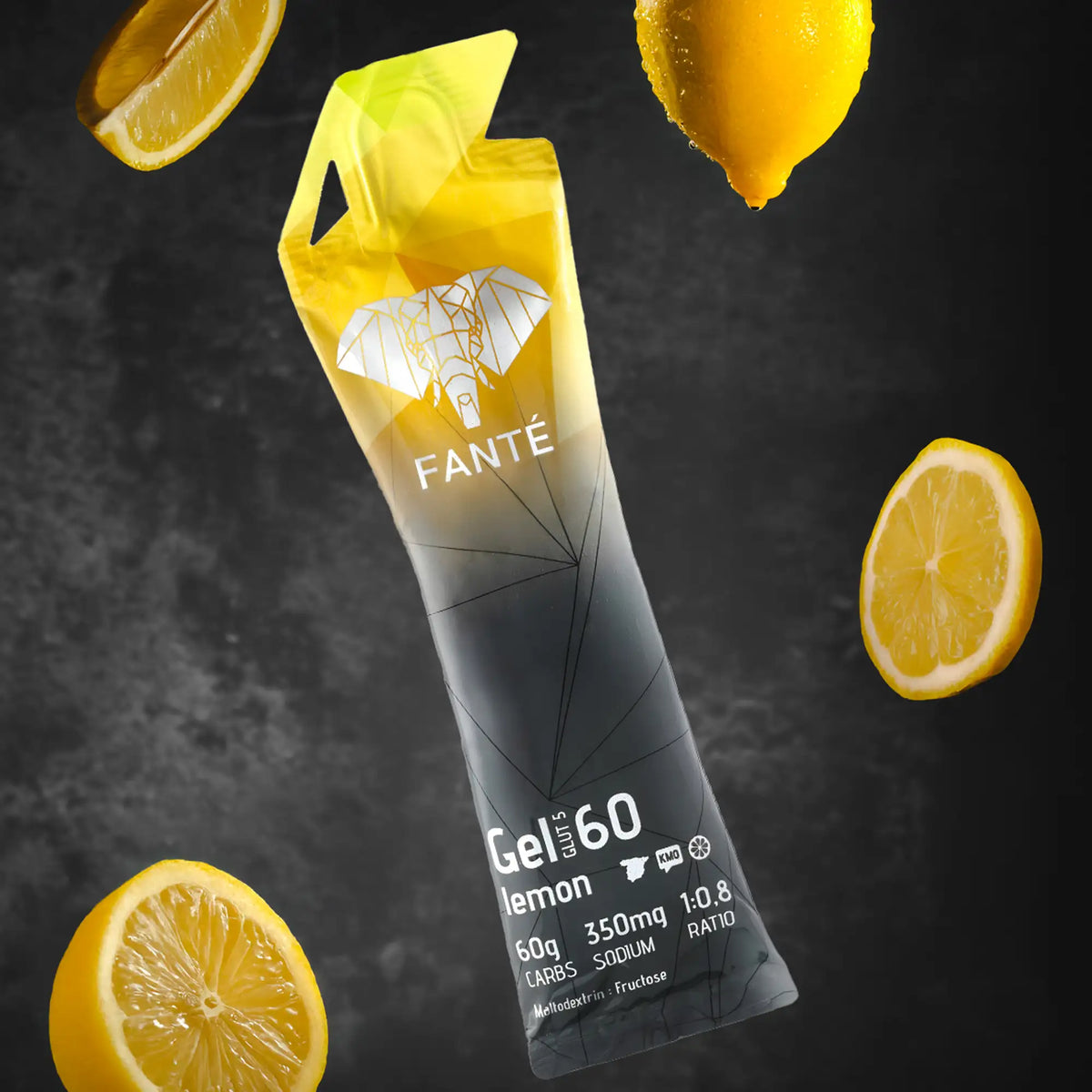
Increasing the glucose content of the beverage above 6% decreased fluid transport compared to water, while the sodium content within the investigated range did not affect fluid transport but did contribute to dehydration in athletes (7) . Therefore, solutions that are more than isotonic (>550mg sodium per 750ml bottle) or have a carbohydrate concentration above 9% would be detrimental to athletes during exercise. With all this in mind, at FANTÉ we prioritize common sense and empirical evidence over marketing. Our GLUT 5 DRINK range provides 67.5 grams of carbohydrates with a 1:0.8 ratio in 750ml of water to reach a maximum of 9%, maximizing the total amount per bottle without compromising peak athletic performance. Furthermore, we include 350mg of sodium in the solution to improve fluid and solute transport.
Davis et al. (8) reported no differences in plasma D2O levels when comparing 6%, 8%, and 9% glucose and fructose drinks with water. One possible reason for the discrepancies between these studies is the inclusion of fructose in the drinks by Davis et al. (8) . Fructose is absorbed via GLUT5 in the intestinal cell membrane (9) , while glucose is absorbed via SGLT1 (10) . The inclusion of these carbohydrates, which can be transported via multiple transporters, may lead to a reduction in the inhibitory effect of hyperosmolarity on fluid absorption (11) . This is the case when we choose to consume the GLUT5 DRINK and Gel 6 0 range, which contain multiple transporters with a 1:0.8 ratio, in line with scientific evidence.
[[PRODUCT:gel-60]]
It has been shown that a 20% carbohydrate solution empties from the stomach more slowly than a 6% solution; that is, there are current brands that sell single doses at concentrations of 18%, 21%, and others that are not scientifically proven (12) . Another study reported that carbohydrate concentrations lower than 10% do not affect gastric emptying (13) .
Therefore, a drink with a concentration above 9% would slow down gastric emptying and thus our energy intake.
To better understand this, we must first understand how our body works when we ingest it:
Once the ingested beverage has been emptied from the stomach, it enters the small intestine. The proximal section of the small intestine, the duodenum, is the most permeable section. In the duodenum, water is absorbed down an osmotic gradient, so when water is compared to a carbohydrate-containing beverage, it leads to greater fluid absorption in the duodenum, creating a greater osmotic gradient (11) . Increasing the carbohydrate content of beverages to 6% and 9% decreases fluid absorption in the duodenum compared to water (14) .
As the ingested beverage continues down the small intestine to the jejunum, more solutes are absorbed (11) . The absorption of glucose via SGLT1 receptors in the small intestine is directly coupled with the absorption of two sodium molecules and approximately 300 water molecules (15). In this way, the fluid can be absorbed against a concentration gradient. If the single-dose contains adequate amounts of sodium...
This may explain why the 3% glucose drink led to greater fluid transport than water. Glucose absorption in the jejunum leads to increased fluid absorption, both through the transcellular SGLT1 pathway and through paracellular pathways, since SGLT1 has been shown to increase the permeability of intestinal anchoring junctions (16).
Therefore, we need a beverage with a concentration below 9%, containing water and sodium for the proper functioning of glucose transport in the body. And if we add to this the fact that our GLUT 5 DRINK single-serving packet is made with natural products and contains no artificial flavors, preservatives, or thickeners, we obtain a unique product designed to mitigate the potential gastrointestinal effects that these compounds could cause.
[[PRODUCT: glut-5-drink]
That's not all,
Gisolfi et al. (17) investigated fluid absorption from a 6% glucose beverage containing either 0.25 or 50 mmol/L of sodium and found no difference in fluid absorption. Similarly, during exercise, increasing the amount of sodium from 500 mg in ingested carbohydrate beverages does not lead to an increase in fluid absorption and therefore no further addition is necessary (18).
Although sodium may not have effects on fluid transport, it can still be useful to include it in carbohydrate and electrolyte drinks.
Including sodium in ingested beverages leads to an increase in their palatability (19) . Palatability is an important factor in voluntary fluid intake (20) , which can be useful in situations such as prolonged exercise in hot conditions, as fluid intake can help maintain a lower core body temperature compared to no fluid intake and prevents decreased performance (21) . Sodium is also important for rehydration after a period of dehydration, as it helps with fluid retention.

As seen in this photo, sodium does not change the rate of gastric emptying, but it is a very good way to provide extra sodium per hour to reach the minimum recommended hourly sodium intake. If you want to learn more about dehydration, consult our hydration guide .
In conclusion
The drink we use during exercise should be isotonic, that is, have an osmolarity similar to that of blood (280-330 mOsm/kg).
An isotonic drink containing GLUT 5 would have an osmolarity of 200-410 mOsm/L. This would improve transport and emptying, preventing dehydration. However, drinks with a high carbohydrate concentration (above 9%) and above 1 g sodium/L would have an osmolarity >410, meaning they would be hypertonic. While this would result in very rapid solute transport, it would also lead to dehydration.
Therefore, at FANTÉ we have decided to respect the maximum tolerable by adjusting carbohydrates and electrolytes according to what the evidence tells us.
This 9% carbohydrate drink contains multi-transporter carbohydrates, maltodextrin, and fructose in a 1:0.8 ratio, respectively, and a maximum of 350mg of sodium per 750ml. However, we opted to include 350mg of sodium for use with the Glut 5 On range, as together they would provide a total of 700mg of sodium per hour, making it an isotonic drink. This would hydrate us without dehydrating us. Our glycogen recovery drink is an example of a hypertonic drink, as its purpose is to absorb the maximum amount of carbohydrates per unit of time. Therefore, we will use this drink post-workout, not during training.
And why maltodextrin and not glucose?
Because maltodextrin provides a less sweet taste for palatability control and has a lower osmolarity than glucose, we can include more carbohydrates per ml without affecting the gastric emptying rate.
Literature
- Maughan RJ, Leiper J.B (1999). Limitations to fluid replacement during exercise. Can J Appl Physiol 1999, 24:173-187
- Gisolfi CV, Summers RW, Schedl HP, Bleiler TL, Oppliger R. A (1990). Human intestinal water absorption: direct vs. indirect measurements. Am J Physiol, 258:G216-222
- Davis JM, Lamb DR, Burgess WA, Bartoli W.P (1987). Accumulation of deuterium oxide in body fluids after ingestion of D2O-labeled beverages. J Appl Physiol, 63:2060-2066
- A., Bartoli W. P (1990). Fluid availability and sports drinks differing in carbohydrate type and concentration. Am J Clin Nutr 51:1054–1057
- Leiper JB, Maughan R.J (1988). Experimental models for the investigation of water and solute transport in man. Implications for oral rehydration solutions. Drugs, 36 (Suppl 4): 65-79
- Barr SI, Costill DL, Fink W. J (1991). Fluid replacement during prolonged exercise: effects of water, saline, or no fluid. Med Sci Sports Exerc 23
- Asker Jeukendrup, Kevin Currel, Juliette Clarke, Johnny Cole, and Andrew K. Blannin. Effect of Glucose and Sodium Content of Beverages on Fluid Transport. School of Sport and Exercise Sciences, University of Birmingham, Edbaston, Birmingham, UK. 201
- Davis JM, Burgess WA, Slentz CA, Bartoli W.P (1990). Fluid availability and sports drinks differing in carbohydrate type and concentration. Am J Clin Nutr 51:1054–1057
- Semenza G., Kessler M., Hosang M., Weber J., Schmidt U (1984). Biochemistry of the Na+, D-glucose cotransporter of the small-intestinal brush-border membrane. The state of the art in 1984. Biochim Biophys Acta, 779:343-379
- Kellett G.L (2001). The facilitated component of intestinal glucose absorption. J Physiol, 531:585-595
- Shi X., Summers RW, Schedl HP, Flanagan SW, Chang R., Gisolfi C. V (1995). Effects of carbohydrate type and concentration and solution osmolality on water absorption. Med Sci Sports Exerc, 27:1607-1615
- Murray R., Bartoli WP, Eddy DE, Horn M. K (1997). Gastric emptying and plasma deuterium accumulation following ingestion of water and two carbohydrate-electrolyte beverages. Int J Sport Nutr, 7:144-153
- Zachwieja JJ, Costill DL, Beard GC, Robergs RA, Pascoe DD, Anderson D. E (1992). The effects of a carbonated carbohydrate drink on gastric emptying, gastrointestinal distress, and exercise performance. Int J Sport Nutr, 2:229-238
- Lambert GP, Chang RT, Xia T., Summers RW, Gisolfi C. V (1997). Absorption from different intestinal segments during exercise. J Appl Physiol, 83:204-212
- Loo DD, Zeuthen T., Chandy G., Wright E. M (1996). Cotransport of water by the Na+/glucose cotransporter. Proc Natl Acad Sci USA, 93:13367-13370
- Turner JR (2000). Show me the pathway! Regulation of paracellular permeability by Na(+)-glucose cotransport. Adv Drug Deliv Rev, 41:265-281
- Gisolfi CV, Summers RD, Schedl HP, Bleiler T. L (1995). Effect of sodium concentration in a carbohydrate-electrolyte solution on intestinal absorption. Med Sci Sports Exerc, 27:1414-1420
- Gisolfi CV, Lambert GP, Summers R.W (2001). Intestinal fluid absorption during exercise: role of sport drink osmolality and [Na+]. Med Sci Sports Exerc, 33:907-915
- Murray R (1987). The effects of consuming carbohydrate-electrolyte beverages on gastric emptying and fluid absorption during and following exercise. Sports Med, 4:322-351
- Minehan MR, Riley MD, Burke L. M (2002). Effect of flavor and awareness of kilojoule content of drinks on preference and fluid balance in team sports. Int J Sport Nutr Exerc Metab, 12:81-92
- Sawka MN, Montain SJ, Latzka W.A (2001). Hydration effects on thermoregulation and performance in the heat. Comp Biochem Physiol A Mol Integr Physiol, 128:679-690