What are the differences between high-carbohydrate energy gummies?
Two energy gummies can provide a very similar amount of carbohydrates and still be quite different products when you consume them during exercise.
In products designed to provide around 45–46 g of carbohydrates per unit, we should not only look at the grams of carbohydrates. Also important are the sources used, the glucose-fructose ratio, the sodium, the ingredients, the texture, the ease of chewing, and how the product fits into your overall nutritional strategy.
| Feature | Generic gummy | FANTÉ Carbo Gummy |
|---|---|---|
| Carbohydrates per unit | ≈46 g | 45–46 g |
| Main carbohydrate sources | Sugar, glucose powder, and fructose | Sugar, glucose syrup, and fructose syrup |
| Glucose-fructose ratio | Approx. 1:0.8 | 1:0.8 |
| Gelling agent | Pectin | Pectin |
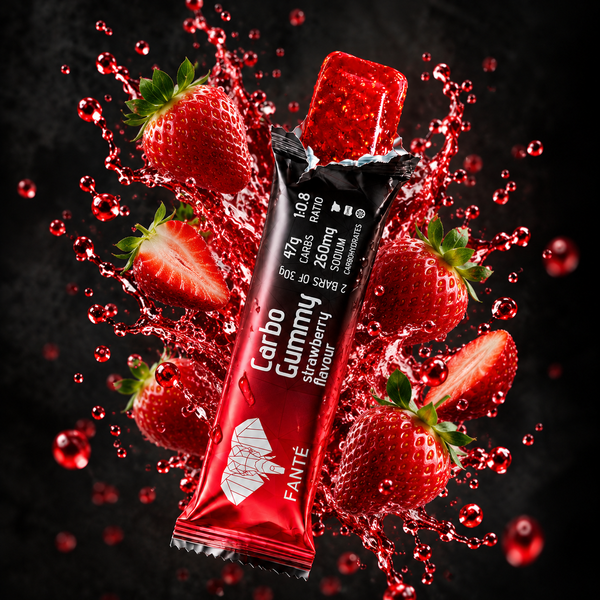
| Real fruit | No fruit | Strawberry version with 4% freeze-dried strawberry |
| Added flavor | Flavors included | No added flavors |
| Preservative | Potassium sorbate | No preservatives |
| Added antioxidant | Ascorbic acid | No added antioxidants |
| Sodium | 260 mg | 260 mg |
| Coating | Unspecified | Coconut oil |
| Texture | Chewy gummy | Soft and chewy gummy |
| Portioning | Single format | Predivided to split the intake |
What does this difference in ingredients mean?
Both formulations start from a similar base: sugars, glucose, fructose, and pectin to achieve an energy product in a chewy format.
The main difference lies in how each product is constructed. One of the formulations uses flavoring, preservatives, and antioxidants, while Carbo Gummy uses a shorter formulation, without flavorings or preservatives and, in its strawberry version, incorporates 100% natural freeze-dried strawberry.
From a performance standpoint, the total amount of carbohydrates, the sources used, the glucose-fructose ratio, and how they fit into your hourly strategy remain fundamental. But with an approximately equal amount of carbohydrates, there are significant differences in formulation and consumption experience.
Texture also matters when you are training
A gummy can have an adequate nutritional composition on paper and be uncomfortable when you try to eat it while running, cycling, or during a competition.
That is why, in addition to carbohydrates, it is important to assess how the product behaves in the mouth, how much you need to chew it, and how easy it is to consume as intensity increases.
Carbo Gummy has a soft, chewy texture. Furthermore, its format is predivided, which allows for splitting the intake rather than necessarily consuming the whole unit at once.
This makes it possible to better adapt the amount of carbohydrates and sodium to each moment of training or competition.
In races lasting several hours, aspects such as texture, ease of eating, variety of formats, and flavor fatigue can be important for maintaining the planned nutritional strategy.
[[PRODUCTO:carbo-gummy]]
How are pâte de fruit-style energy bars different?
In pâte de fruit-style formats, the differences are even greater. Here, not only does the amount of fruit change, but also which fruit is used, the formulation, the sodium, the final texture, and how it can be combined with gels and drinks within a nutritional strategy.
| Feature | FANTÉ Energy Bar Pâte de Fruit | Comparative bar |
|---|---|---|
| Carbohydrates per unit | 33 g | 33 g |
| Total fruit content | 62% | 51% |
| Fruit | 62% fruit | Apple blends with flavor fruit |
| Sugar | Yes | Yes |
| Glucose syrup | Yes | Yes |
| Pectin | Yes | Yes |
| Lemon | Squeezed lemon juice | Lemon concentrate-based juice |
| Sodium | 150 mg | Up to 320 mg |
| Starch | None added | Yes |
| Added flavor | No added flavors | Natural flavor |
| Texture | Extra soft and very easy to chew | Chewy pâte de fruit |
| Integration with gels | 150 mg sodium to facilitate combination with other products | High-sodium versions require special accounting of the strategy's total intake |
What changes between a pâte de fruit with 62% and one with 51% fruit?
Both use fruit as a central part of the formulation, but there is a clear difference both in the proportion of fruit and in how the product is constructed.
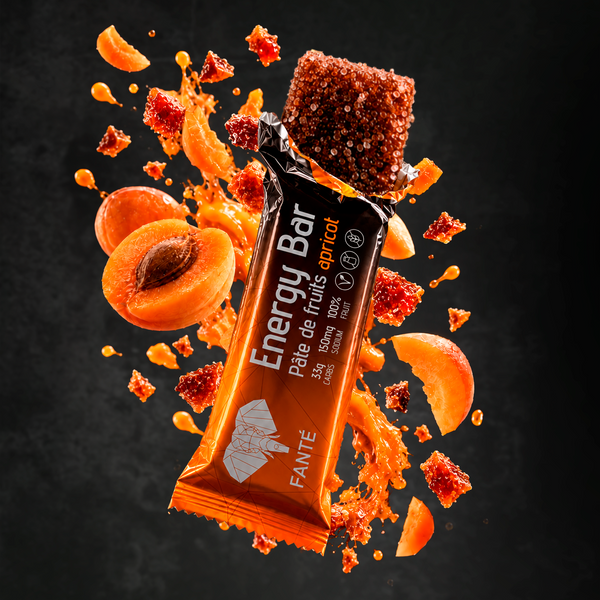
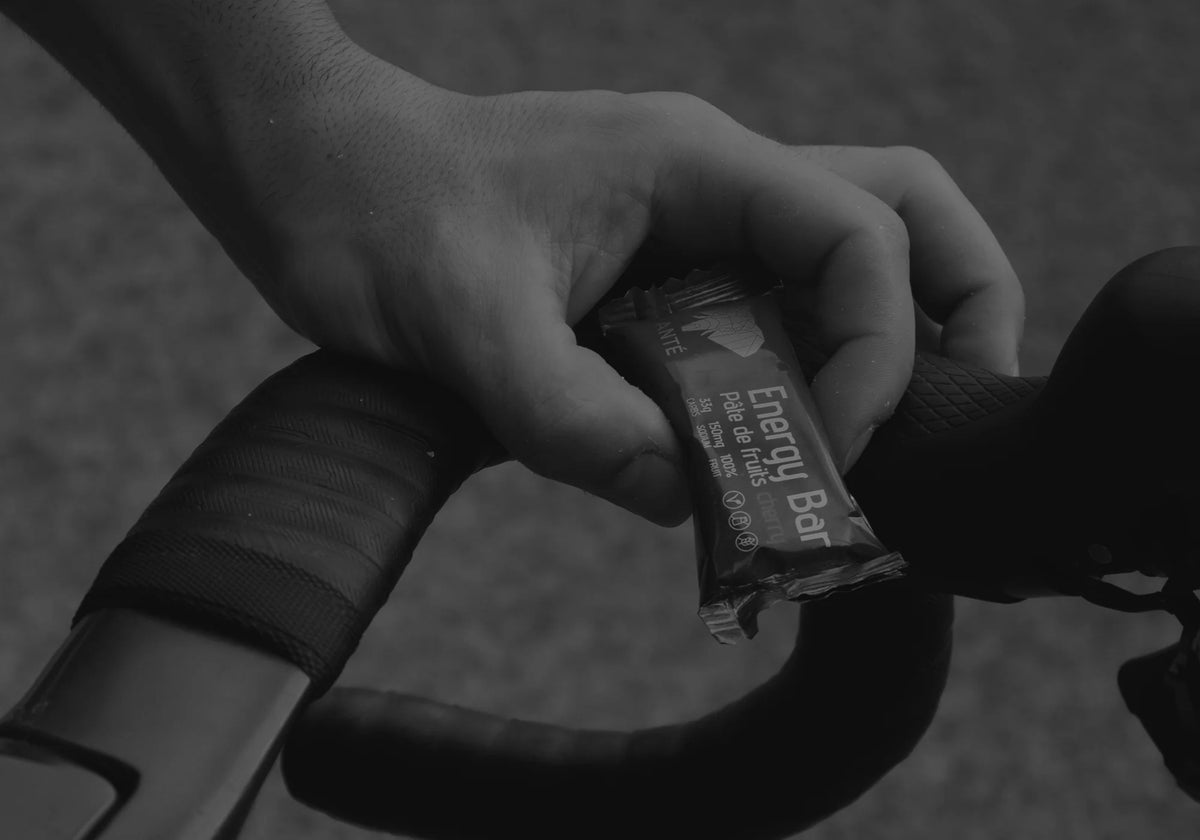
Energy Bar Pâte de Fruit contains 62% fruit and uses a short formulation based on fruit, sugar, glucose syrup, pectin, lemon juice, and sodium chloride.
The comparative bar contains 51% fruit purées, where apple represents a significant part of the formulation, and also incorporates starch and natural flavor.
Therefore, if you are looking for a pâte de fruit with a high percentage of fruit, a short formulation, and no added flavors, there are clear differences between both options.
The big difference is also in the texture
In a bar designed for endurance sports, it is not just about reaching a certain amount of carbohydrates. It is also about being able to consume them when you are running, cycling, or competing at high intensity.
That is why texture was one of the important points in the development of Energy Bar Pâte de Fruit.
The goal is to achieve a product that maintains its shape out of the mouth but, when consumed, offers a very soft and easy-to-chew texture.
This reduces the amount of chewing required compared to more compact solid foods and makes it easier to introduce carbohydrates through a format other than a gel.
Two products can provide exactly 33 g of carbohydrates and offer very different experiences in terms of texture, flavor, ease of consumption, and combination with the rest of the strategy.
A Pâte de Fruit designed to be combined with gels
There is another important difference that is not apparent by looking only at carbohydrates: sodium must be calculated by adding up all the products you consume during an hour.
Energy Bar Pâte de Fruit provides 33 g of carbohydrates and 150 mg of sodium. It is not designed to provide all the sodium for an hour on its own, but to be easily integrated with gels and drinks within a complete strategy.
This becomes important when you use products that already contain a significant amount of sodium.
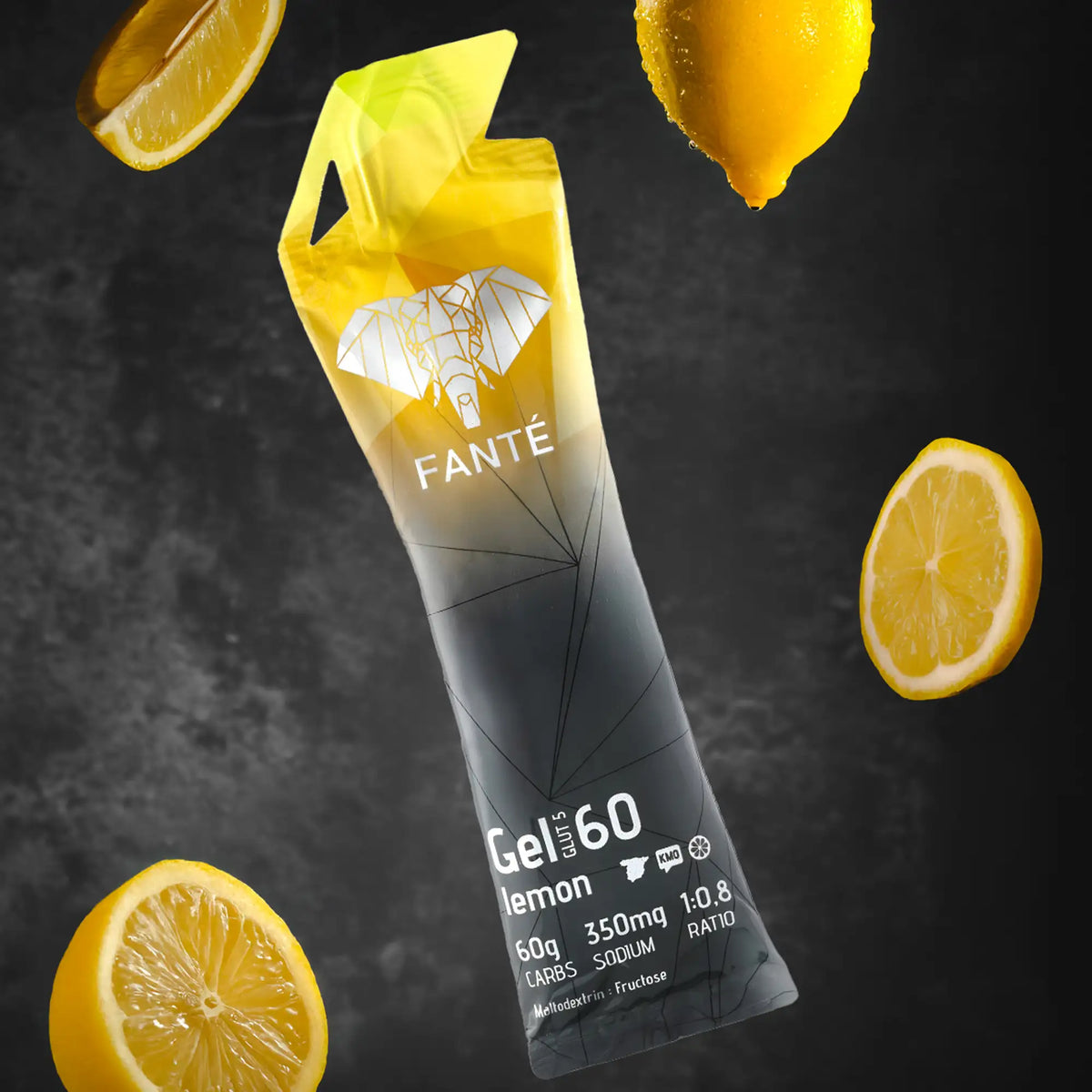
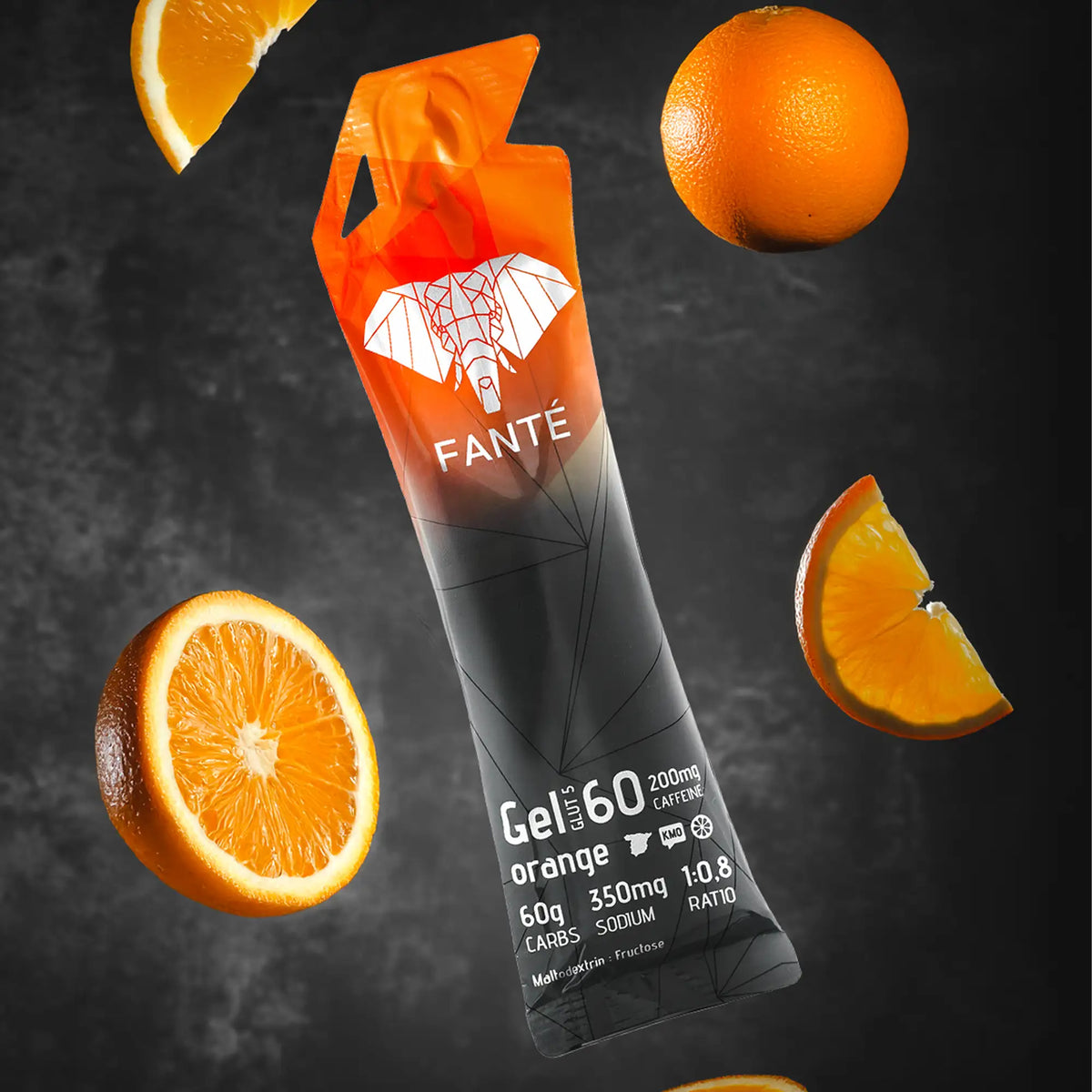
For example, a Gel 60 provides 350 mg of sodium. If you combine it with a Pâte de Fruit during the same hour, the total provides:
- Gel 60: 350 mg of sodium.
- Energy Bar Pâte de Fruit: 150 mg of sodium.
- Total: 500 mg of sodium.
If an equivalent bar provided 320 mg of sodium, the same combination would reach 670 mg of sodium before accounting for any sodium that the drink might provide.
This does not mean that 670 mg of sodium per hour is necessarily excessive for all athletes. Sodium losses through sweat show great individual variability and depend, among other factors, on the sweat rate, environmental conditions, and the sodium concentration of the sweat.
The difference is that a more moderate intake allows for greater margin to build the strategy and add sodium where you really need it through gels, drinks, or electrolytes.
That is why, at FANTÉ, we do not formulate each product trying to have it individually provide the maximum possible of each nutrient. We think about how all the products combine during an hour of exercise.
Carbohydrates, sodium, and digestive tolerance must be considered together
A nutritional strategy should not be built simply by adding products up because each has high carbohydrate or electrolyte figures.
During prolonged efforts, increasing carbohydrate intake requires digestive training and individual planning. Gastrointestinal tolerance can vary greatly between athletes.
That is why the goal is to be able to reach the planned carbohydrates per hour through formats that are easy to consume, amounts of sodium that can be combined with each other, and products that you have previously tested during training.
Energy Bar Pâte de Fruit provides 33 g of carbohydrates in a smaller portion than Carbo Gummy and with 150 mg of sodium. This allows it to be used as one more piece of the strategy when you are already consuming gels or drinks with carbohydrates and electrolytes.
We cannot claim that a formulation will prevent all gastrointestinal problems, because tolerance is individual. But we can design the strategy to avoid unnecessary loads, better distribute the intake, and make it easier for the athlete to meet their carbohydrate, fluid, and sodium goals.
[[PRODUCTO:energy-bar-pate-de-fruit]]
Carbo Gummy or Pâte de Fruit: which one to choose?
Within the FANTÉ range itself, Carbo Gummy and Energy Bar Pâte de Fruit are not designed to do exactly the same thing.
| If you are looking for... | Option |
|---|---|
| Concentrating more carbohydrates in one unit | Carbo Gummy |
| 45–46 g of carbohydrates | Carbo Gummy |
| Glucose-fructose ratio 1:0.8 | Carbo Gummy |
| Easily dividing the intake | Carbo Gummy |
| A 33 g carbohydrate intake | Energy Bar Pâte de Fruit |
| Higher percentage of fruit | Energy Bar Pâte de Fruit |
| Combining with gels that already provide sodium | Energy Bar Pâte de Fruit |
| Introducing a different texture during long sessions | Energy Bar Pâte de Fruit |
The choice does not have to be one or the other. In a long session, you can use Carbo Gummy, Pâte de Fruit, gels, and drinks at different times, always calculating the total carbohydrates, sodium, fluids, and caffeine of the complete strategy.
What should you really look at when choosing an energy gummy?
When comparing energy gummies for sports, it is not advisable to look only at how many ingredients each product has or which one provides the highest figure of carbohydrates or sodium.
The aspects you should really compare are:
- total amount of carbohydrates per unit;
- carbohydrate sources used;
- glucose-fructose ratio when relevant;
- sodium content;
- total sodium when combined with gels and drinks;
- percentage and type of fruit;
- presence or absence of caffeine;
- texture and amount of chewing required;
- ease of consumption at high intensity;
- possibility of dividing the intake;
- individual gastrointestinal tolerance;
- presence of flavors, preservatives, or other ingredients according to your preferences.
Sports nutrition is not about looking for the product that provides the most of everything, but about making all the pieces of the strategy fit together.
Carbohydrates, sodium, hydration, caffeine, texture, and digestive tolerance must be calculated together and tested beforehand during training.
[[COMUNIDAD_CTA]]