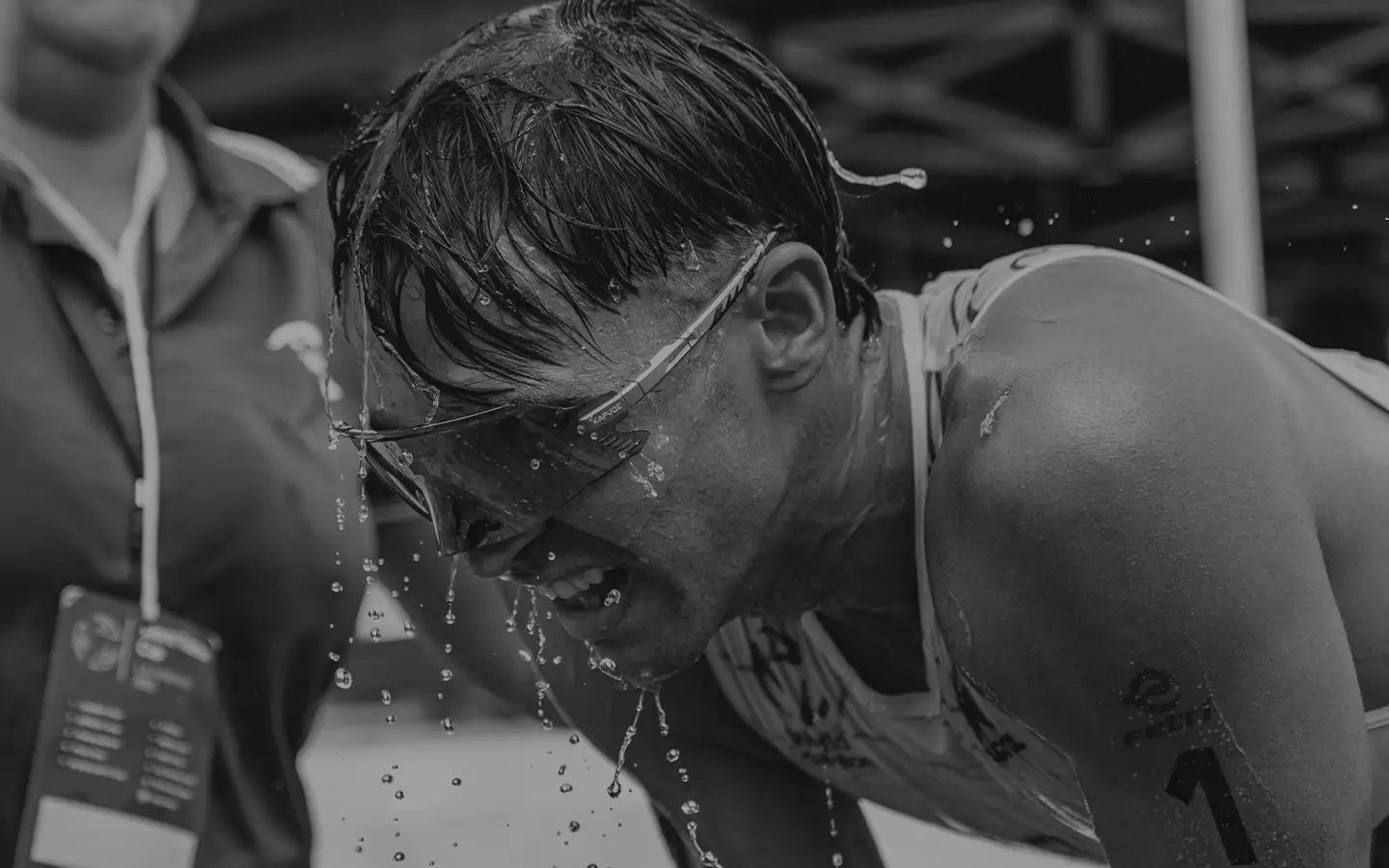
Excessive sweating during exercise is common, especially during intense training or in hot and humid conditions. While sweating is a necessary physiological mechanism for regulating body temperature , excessive sweat loss can directly affect performance, hydration, and electrolyte balance.
Understanding why excessive sweating occurs during exercise, what causes it, and how to manage it properly is essential to avoid performance drops, cramps, or dehydration. If left unchecked, excessive sweating during exercise can become a real limitation in endurance sports.
Why do we sweat more when we exercise?
Sweating is a natural thermoregulation process. When your body generates heat during exercise, it activates the sweat glands to cool down through evaporation.
The greater the intensity, the greater the heat production… and the greater the sweating. In some athletes, this response translates into excessive sweating during exercise , especially during long sessions or competitions.
Factors that determine your sweat rate
Not everyone sweats the same way. Excessive sweating during exercise can be influenced by:
- Training level
- Body mass
- Environmental conditions
- Relative humidity
- Genetics
- Heat adaptation
Some athletes can lose more than 2 liters per hour in extreme situations . In these cases, excessive sweating during exercise requires an individualized hydration and mineral replacement strategy.
That's why it's essential to calculate your dehydration rate and adapt your plan according to your own losses.
How much sweat is normal during exercise?
Under temperate conditions, most athletes lose between 0.5 and 1.5 liters per hour.
When we talk about excessive sweating during exercise, we are referring to greater losses that are not adequately compensated for and can lead to:
- Premature fatigue
- Decreased performance
- Cramps
- Headache
- Dizziness
If excessive sweating during exercise is not managed properly, the impact can accumulate session after session.
Excessive sweating from exercise: What happens to your body
Sweating doesn't just involve water loss. It also involves a significant loss of essential minerals.
When there is excessive sweating during exercise, the internal balance is disrupted faster than many athletes imagine.
[[CTA_COMMUNITY]]
Loss of water, electrolytes and performance
With excessive sweating during exercise, the body loses:
- Water
- Sodium
- Potassium
- Magnesium
- Calcium
- Chlorine
If electrolytes are not properly replenished to compensate for excessive sweating during exercise, the following may occur:
- Decreased plasma volume
- Increased heart rate
- Lower oxygen transport capacity
- Greater perception of effort
That's why hydration should include minerals, not just water. You can learn more in our hydration guide .
But wait, because now I'll explain the warning signs and what you need to do to avoid it.
Warning signs you shouldn't ignore
If you suffer from excessive sweating due to exercise, pay attention to:
- Very dark urine
- Chills despite the heat
- Mild confusion
- Repeated cramps
- Rapid weight loss post-workout
In cases of excessive sweating during exercise, it is also important not to fall into the opposite extreme: drinking too much without replenishing sodium can cause overhydration , which in some cases is good if we are talking about before training, but during could be fatal for your body.
Electrolytes for excessive sweating during exercise
When excessive sweating occurs during exercise, strategic mineral replenishment is essential to sustain performance.
Using electrolytes correctly to counteract excessive sweating during exercise can make the difference between maintaining your pace or experiencing a sudden drop in energy .
What electrolytes are lost through sweat and in what quantity?
The main mineral lost is sodium (between 400 and 1,800 mg per liter of sweat).
Also lost:
- Potassium (100–300 mg/L)
- Magnesium (10–20 mg/L)
- Calcium (5 to 40mg/L)
- Chloride
In situations of excessive sweating, these losses can be even greater, especially in hot climates.
When and how to replace what you lose
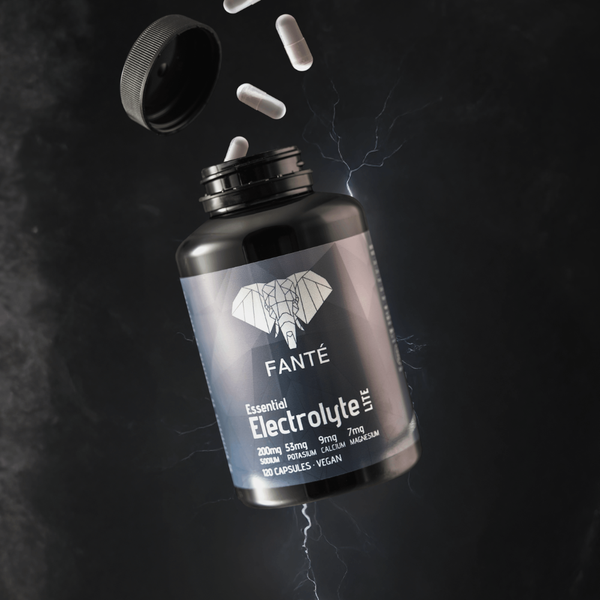
- Before: Pre-hydration with moderate sodium (Example: 1 tablet of our Essentials Electrolyte LITE FANTÉ )
- During: 300–800 mg of sodium per hour depending on sweat rate. (Example: You can choose to use ISO DRINK, GLUT 5 DRINK, or Essentials Electrolyte Lite)
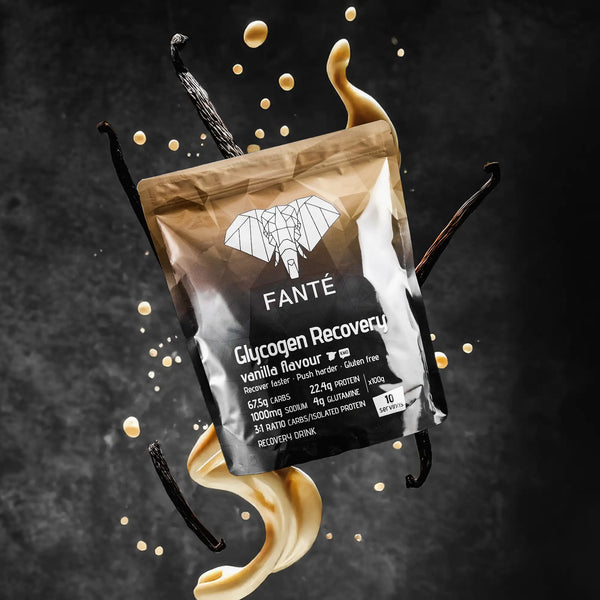
- Afterwards: Replenish 150% of the weight lost. (Example: A hypertonic drink such as Glycogen Recovery Drink)
[[PRODUCT:glycogen-recovery-drink]]
If you train or compete frequently, check these out. 👉 Hydration tips during races to better structure your strategy.
Practical tips for controlling excessive sweating while playing sports
Controlling excessive sweating during exercise does not mean eliminating it, but managing it strategically so that it does not limit your performance.
When you know you tend to sweat excessively, you should anticipate this with planning.
Before training: hydration and electrolyte loading
- Drink 5–7 ml/kg 3–4 hours before.
- Add sodium if you know you experience excessive sweating when exercising.
- Avoid excessive fluids just before starting.
Proper preparation reduces the initial impact of excessive sweating when playing sports.
During exertion: hydration strategy by segment
Don't wait until you're thirsty.
Divide your hydration into small sips every 15–20 minutes. Adjust the volume according to environmental conditions.
The key in cases of excessive sweating during exercise is to anticipate the loss , not to react when there is already a deficit.
After exercise: recovery and replenishment
Weigh yourself before and after training.
For every kilo lost, replace approximately 1.5 liters of fluid along with sodium.
If you regularly experience excessive sweating when exercising, this phase is critical to starting the next session in a balanced state.
FANTÉ Electrolyte Hydration: Formulated for athletes with high sweating rates
In cases of excessive sweating during exercise, the formulation of the drink is crucial.
ISO Drink and GLUT 5 Drink
- 👉 ISO Drink : isotonic drink with a balanced sodium and carbohydrate profile to maintain performance in situations of excessive sweating during sports.
- 👉 GLUT 5 Drink : advanced option for prolonged efforts where electrolyte loss is greater.
Both formulas are designed to optimize hydration without causing digestive discomfort.
Essential Electrolyte LITE
For those who need to boost mineral replacement without adding carbohydrates:
[[PRODUCT: Electrolytes-Lite-Essential]]
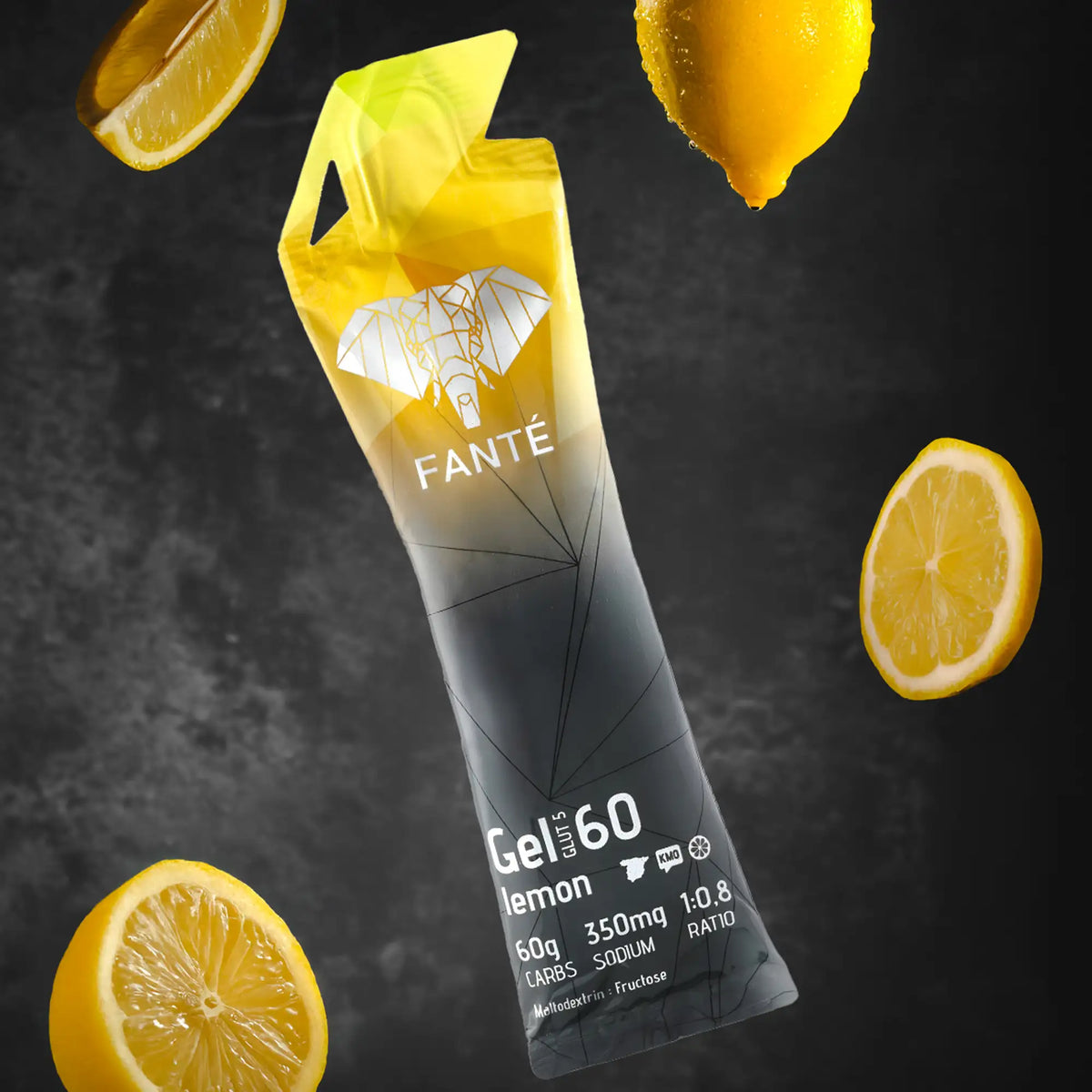
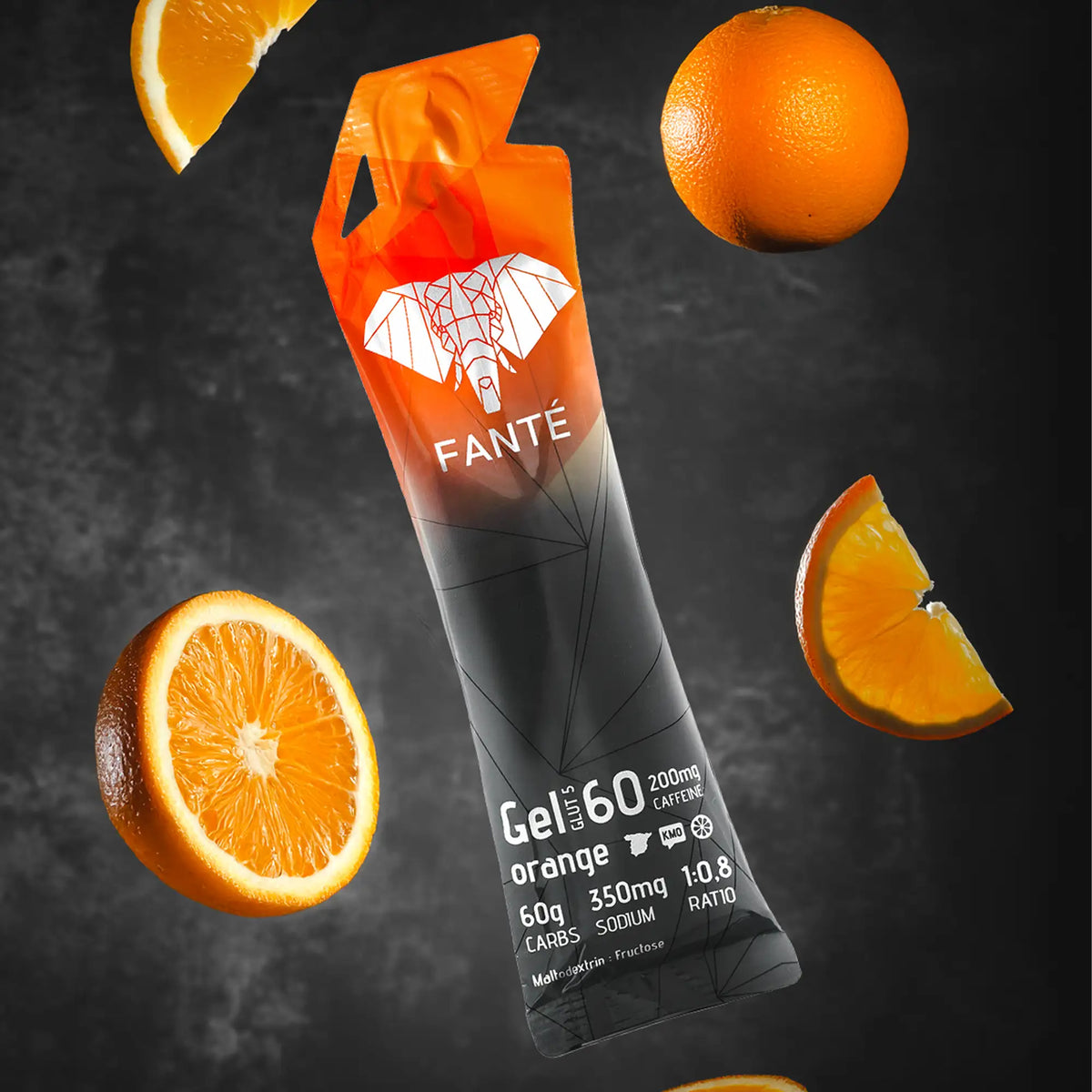
Especially useful for athletes with excessive sweating and a high rate of sodium loss, to complement the rest of the FANTÉ gels since these already provide sodium, potassium, magnesium and calcium in adequate amounts.
Literature
Sawka MN et al. Exercise and fluid replacement. Med Sci Sports Exerc.
House DJ et al. National Athletic Trainers' Association Position Statement: Fluid Replacement.