
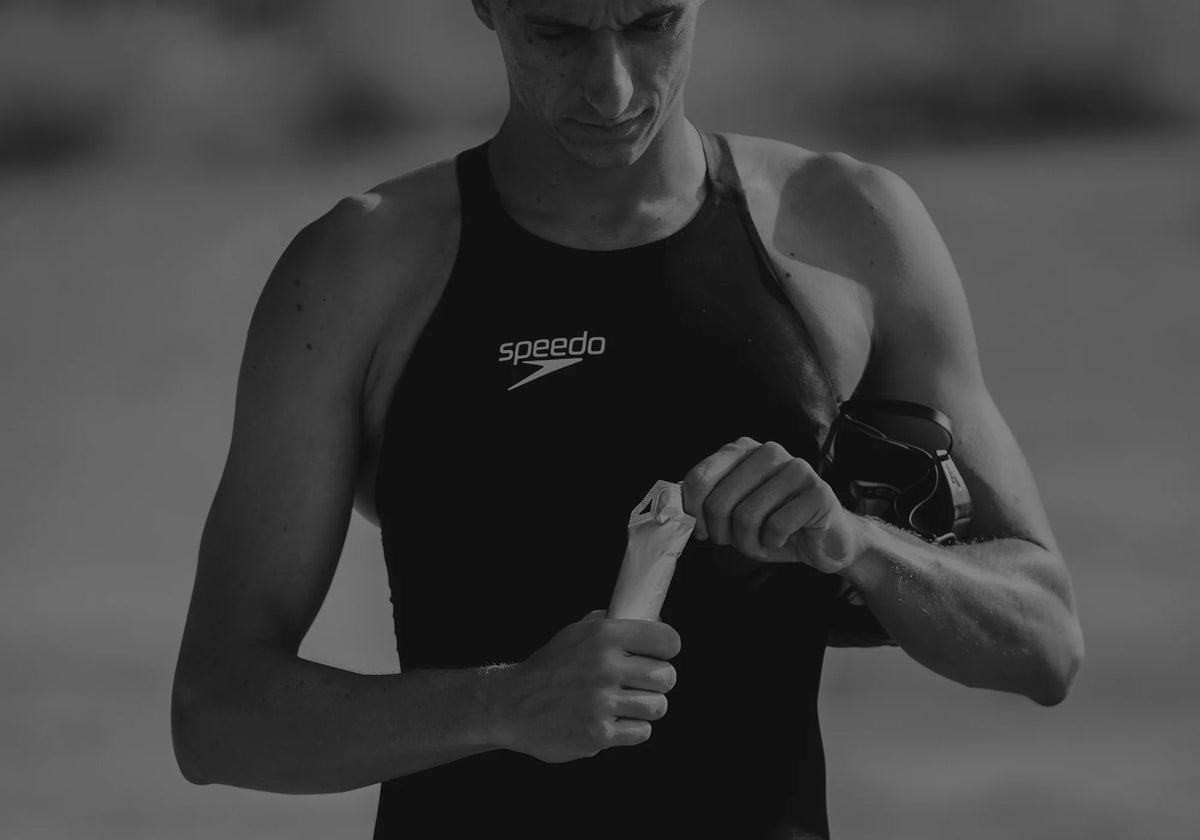
What to eat before and during a triathlon? A nutrition guide
Triathlon nutrition must be planned before you reach the starting line. What you eat in the hours prior, how much you drink, and how you distribute carbohydrates during the bike and run segments can vary significantly depending on whether you are competing in Sprint, Olympic, Middle Distance, or Long Distance events.
There is no universal strategy. Expected duration, intensity, your weight, your gastrointestinal tolerance, and your prior training should determine what to eat before and during a triathlon.
In this guide, we explain how to organize your breakfast or pre-race meal, how many carbohydrates to consume during the competition, and how to adapt gels, drinks, electrolytes, and caffeine to each distance.
[[COMUNIDAD_CTA]]
What to eat before a triathlon?
The pre-triathlon meal should primarily prioritize easily digestible carbohydrates, provide sufficient fluid, and include foods that you have already tested during your training.
As a general reference, the pre-race intake can be approximately 1–4 g of carbohydrates per kg of body weight in the 1–4 hours prior, adjusting the amount based on the time available for digestion and the duration of the event.
This does not mean you have to consume the maximum amount. If you eat breakfast three hours before, you can likely have a more complete meal than if you only have one hour until the start.
What should a pre-triathlon breakfast include?
A pre-race breakfast should be predominantly high in carbohydrates and relatively low in fat and fiber if you are sensitive to gastrointestinal discomfort.
Some foods that may work include:
- white bread with jam or honey;
- rice or low-fiber cereals;
- bananas or other well-tolerated fruit;
- juice;
- yogurt, if you tolerate it well;
- water;
- coffee, if it is part of your regular routine.
Do not try a new breakfast on competition day. The pre-race meal must have been tested before important training sessions or race simulations.
How long before the triathlon should you eat?
If you are eating a full breakfast, it is usually practical to have approximately 2–4 hours before the start.
If you only have 60–90 minutes, it is likely more comfortable to reduce the size of the meal and use simple, fast-digesting carbohydrate sources.
The strategy must also take into account the start time. Competing first thing in the morning is not the same as starting a triathlon at noon.
What to eat right before starting a triathlon?
In the minutes prior, you do not need to eat another full meal if you have already had a proper breakfast.
Depending on the duration of the event and your strategy, you can consume a small intake of carbohydrates before the start if you have tested it previously.
The goal is to arrive at the swim with available energy without feeling heavy.
How to eat during a triathlon if you can't ingest anything while swimming?
A feature that distinguishes the triathlon from other endurance sports is that you practically cannot eat or drink during the swim.
For this reason, you must arrive well-prepared from before the start and especially use the cycling segment to complete a significant portion of your race nutrition.
The bike allows you to carry bottles, gels, chews, and other products and usually offers more opportunities to drink and eat than the run.
How many carbohydrates per hour do you need during a triathlon?
The amount depends fundamentally on the duration of the competition.
- In efforts of approximately 1–2.5 hours, strategies of around 30–60 g of carbohydrates per hour can be used.
- In competitions lasting more than 2.5 hours, trained athletes can work with approximately 60–90 g/h.
- High intakes must have been practiced previously to check for tolerance.
The specific figure must be adapted to each triathlete. You do not need to consume 90 g/h simply because another athlete does.
Why does the carbohydrate combination matter?
When total carbohydrate intake increases, the sources you use also matter.
Combining glucose or maltodextrin with fructose allows for the use of different intestinal transporters and can facilitate high carbohydrate intake during prolonged efforts.
If you want to delve deeper into this topic, you can consult our guide on the 1:0.8 carbohydrate ratio and what scientific evidence says.
What to eat during the cycling segment?
The bike is usually the best time of the triathlon to concentrate a good part of the nutritional strategy because you can easily carry food and liquids, and intake is usually simpler than while running.
Depending on the distance, you can combine:
- carbohydrate drinks;
- energy gels;
- Carbo Gummy;
- Electro Gummy;
- Pâte de Fruit or other chewable formats;
- water and electrolytes.
Remember that you must add up all carbohydrates from drinks, gels, and food, not just the gels.
Gel 60 to concentrate carbohydrates during the bike
Gel 60 provides 60 g of carbohydrates per unit, which can facilitate high carbohydrate strategies by reducing the number of units you need to carry.
It can be especially practical in Middle and Long Distance triathlons, provided that this amount has been trained beforehand.
[[PRODUCTO:gel-60]]Hydro 35 and Hydro 45 to distribute intake
Hydro formats allow you to introduce different amounts of carbohydrates with a more fluid texture.
They can be used to spread out the strategy in smaller doses or combined with Gel 60 and drinks according to your hourly carbohydrate goal.
What to eat during the running segment of a triathlon?
When you start the run, the context changes. Intensity, impact, and gastrointestinal movement can make ingesting large amounts more difficult than on the bike.
That is why it is important not to reach T2 with a significant energy deficit and to have properly utilized the cycling segment.
During the run, you can mainly use:
- gels;
- water;
- isotonic drinks at aid stations;
- caffeine when planned.
The strategy must have been previously tested in bike-to-run transition training.
What to eat according to the triathlon distance?
The duration of the event completely changes the level of planning required.
| Distance | Approximate duration | What to prioritize | Strategy during the event |
|---|---|---|---|
| Sprint | ≈ 1–2 h | Good pre-race breakfast and simple strategy | Small carbohydrate intake based on duration and level |
| Olympic | ≈ 2–3 h | Regular carbohydrates and good hydration | Especially during the bike leg |
| Middle Distance / 70.3 | ≈ 4–7 h | 60–90 g CHO/h if trained + fluids/electrolytes | Bike as the main segment for intake |
| Long Distance / Ironman | ≈ 8–15 h | Individualized and trained strategy | Planned carbohydrates, hydration, sodium, and caffeine |
Nutrition for Sprint Triathlon
In a Sprint Triathlon, the competition is relatively short and high-intensity. A well-planned breakfast is very important because the opportunity to ingest large amounts during the event is limited.
During the bike, a small carbohydrate intake can be incorporated if the duration and strategy justify it.
You can check out the FANTÉ Sprint Triathlon Pack to organize your pre-, during-, and post-competition nutrition.
Nutrition for Olympic Triathlon
In the Olympic distance—approximately 1,500 m swim, 40 km bike, and 10 km run—the strategy during the competition begins to gain greater relevance.
The bike is the best time to start a regular intake of carbohydrates and liquids that allows you to arrive at the run with good energy availability.
You can check out the FANTÉ triathlon nutrition packs to choose the option corresponding to your distance.
Nutrition for Middle Distance or 70.3
In a 70.3, the nutritional strategy becomes a fundamental part of the competition.
With approximately 1.9 km of swimming, 90 km of cycling, and 21 km of running, you must plan: