
Which gels to choose for a marathon: strategy based on your experience
Choosing which gels to take during a marathon should not depend on what another runner takes, what you have seen on social media, or simply which gels are available at the aid stations.
The strategy should primarily be adapted to your experience with taking gels, your gastrointestinal tolerance, and the amount of carbohydrates per hour that you have trained for. A runner preparing for their first marathon does not necessarily need the same strategy as someone accustomed to ingesting 60–90 g of carbohydrates per hour.
In this guide, we explain which gels to choose for a marathon according to three different profiles and how to train your strategy before race day.
- It is my first marathon and I don't know which gels to choose.
- I already use gels, but I want to change brands.
- I have experience with gels and I want to optimize my strategy.
Why take energy gels during a marathon?
During a marathon, carbohydrates are one of the main fuels used to maintain exercise intensity. The body has stores of muscle and liver glycogen, but they are limited, so providing carbohydrates during a long-duration event helps maintain their availability.
Energy gels for running are a practical way to provide carbohydrates while you run. They take up little space, allow you to know precisely how much you are ingesting, and make it easier to plan an hourly strategy.
However, not all runners need to use the same amount or the same type of gel. Before deciding what to carry on marathon day, there is an important question:
How many carbohydrates are you able to ingest and tolerate while running at marathon pace?
Which gels to choose for your first marathon?
If you are preparing for your first marathon, the goal should not be to suddenly reach the maximum possible carbohydrate intake. The priority is to develop a simple strategy that you have previously tested on your long runs.
One of the most frequent mistakes is using new gels or considerably increasing their amount on race day. Your nutritional strategy also needs training.
Train your stomach before the marathon
Tolerance for carbohydrate intake during exercise can be trained. That is why long runs are the right time to progressively test the same strategy you will use in competition.
Instead of just deciding “how many gels to carry,” first calculate how many grams of carbohydrates you want to consume each hour and then choose the necessary gels to reach that amount.
For example, you can start with a moderate intake that you tolerate well and increase it progressively during the weeks of preparation. The final amount should depend on the expected duration of the marathon, the intensity, other sources of carbohydrates, and, above all, what you have trained for.
Are Hydro gels interesting for a first marathon?
Hydro formats have a more fluid texture, which some runners may find more comfortable when they need to ingest carbohydrates while running. This does not mean that a more liquid gel guarantees better gastrointestinal tolerance: the response is individual and must be verified during training.
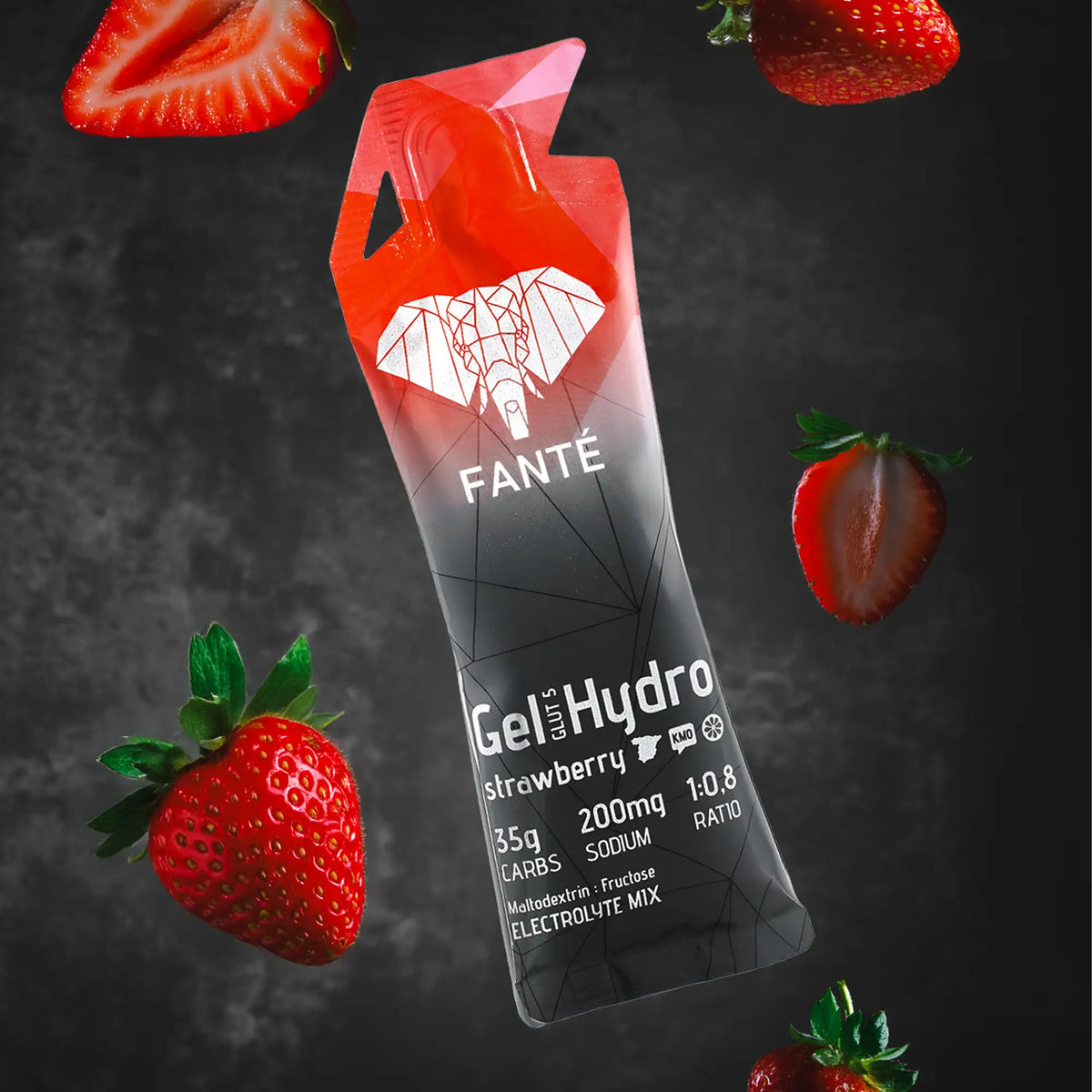
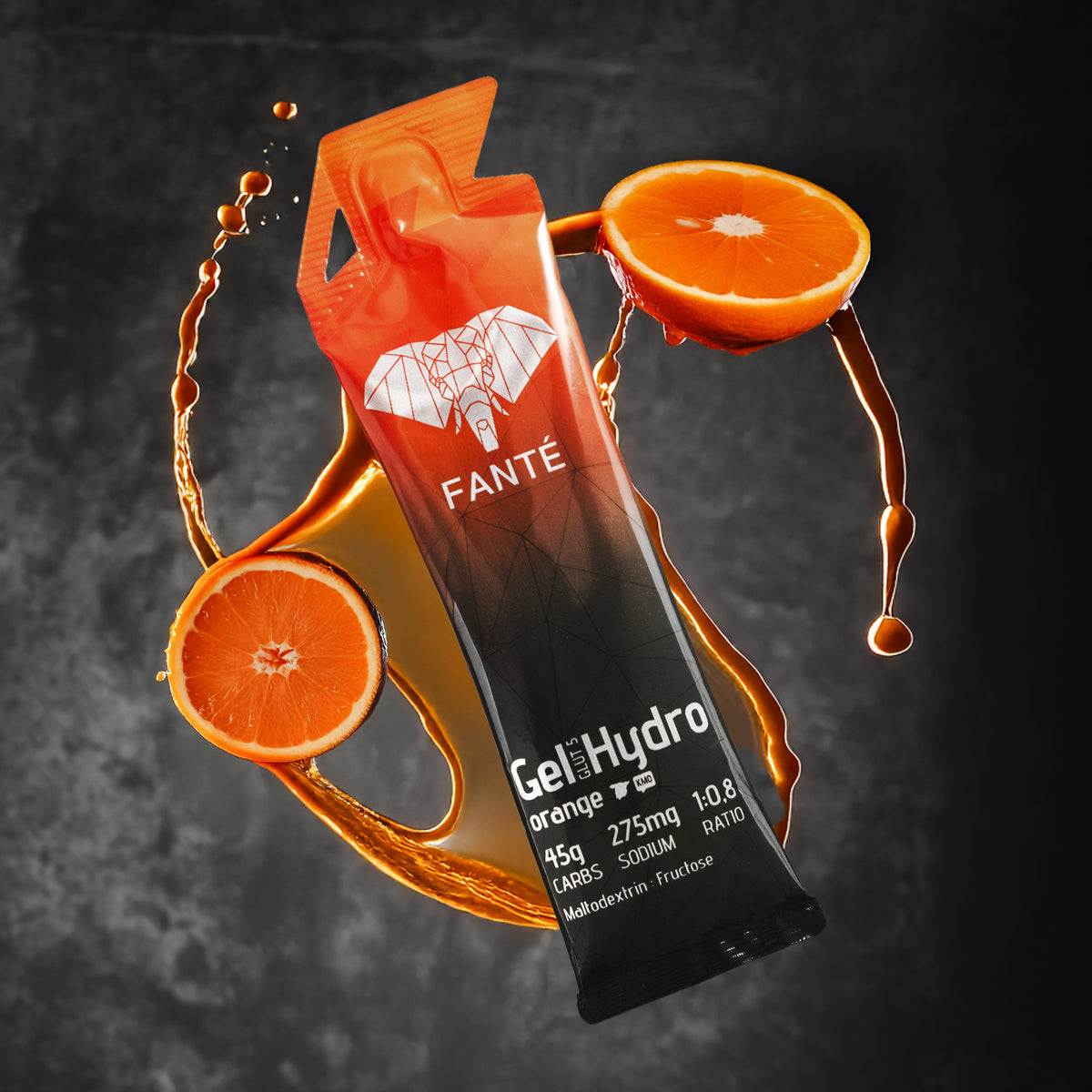
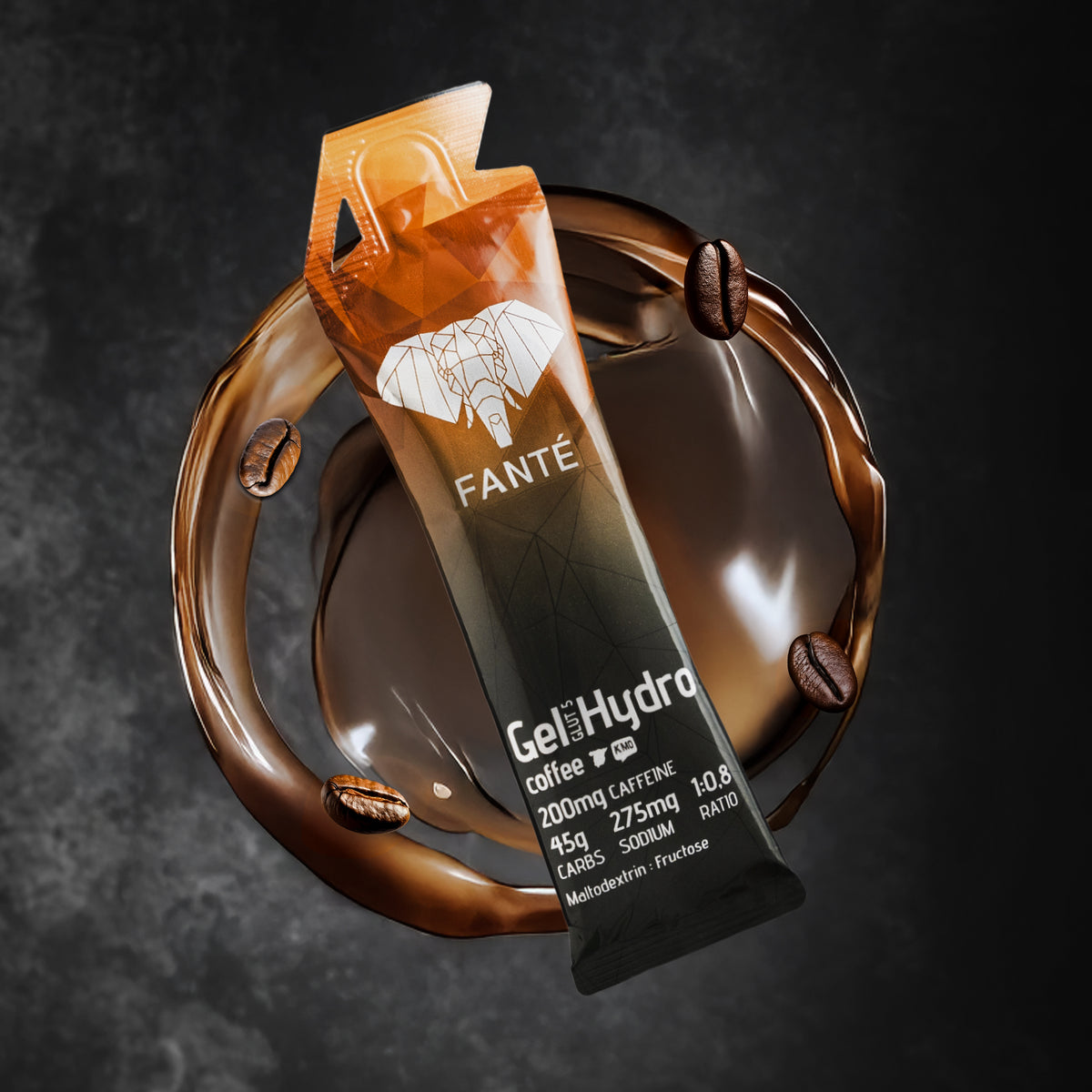
If you prefer this type of texture, you can try FANTÉ's Hydro formats during your long runs and see how they fit into your strategy.
Example strategy for a first marathon
There is no universal number of gels that is valid for all runners. A simple strategy could start with the first carbohydrate intake during the first 30–45 minutes and continue with regular intakes throughout the event.
The important thing is to avoid leaving all the intake for the second half of the marathon and to practice the frequency, the product, and the amount of water you will use beforehand.
If you have not yet used caffeine during your training, it is also not recommended to introduce it for the first time on race day.
I already use gels, but I want to change brands: what should I look at?
If you have already used gels in half marathons, marathons, or long runs, you start with an advantage: you already have information about what you tolerate and about the amount of carbohydrates you are accustomed to consuming.
Changing gels does not mean you have to completely change your strategy. First, compare three aspects:
- Carbohydrates per unit: compare the grams provided by your previous gel with the new one.
- Texture and format: assess whether you prefer a more fluid gel or a more concentrated one.
- Composition: check the carbohydrate sources, sodium, and the presence or absence of caffeine.
Afterward, test the new product first in training and subsequently during a long run that best replicates marathon conditions.
[[COMUNIDAD_CTA]]
Which FANTÉ gel should I choose if I come from another brand?
The FANTÉ gel range allows you to choose different formats based on the amount of carbohydrates and the texture you want to incorporate into your strategy.
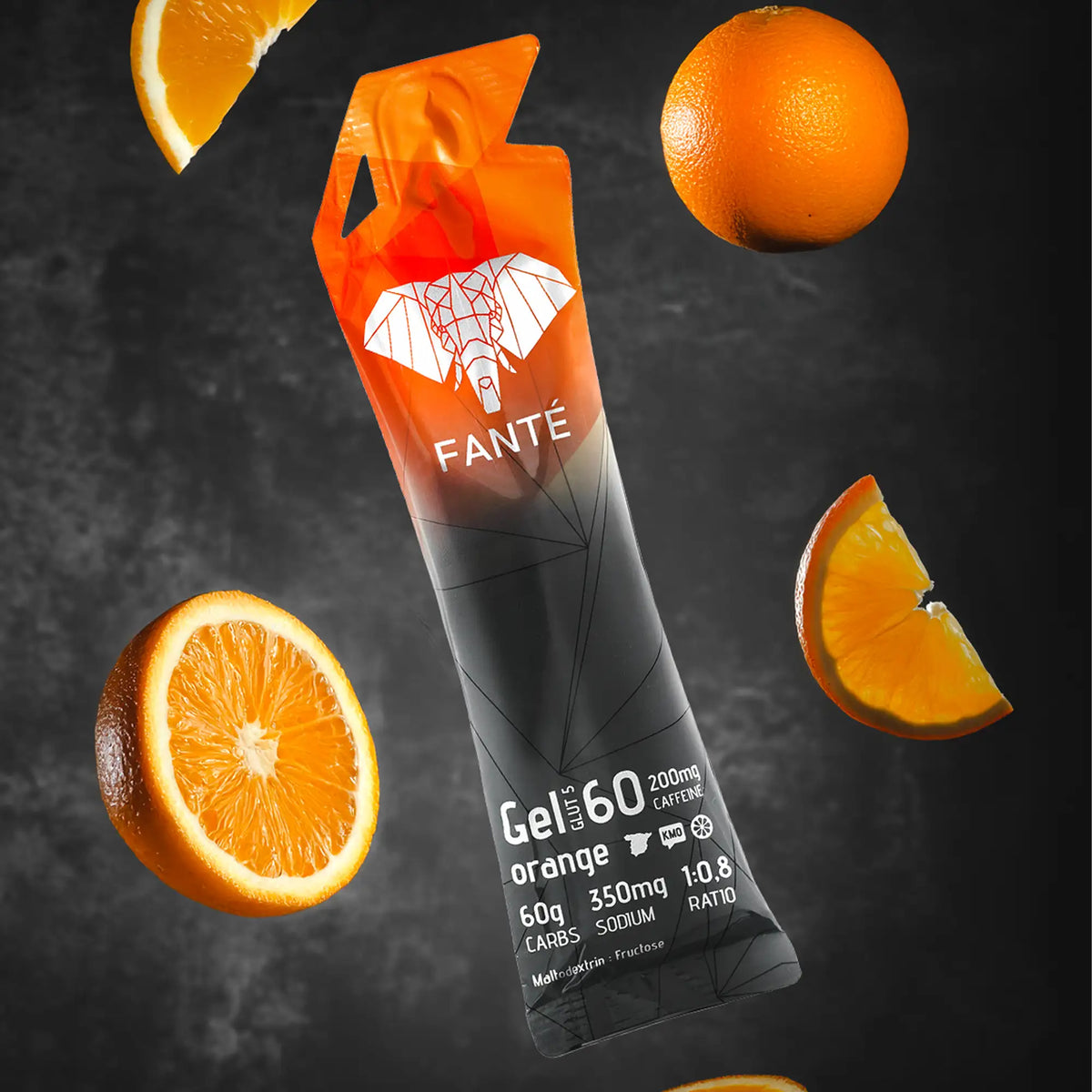
If you already use high-intake strategies and are looking to concentrate a high amount of carbohydrates into a single unit, Gel 60 provides 60 g of carbohydrates and uses a combination of maltodextrin and fructose with a 1:0.8 ratio.
[[PRODUCTO:gel-60]]The decision should not be based solely on the brand. Compare the amount of carbohydrates you used previously and test the change during your training before taking it to competition.
Which gel strategy should I use if I already have experience?
If you have been training your nutrition during long runs for some time and correctly tolerate carbohydrates while running, you can consider a higher intake strategy.
For prolonged endurance exercises, commonly used recommendations place intake at around 60–90 g of carbohydrates per hour when the duration and intensity justify it. The specific amount must be individualized and trained for beforehand.
[[PRODUCTO:gel-hydro-35]]
Higher intakes are also being studied for advanced runners. However, more carbohydrates do not automatically mean a better strategy: increasing intake without having trained for it can make it difficult to follow the plan and increase gastrointestinal problems.
Why does the carbohydrate combination matter?
When carbohydrate needs increase, the sources you are using also matter. Strategies that combine glucose or maltodextrin with fructose allow for the use of different intestinal transporters and are especially relevant when high intakes are sought during prolonged exercise.
For this reason, in advanced strategies, we should not value a gel solely by the grams of carbohydrates it contains, but also by how it is formulated and how it fits into the total hourly intake.
Example of an advanced marathon strategy
A runner accustomed to ingesting 60–90 g of carbohydrates per hour can use Gel 60 as one of the tools to build their strategy, combining it with other formats, carbohydrate drinks, or water depending on their needs.
For example, one Gel 60 provides 60 g of carbohydrates. This makes it easier to calculate hourly intake, but it does not necessarily mean that you have to take exactly one Gel 60 every hour: the complete strategy must consider everything you consume during that period.
You must also plan your hydration, sodium, and caffeine independently according to environmental conditions, your sweat rate, expected duration, and prior experience.
When to use gels with caffeine in a marathon?
Caffeine is evidence-based to improve certain aspects of athletic performance, but its use must be planned within the complete strategy and not just added because a gel contains it.
In a marathon, part of the caffeine can be reserved for moments when a higher perception of effort is expected, although the strategy depends on the total dose, timing of intake, individual sensitivity, and the runner's usual consumption.
If you have never tried caffeine while running, the marathon is not the time to experiment.
Table: which gels to choose for a marathon based on your experience
| Profile | Goal | What to prioritize | Strategy | What to avoid |
|---|---|---|---|---|
| First marathon | Create a simple and tolerable plan | Formats already tested and easy to ingest | Regular intake from the first part of the race | Trying new gels or aiming for very high intake without training |
| Changing brands | Maintain a strategy that already works | Compare carbohydrates, texture, sodium, and caffeine | Introduce the new gel progressively in training | Changing product and strategy simultaneously on race day |
| Experienced runner | Optimize carbohydrate intake | Carbohydrate combinations and individualized strategy | 60–90 g CHO/h when trained and appropriate | Increasing intake just because other runners do it |
Frequent mistakes when choosing gels for a marathon
- Using the gels for the first time on race day.
- Choosing them solely based on flavor or another runner's recommendation.
- Not calculating total grams of carbohydrates per hour.
- Taking the first dose too late.
- Not considering the carbohydrates from sports drinks.
- Using caffeine without having tested it previously.
- Trying to reach 90 g/h without having previously trained for that intake.
Frequently asked questions about marathon gels
How many gels do I need to run a marathon?
It depends on how many grams of carbohydrates each gel provides, how long it will take you to complete the marathon, and what your carbohydrate-per-hour goal is. Therefore, it is more accurate to first calculate the grams of carbohydrates you need during the race and then convert them into the number of gels. Furthermore, you must account for carbohydrates from drinks or other foods.
How often should I take a gel in a marathon?
There is no single interval that is valid for everyone. A practical strategy consists of distributing carbohydrates regularly throughout the race instead of waiting until you feel a lack of energy. The interval will depend on the grams of carbohydrates in each gel and your hourly intake goal.
When should I take the first gel of the marathon?
It is not necessary to wait until you notice fatigue. In endurance strategies, it is usually more practical to start providing carbohydrates during the first part of the event and then maintain regular intake. The exact timing should have been tested previously during long runs.
Is a 30 g gel or a 60 g gel better for a marathon?
Neither is better by definition. A 30 g gel allows you to distribute the intake over more doses, while a 60 g gel allows you to concentrate a larger amount of carbohydrates in one unit. The best option is the one that allows you to reach your hourly goal in a practical and tolerable way.
Should gels be taken with water?
It depends on the formulation and concentration of the product. Always follow the specific instructions for the gel and plan your access to liquids during the race. Also, remember that hydration must be individualized based on environmental conditions, duration, pace, and sweat rate.
How many grams of carbohydrates per hour do I need in a marathon?
For prolonged events like the marathon, 60–90 g of carbohydrates per hour is a range commonly used in sports recommendations when the duration and intensity justify it. It does not mean that all runners should start directly at 90 g/h. The strategy must be adapted to experience, gastrointestinal tolerance, expected duration, and previous nutritional training.
Conclusion: the best marathon gel depends on your strategy
Choosing which gels to take in a marathon begins with knowing how much you are capable of ingesting and tolerating during the race. The product is a tool within a broader strategy of carbohydrates, hydration, sodium, and, when appropriate, caffeine.
If it is your first marathon, prioritize a simple and trained plan. If you want to change brands, compare what you already use before modifying your strategy. And if you are an experienced runner, you can work with higher intakes as long as you have practiced them beforehand.
Do not improvise your nutrition on marathon day. Train it just as you train your pace, shoes, and mileage.
[[COMUNIDAD_CTA]]