If there's one sport where nutritional strategy makes all the difference, it's triathlon. Not only do you have to complete three consecutive disciplines, but you also have to manage your energy, fluid, and sodium intake for several hours while your digestive system works under significant physiological stress.
Many athletes train their swimming, cycling, and running for months, but leave sports nutrition for triathlon until the last few weeks. The result is usually the same: lack of energy, gastrointestinal problems, cramps, or a drop in performance in the decisive kilometers.
The good news is that most of these errors can be avoided with proper planning. Scientific evidence shows that training a nutritional strategy improves digestive tolerance and facilitates meeting current recommendations for carbohydrate intake during exercise (Jeukendrup, 2014; Costa et al., 2017).
In this triathlon nutrition guide, you will discover how to plan your nutrition before, during, and after the competition, adapting the strategy to the distance and avoiding the most common mistakes.
Why triathlon sports nutrition is different from other endurance sports
Sports nutrition in triathlon presents challenges that do not appear in most endurance sports. While a runner or cyclist maintains a single mode of effort, a triathlete must face three consecutive disciplines with very different physiological demands.
Swimming prevents food or fluid intake during the segment, which makes it essential to start the race with adequate energy and hydration reserves. Subsequently, cycling becomes the best opportunity to consume carbohydrates and fluids before tackling the run, where mechanical impact usually increases the risk of gastrointestinal discomfort.
For this reason, nutrition in triathlon should be understood as a global strategy and not as a simple sum of gels or sports drinks. Every decision made before the start affects performance during the following hours.
Additionally, recommendations change depending on the distance:
|
Distance |
Approximate duration |
Nutritional strategy |
|
Sprint |
1-1.5 h |
The priority is to arrive with full glycogen stores. |
|
Olympic |
2-3 h |
It starts to be advisable to ingest carbohydrates during the bike segment. |
|
Middle distance |
4-6 h |
It is essential to plan carbohydrates, fluids, and sodium. |
|
Long distance (Ironman) |
8-17 h |
The nutritional strategy is crucial for maintaining performance. |
Current scientific literature recommends individualizing the amount of carbohydrates based on the duration of the effort, intensity, and digestive tolerance of each athlete. There is no single valid strategy for all triathletes.
Before the triathlon: CHO loading, timing, and frequent mistakes in the week before
Triathlon sports nutrition begins several days before the starting gun. Arriving at the competition with optimal muscle and liver glycogen reserves helps delay fatigue and reduce dependence on carbohydrates ingested during the race.
In Olympic, middle-distance, or long-distance races, carbohydrate loading remains one of the most scientifically supported strategies for improving performance when exercise exceeds approximately 90 minutes.
It's not just about eating more pasta the day before. Planning should consider the total amount of carbohydrates ingested during the last 24-48 hours, as well as the timing of each meal and the athlete's individual tolerance.
[[COMUNIDAD_CTA]]
How many carbohydrates you need based on your weight and distance
Current recommendations vary depending on training volume and the anticipated duration of the competition.
As a general guideline:
- Sprint: specific loading is usually not necessary if previous nutrition has been adequate.
- Olympic: between 7 and 10 g of carbohydrates per kilogram of body weight during the 24 hours prior may be sufficient.
- Middle distance: between 8 and 10 g/kg/day for one or two days before the race.
- Long distance: up to 10-12 g/kg/day during the 36-48 hours prior for trained athletes.
These figures should always be adapted to individual characteristics, as a sudden increase in carbohydrate intake can cause digestive discomfort if not previously trained.
In addition to carbohydrates, it is also important to pay attention to hydration, sodium intake, and the timing of the last meal before the start.
The mistake of trying new products on race day
This is probably the most common mistake in triathlon nutrition.
Many athletes buy gels, isotonic drinks, or different supplements at the event expo or aid stations without having tried them beforehand. The result can be a combination of digestive discomfort, difficulty absorbing carbohydrates, and even withdrawing from the competition.
The digestive system also needs training. Various studies have shown that accustoming the gut to ingesting larger amounts of carbohydrates during training facilitates absorption and improves gastrointestinal tolerance.
Therefore, any strategy before, during, and after the triathlon should be rehearsed in long sessions, simulating real competition conditions.
At FANTÉ, we recommend that on race day you only use products that you have already tried during your preparation. Reducing uncertainty is one of the most effective ways to minimize the risk of digestive problems and maintain your planned nutritional strategy.
[[PRODUCTO:pack-triatlon-media-distancia]]
Triathlon nutrition during the competition
Triathlon sports nutrition is not just about ingesting gels when the first symptoms of fatigue appear. The strategy must be planned from the start of the race to maintain a constant availability of carbohydrates, fluids, and sodium.
Current recommendations suggest adapting carbohydrate intake to the duration of the effort. In races longer than 2.5-3 hours, many athletes can benefit from strategies of 60 to 90 g of carbohydrates per hour. For highly trained athletes with adequate gut training (gut training), some protocols investigate intakes of up to 120 g/h, although these must always be individualized and trained beforehand (Jeukendrup, 2014).
Triathlon nutrition must also consider hydration and sodium. Sweat losses vary enormously among athletes, so there is no universal guideline. Knowing your sweat rate during training is one of the best tools for personalizing your strategy.
You can't eat while swimming: how to arrive well-fueled at T1
Swimming presents an obvious limitation: it is not possible to ingest carbohydrates or liquids during the segment. Therefore, prior preparation plays a fundamental role.
The pre-swim breakfast should provide enough carbohydrates and be consumed with enough time for good digestion. As a guideline, international recommendations suggest ingesting between 1 and 4 g of carbohydrates per kilogram of body weight between one and four hours before the start, adjusting the amount according to the competition schedule and individual tolerance.
In the minutes before the start, some triathletes also use an energy gel accompanied by water to begin the race with a greater availability of glucose. This strategy must have been tested previously during training.
Arriving at the first transition with adequate energy levels will allow you to start the cycling segment without having to compensate for a deficit accumulated since the swim.
On the bike: the window of opportunity to load CHO
Cycling represents the best moment to develop the sports nutrition strategy for triathlon.
The position on the bike makes it easier to eat and drink more comfortably, in addition to reducing the mechanical impact on the digestive system compared to running.
For this reason, most carbohydrates should be consumed during this segment. Depending on the duration of the race and the athlete's level, different carbohydrate sources can be combined using energy gels, sports drinks, or mixtures of both.
In addition to energy intake, it is advisable to maintain adequate hydration and replenish some of the sodium lost through sweat. Needs can vary considerably between individuals depending on temperature, humidity, effort intensity, and sweat rate.
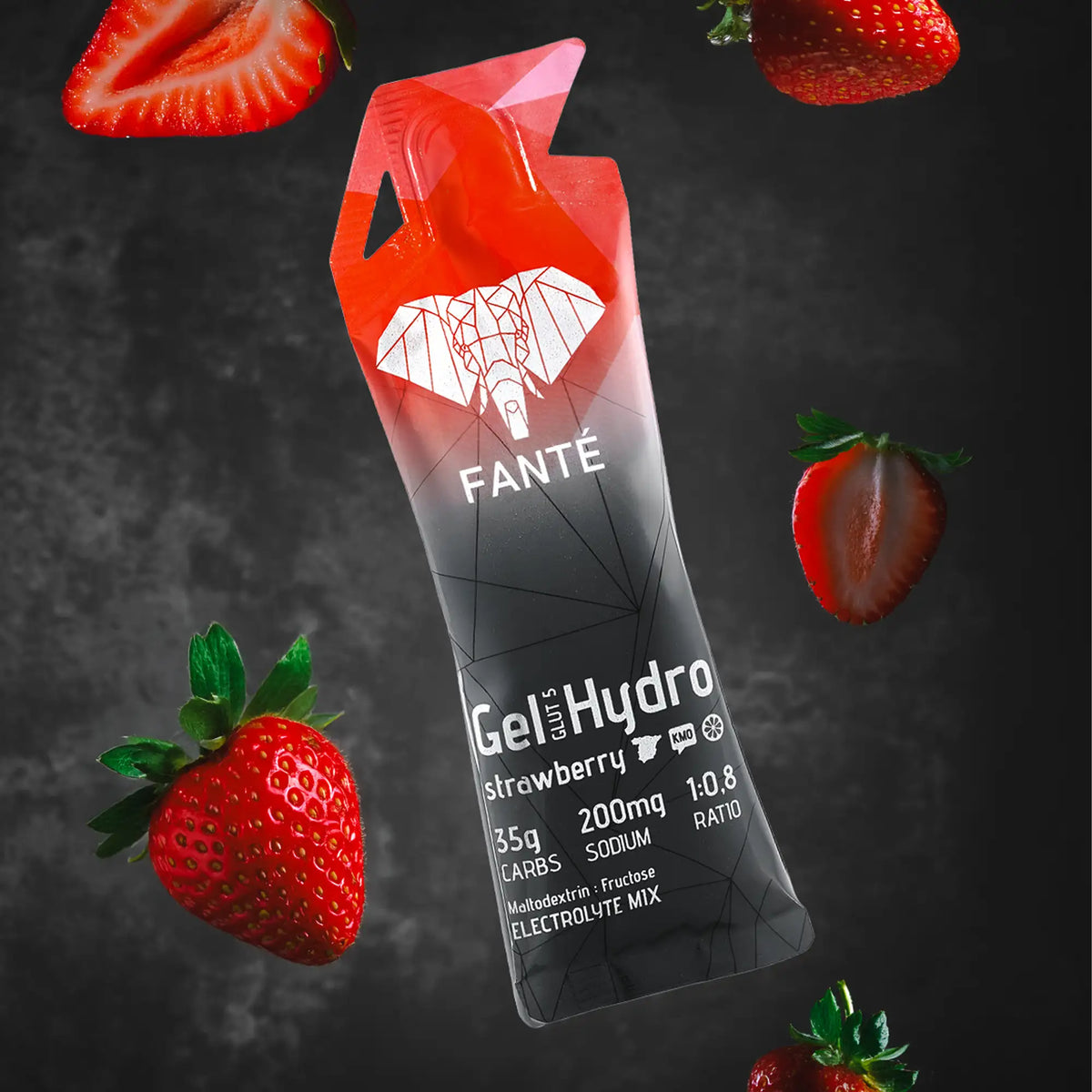
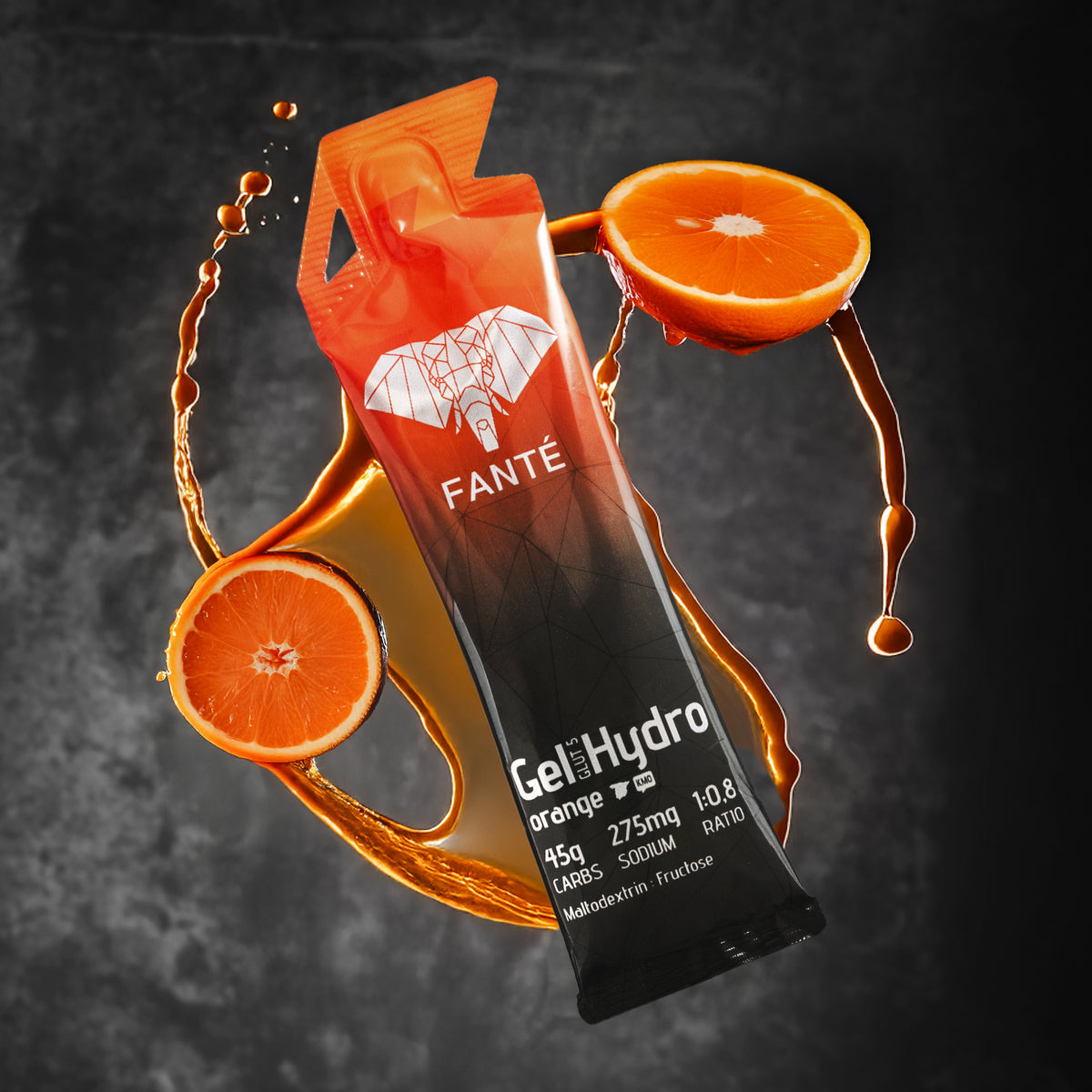
To facilitate this planning, FANTÉ offers different FANTÉ hydration products and a wide range of energy gels for triathlon that allow adapting the nutritional strategy to each athlete and distance.
On the run: tolerating gels when the body is already at its limit
The run is often the segment where most digestive problems occur. After several hours of effort, accumulated fatigue, dehydration, and decreased intestinal blood flow increase the risk of nausea, abdominal discomfort, or difficulty continuing to ingest carbohydrates.
Therefore, one of the main objectives of triathlon nutrition is to reach this last segment without a significant energy deficit. The better the strategy during cycling, the easier it will be to maintain carbohydrate intake until the finish line.
It is also advisable to space out gel intake and accompany them with water when the product requires it. This practice promotes gastric emptying and can improve digestive tolerance.
If you want to delve deeper into how to organize your strategy during endurance competitions, we recommend consulting our article on aid stations during the race.
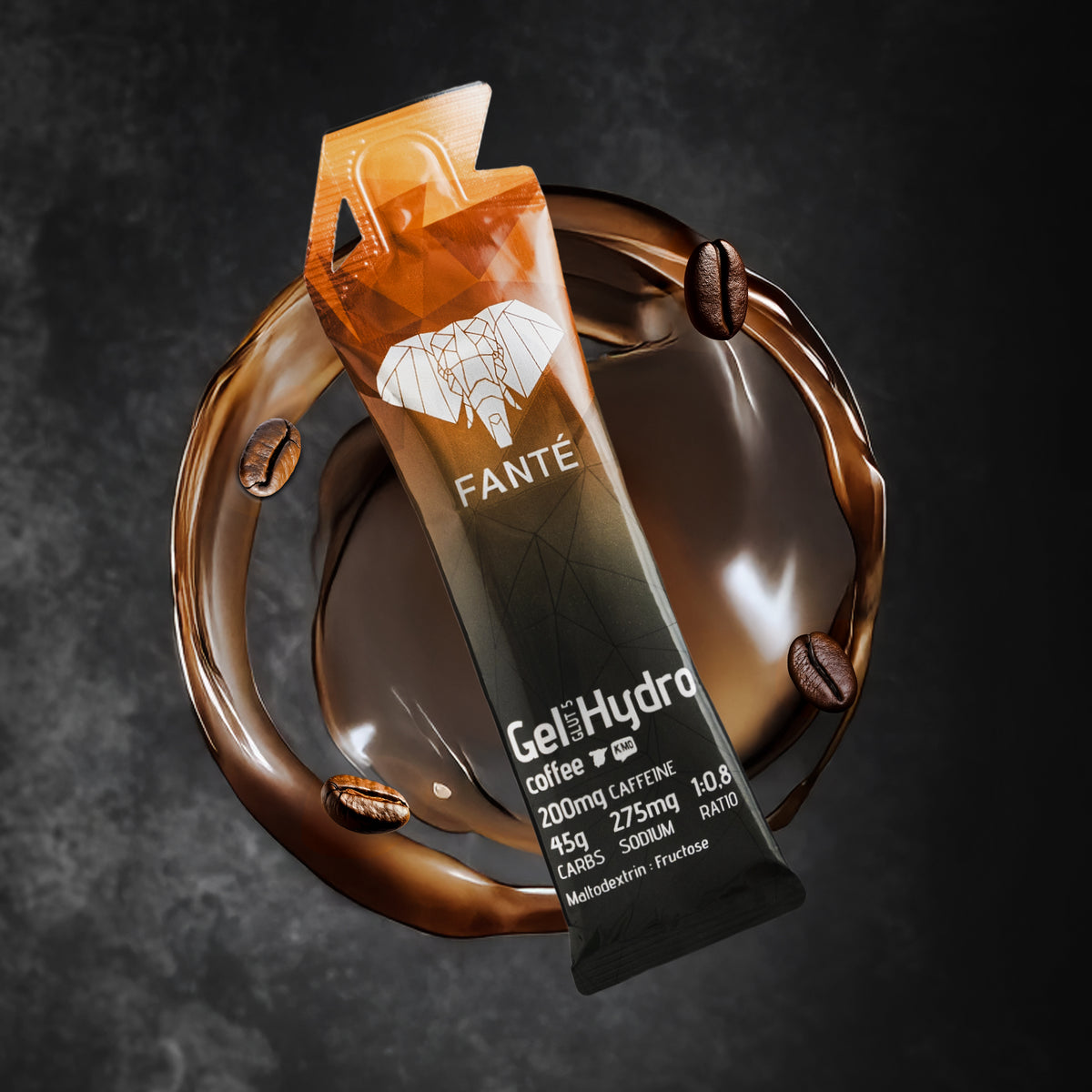
[[PRODUCTO:gel-hydro-35]]
After the triathlon: nutritional recovery based on distance
Recovery begins the moment you cross the finish line. Proper sports nutrition in triathlon promotes muscle glycogen replenishment, muscle tissue repair, and rehydration, especially when several training sessions or competitions are linked in a few days.
The most scientifically supported recommendations advise consuming carbohydrates and proteins during the first few hours after exertion, paying special attention to fluid and electrolyte replenishment.
Generally, it can be useful to follow these guidelines:
- Carbohydrates: around 1-1.2 g/kg/h during the first four hours when recovery needs to be fast.
- Proteins: approximately 20-40 g of high-quality protein to stimulate muscle protein synthesis.
- Hydration: replenish between 125% and 150% of lost weight with fluids, incorporating sodium to promote water retention.
In long-distance triathlons, where fluid and glycogen losses are very high, recovery can extend over several days. Properly planning this period is as important as preparing for the competition.
[[PRODUCTO:glycogen-recovery-drink]]
FANTÉ Packs for triathlon: personalized nutritional strategy by distance
Every triathlon presents different nutritional needs. A sprint triathlon does not require the same planning as a middle or long-distance race, where carbohydrate, fluid, and sodium intake plays a decisive role.
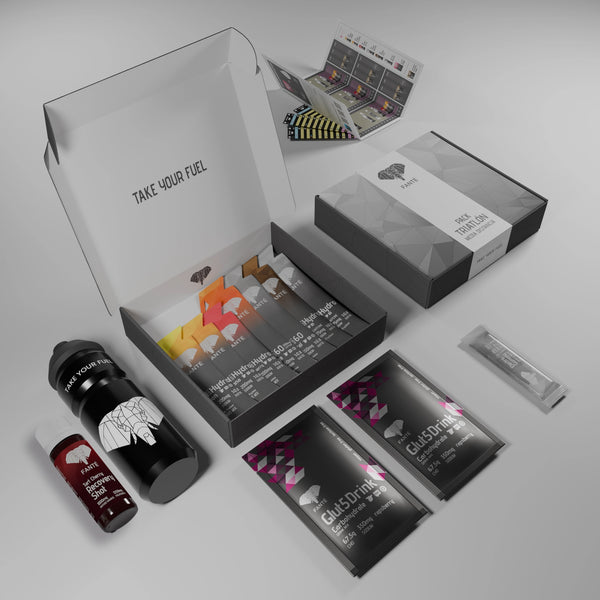
For this reason, FANTÉ has developed specific packs that facilitate the organization of triathlon sports nutrition according to the distance and expected competition time.
You can find tailored solutions for each modality:
- FANTÉ Olympic Triathlon Pack, designed for Olympic distance races.
- FANTÉ Middle Distance Triathlon Pack, designed for longer competitions.
- FANTÉ Long Distance Triathlon Pack, aimed at athletes facing prolonged endurance events.
Each pack combines energy products, hydration, and a nutritional strategy adapted to the demands of each competition, helping to reduce improvisation on race day.
Bibliography
The recommendations included in this guide are based on international consensus and available scientific evidence on sports nutrition, carbohydrate metabolism, hydration, and recovery in endurance sports.
- American College of Sports Medicine (ACSM), Academy of Nutrition and Dietetics & Dietitians of Canada. Nutrition and Athletic Performance. Medicine & Science in Sports & Exercise. 2016.
- Burke LM, Hawley JA, Wong SHS, Jeukendrup AE. Carbohydrates for training and competition. Journal of Sports Sciences. 2011.
- Burke LM, Castell LM, Casa DJ, et al. International Olympic Committee Consensus Statement on Dietary Supplements and the High-Performance Athlete. Br J Sports Med. 2018.
- Costa RJS, Snipe RMJ, Kitic CM, Gibson PR. Exercise-induced gastrointestinal syndrome: implications for health and intestinal disease. Aliment Pharmacol Ther. 2017.
- de Oliveira EP, Burini RC, Jeukendrup AE. Gastrointestinal Complaints During Exercise: Prevalence, Etiology, and Nutritional Recommendations. Sports Medicine. 2014.
- Jeukendrup AE. A Step Towards Personalized Sports Nutrition: Carbohydrate Intake During Exercise. Sports Medicine. 2014.
- Thomas DT, Erdman KA, Burke LM. Position of the Academy of Nutrition and Dietetics, Dietitians of Canada, and the American College of Sports Medicine: Nutrition and Athletic Performance. J Acad Nutr Diet. 2016.