
What to eat at Canfranc-Canfranc 2026: nutritional strategy by distance
The Canfranc-Canfranc is no ordinary mountain race. It is an alpine, technical event, with significant elevation gain and very different distances: from the explosiveness of the Uphill 6K to the extreme demands of the Ultra 100K.
Therefore, one of the most important questions is not only how to train for Canfranc, but also what to eat at Canfranc-Canfranc, how many gels to bring, how to use salts, when to drink, and which nutrition pack to choose depending on the distance.
In this guide, we explain how to prepare your nutritional strategy for Canfranc-Canfranc 2026 whether you are participating in the Uphill 6K, Classic 16K, Long Distance 26K, Marathon 45K, Ultra 70K, or Ultra 100K.
Why nutrition is key at Canfranc-Canfranc
In a race like Canfranc-Canfranc, nutrition cannot be improvised. The elevation gain, altitude, technical sections, changes in pace, and race duration mean that the body relies on a clear strategy for carbohydrates, hydration, and electrolytes.
The goal is not to consume products when hunger strikes. The goal is to reach each section with available energy, avoid sudden drops, and reduce the risk of gastrointestinal issues.
In trail running, especially in alpine races, a nutritional error can be costly for hours. Therefore, good nutrition for Canfranc-Canfranc must be prepared before the race and practiced during the preceding weeks.
Canfranc-Canfranc 2026: what changes depending on the distance
It makes no sense to use the same strategy for a 6 km vertical climb as for a 100 km ultra. The race requires adapting nutrition to the estimated time, elevation gain, aid stations, digestive tolerance, and the runner's level.
What to eat at Canfranc Uphill 6KThe priority is to arrive with energy, without feeling heavy, and with a simple intake before the start.
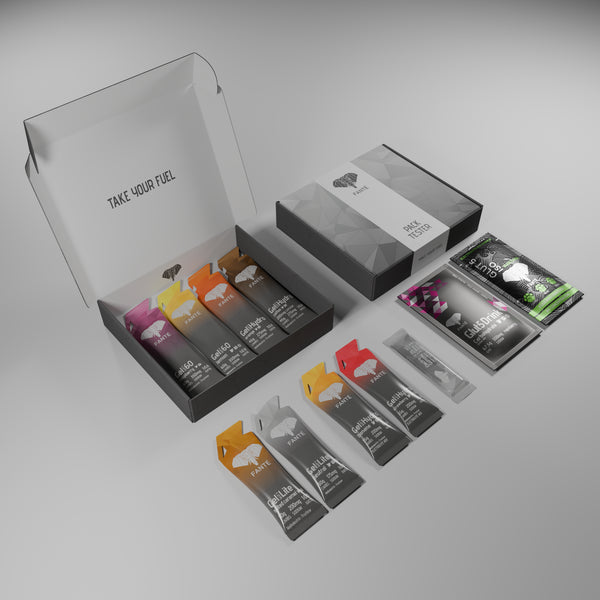
Tester PackNutrition Classic 16K CanfrancYou need to carry a compact plan of gels, water, and salts.
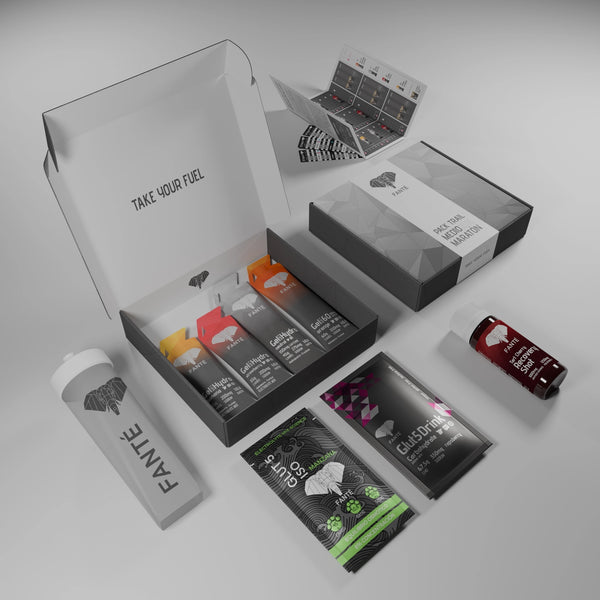
Half Marathon Trail PackWhat to eat at Canfranc Long Distance 26KEven if it's not an ultra, the elevation gain and terrain require planning.
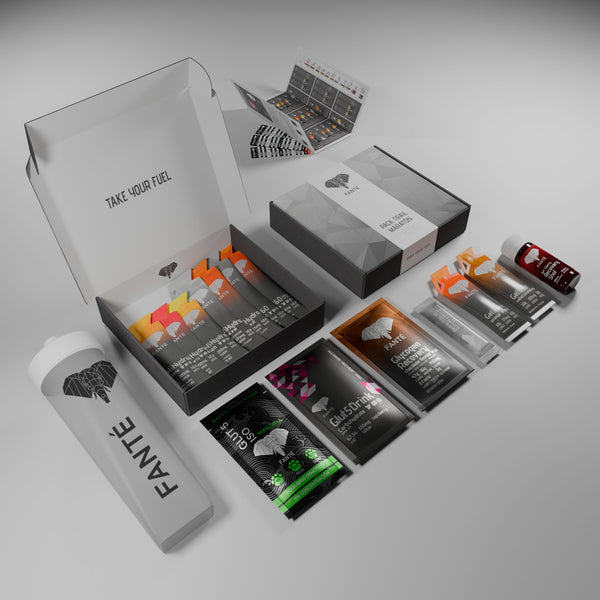
Half Marathon Trail PackCanfranc trail marathon nutritionHere, carbohydrates per hour, salts, and a plan divided by sections are already necessary.
Trail Marathon PackNutritional strategy Ultra 70K CanfrancThe priority is to sustain energy for many hours without overloading the stomach.
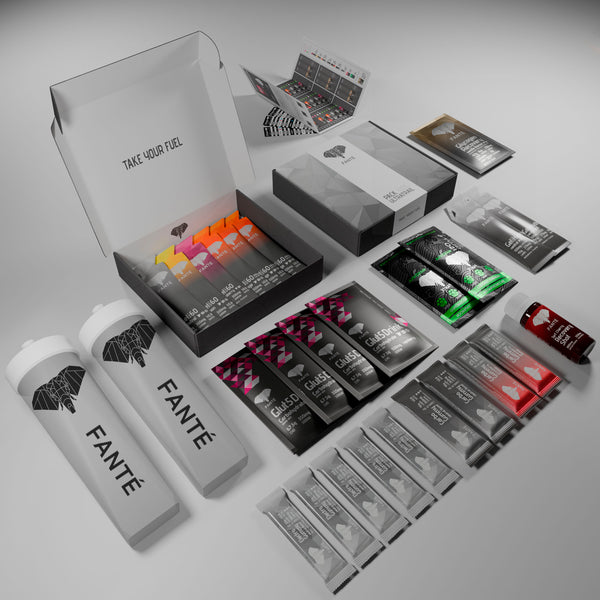
Ultra Trail PackWhat to eat at Canfranc Ultra 100KThe strategy must include the day before, night, salts, liquids, caffeine, and tolerance.
Ultra Trail PackWhat to eat at Canfranc Uphill 6K
The Canfranc Uphill 6K is a short, intense, and vertical race. The nutritional strategy should not be heavy. Here, we are not looking to load the stomach, but to arrive with full reserves and an easy-to-digest intake before the start.
For this distance, the most important thing is:
- Eat a simple pre-race meal, rich in carbohydrates and low in fat or fiber.
- Avoid trying new products on race day.
- Take a gel or carbohydrate intake before the start if you have already tested it in training.
- Drink in a controlled manner, without feeling heavy.
For the Uphill 6K, we recommend the Tester Pack, designed to test products and choose which format you tolerate best before longer races.
What to eat at Canfranc Classic 16K
The Classic 16K Canfranc already requires a clearer strategy. It is a short race in terms of kilometers, but not easy in terms of effort. Furthermore, as a self-sufficient race, planning equipment and nutrition becomes key.
In the Classic 16K, it is advisable to prioritize a simple strategy: few products, good hydration, and an easy-to-execute plan for climbs, descents, and technical sections.
The plan should focus on:
- Carrying enough gels so as not to depend on hunger.
- Taking carbohydrates from the start if the estimated time approaches several hours.
- Avoiding excessive fiber or fat before the start.
- Using salts if it is hot or if you sweat a lot.
For this distance, we recommend the Half Marathon Trail Pack, because it better covers a multi-hour race than a simple test pack.
What to eat at Canfranc Long Distance 26K
The Long Distance 26K Canfranc is an intermediate distance, but it should not be interpreted as an easy race. The elevation gain, altitude, and terrain make the available energy decisive.
In the Long Distance 26K, nutrition must cover more hours of effort than a short race, but without reaching the complexity of an ultra: tolerable gels, salts, and a regular plan from the first kilometers.
In a race of this type, the goal should be to maintain a constant intake of carbohydrates. There is no need to wait until you are empty. In fact, when the feeling of emptiness appears, you are usually already late.
- Plan gels by time, not just by kilometers.
- Combine water with salts if the day is hot or humid.
- Use foods or products that you have already tested on long runs.
- Avoid relying solely on aid stations.
For the Long Distance 26K, we also recommend the Half Marathon Trail Pack, especially if your goal is to run with a simple, tolerable, and easy-to-execute strategy.
Nutrition for the Canfranc Marathon 45K
The Canfranc Marathon 45K already enters a territory where nutrition can decide the race. Here we are talking about many hours, a lot of elevation gain, and an accumulation of fatigue that can amplify any error.
This section naturally covers Canfranc trail marathon nutrition, along with searches such as gels for trail marathon, salts for mountain marathon, and mountain marathon nutritional strategy.
In the Marathon 45K, the plan must answer three questions:
- How many carbohydrates per hour will you consume?
- How much liquid and sodium do you need based on temperature and sweating?
- At what times does it make sense to use caffeine?
For this distance, we recommend the Trail Marathon Pack, designed to cover a long mountain race with gels, drink, salts, and a practical intake structure.
Nutrition for Canfranc Ultra 70K
The Canfranc Ultra 70K requires thinking like an ultradistance. It's not enough to carry gels. You need to know when to take them, how to alternate them with drinks, when to replenish salts, and how to prevent your stomach from shutting down after many hours.
In the Ultra 70K, the goal is to sustain energy for many hours, anticipate hydration, and prevent digestive fatigue from forcing you to stop eating in the final sections.
In an ultra, the key is to sustain. Sustain energy, hydration, concentration, and digestive tolerance.
- Divide the strategy by sections or by hours.
- Don't wait for aid stations to start eating.
- Alternate textures and flavors to avoid saturation.
- Plan salts from the start if conditions are hot.
- Use caffeine only if you know how it affects you.
For this distance, we recommend the Ultra Trail Pack, designed for long races where the nutritional strategy must endure for many hours.
What to eat at Canfranc Ultra 100K
The Canfranc Ultra 100K is the distance where planning becomes most important. Here, we are not just talking about performance. We are talking about being able to continue eating, drinking, and making decisions when you have already been racing for many hours.
We all ask ourselves the same questions: what to eat at Canfranc Ultra 100K, Canfranc 100K nutrition, 100 km ultra trail nutritional strategy, long-distance ultra trail nutrition, but do we really know what we need?
The strategy for a 100 km race must begin before bib pickup:
- Carbohydrate loading the day before or the days before depending on tolerance and objective.
- A familiar breakfast, low in fiber and easy to digest.
- Carbohydrate plan per hour from the first part of the race.
- Control of sodium, water, and carbohydrate drinks.
- Caffeine plan for moments of fatigue, not as an improvised solution.
- Alternation of flavors and textures to avoid digestive rejection.
For the Ultra 100K, we recommend the Ultra Trail Pack, accompanied by a specific strategy by hours, sections, and aid station points.
Quick table: which FANTÉ pack to choose for Canfranc-Canfranc
| Distance | Nutrition concern | Nutritional objective | Recommended Pack |
|---|---|---|---|
| Uphill 6K | what to eat at Canfranc Uphill 6K | Arrive light, with energy, and without heaviness. | Tester Pack |
| Classic 16K | nutrition Classic 16K Canfranc | Self-sufficiency, compact gels, and salts. | Half Marathon Trail Pack |
| Long Distance 26K | what to eat at Canfranc Long Distance 26K | Constant carbohydrates and good hydration. | Half Marathon Trail Pack |
| Marathon 45K | Canfranc trail marathon nutrition | Hourly strategy, planned salts, and caffeine. | Trail Marathon Pack |
| Ultra 70K | nutrition Ultra 70K Canfranc | Sustain energy for many hours. | Ultra Trail Pack |
| Ultra 100K | what to eat at Canfranc Ultra 100K | Complete plan: day before, race, night, salts, and tolerance. | Ultra Trail Pack |
Day before: carbohydrate loading for Canfranc-Canfranc
The nutritional strategy doesn't start at the finish line. In long races, especially the Marathon 45K, Ultra 70K, and Ultra 100K, the day before can make a significant difference.
At FANTÉ, we recommend preparing your carbohydrate load in moderation, increasing the proportion of carbohydrates without making the day before a heavy or difficult-to-digest meal.
The key is to arrive with full reserves, but without feeling bloated, heavy, or experiencing gastrointestinal discomfort. In races with a lot of elevation gain, it's not always desirable to over-load if that means arriving with more weight or a worse digestive feeling.
Before Canfranc-Canfranc, it's advisable to prioritize:
- Rice, pasta, white bread, potato, or simple cereals.
- Peeled fruit if you tolerate it well.
- Simple, low-fat protein.
- Low fiber in the last meals.
- Constant hydration throughout the day.
Hydration and salts for Canfranc-Canfranc
At Canfranc, hydration depends on temperature, humidity, duration, and individual sweating. Not all runners need the same thing, but almost all need a more specific plan than "drink when you can."
In alpine races, drinking only water might not be enough if the duration is long or if sodium loss is high. Therefore, a good nutritional strategy for Canfranc-Canfranc must combine liquid, sodium, and carbohydrates consistently.
- For short distances, avoid arriving with excess liquid in your stomach.
- For 16K and 26K, carry a minimum of water and salts along with gels if it's hot.
- For 45K, 70K, and 100K, plan hydration from the first section. It is essential.
- Don't wait until you're intensely thirsty to drink.
- Practice the strategy before the race.
[[COMUNIDAD_CTA]]
Caffeine in trail running: when to use it at Canfranc
Caffeine can be useful in mountain races, but it should not be used without planning. It can help reduce the perception of effort and improve concentration, but it can also increase digestive discomfort if used incorrectly.
At Canfranc-Canfranc, caffeine makes more sense in:
- Middle and final sections of the Marathon 45K if you already tolerate it well.
- Moments of accumulated fatigue in Ultra 70K. One intake every 2-2.5 hours.
- Night sections or phases of low concentration in Ultra 100K.
- Before key climbs, about 20 minutes before, provided you have tested it previously.
Do not try caffeine for the first time on race day. Just as you train descents, poles, or your backpack, you should also train with caffeine.
Common nutritional mistakes at Canfranc-Canfranc
Many runners train very well but arrive at the race without a real nutritional strategy. These are some common mistakes:
- Starting without having tested gels during long training sessions.
- Consuming too much fiber the day before.
- Drinking only water for many hours.
- Waiting until hungry to start eating.
- Carrying products that don't go down well with high exertion.
- Relying solely on aid stations.
- Not adapting the strategy to the distance.
Nutrition for Canfranc should not depend on improvisation. It should be written down, practiced, and adapted to your distance.
Conclusion: at Canfranc, the most improvised doesn't win
The Canfranc-Canfranc is prepared by training elevation gain, technique, descents, equipment, and mindset. But it is also prepared by training nutrition.
A well-designed strategy can help you maintain energy, reduce dips, better control hydration, and avoid improvised decisions when fatigue is already present.
If you are going to run the Uphill 6K, Classic 16K, Long Distance 26K, Marathon 45K, Ultra 70K, or Ultra 100K, start preparing your nutrition before the race.
Because in an alpine race, the strategy doesn't begin when you're hungry. It starts much earlier.