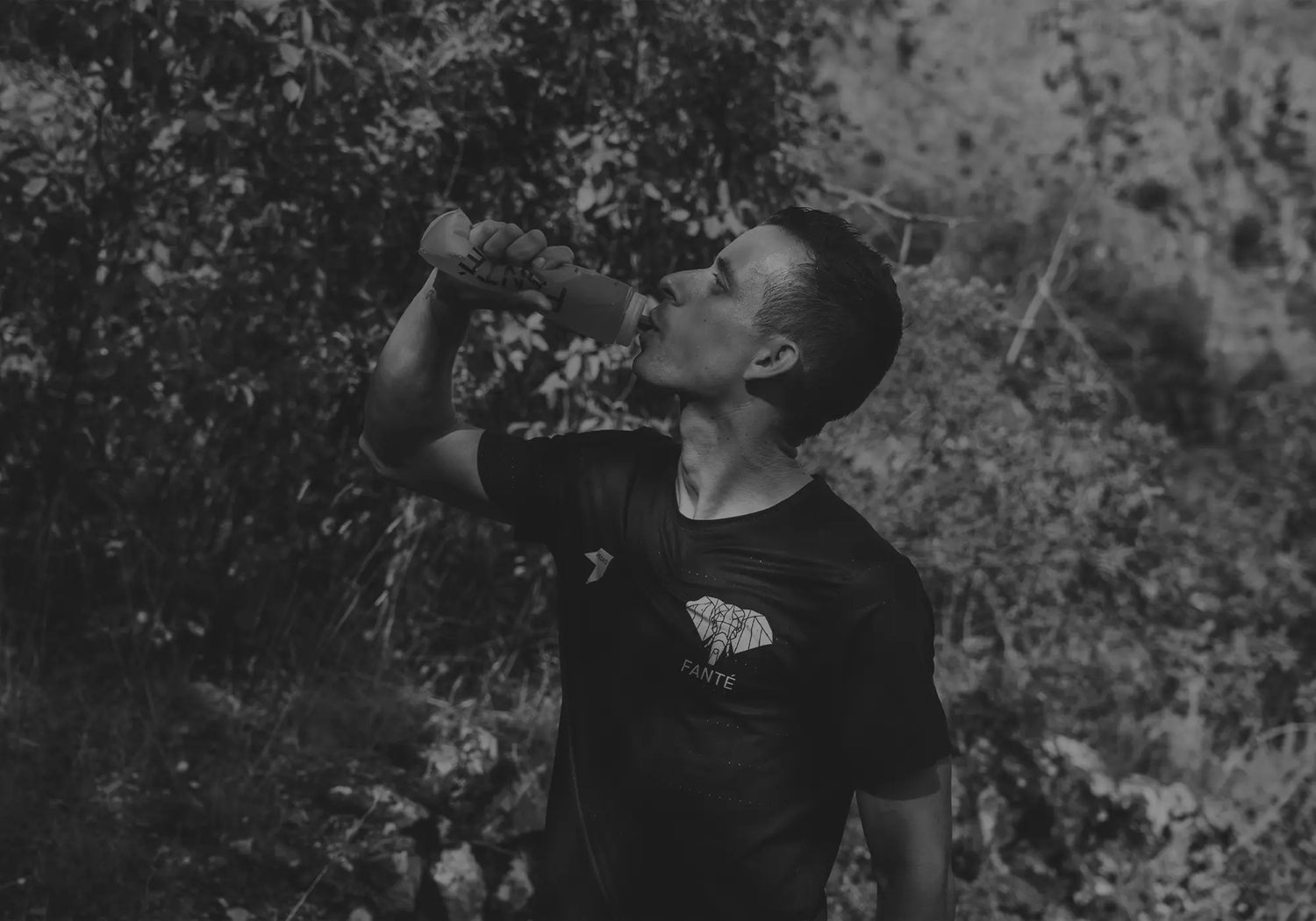
Running in summer can become a real challenge for performance and health if you don't properly adapt your hydration and nutrition strategy.
High temperatures increase fluid loss, raise heart rate, and accelerate fatigue, even when you maintain the same pace as in other seasons of the year.
Therefore, following a series of tips for running in summer will not only help you perform better but also avoid problems such as dehydration, cramps, or a sharp drop in performance.
[[COMUNIDAD_CTA]]
Why heat affects your performance more than you think
Heat doesn't just make the session more uncomfortable. It has a direct physiological impact on your ability to sustain effort.
When you run in high temperatures, your body must direct a greater amount of blood flow to the skin to dissipate heat, which partially reduces the supply of oxygen and nutrients to the muscle.
This results in:
- Increased heart rate
- Greater perception of effort
- Faster fluid loss
- Reduced sustainable pace
Therefore, hydration during a run becomes even more important during the summer months.
What happens to your body when you run in extreme heat
During a run in the heat, the body increases sweating to regulate temperature.
The problem is that this response involves a continuous loss of water, sodium, and other electrolytes.
When this loss is not compensated, performance drops rapidly.
Sweat rate in summer: how much fluid you can lose
Fluid loss can vary greatly among athletes. In summer, some runners can lose between 0.8 and 1.5 liters per hour, or even more.
Therefore, calculating your dehydration rate is one of the most important steps to adapt your hydration strategy.
In addition, excessive sweating during exercise can further increase these needs.
How to hydrate before going for a run in summer
Hydration starts before the session.
One of the most common mistakes is to drink only just before leaving.
Pre-hydration: 2-3 hour protocol beforehand
A good strategy is to start hydration 2–3 hours before training or competition.
As a practical reference:
- 400–600 ml in the 2–3 hours prior
- 150–250 ml 15–20 minutes before
This helps to start the session with an optimal hydration status (euhydration).
The role of sodium in pre-hydration in the heat
When it's hot, water isn't enough. Sodium plays a fundamental role in fluid retention and maintaining plasma volume.
Recent evidence shows that sodium hyperhydration strategies improve fluid retention and reduce body mass loss during exercise in the heat.
Tips for running in summer
Here are the main tips for running in summer that really make a difference.
How much and how often to drink when it's hot
As a general guide:
- Small sips every 10–15 minutes
- Between 400 and 800 ml/h
This should be adjusted according to your individual sweat rate.
Signs of dehydration you shouldn't ignore in summer
Some clear signs are:
- Intense thirst
- Headache
- Sudden drop in pace
- Dizziness
- Cramps
- Abnormally high heart rate
You should never ignore them.
Difference between dehydration and hyponatremia
Dehydration involves water loss greater than replenishment.
Hyponatremia occurs when you drink too much water without replenishing sodium.
This can be even more dangerous.
Therefore, in summer, hydration should include fluids + electrolytes.
Nutrition and hydration in summer: beyond water
When the session exceeds 60 minutes, water is no longer enough.
The strategy should include:
- Carbohydrates
- Sodium
- Electrolytes
Electrolytes and carbohydrates: what you need and in what quantities
In long or intense sessions, a good reference is:
- 30–60 g CHO/h minimum
- 300–600 mg sodium/h
This will depend on the temperature, duration, and digestive tolerance.
Fanté products for running in summer without compromising performance
Hydration for running in summer should integrate fluids, sodium, and carbohydrates.
GLUT 5 DRINK
GLUT 5 DRINK provides carbohydrates and sodium, being especially useful for long runs and demanding workouts.
[[PRODUCTO: glut-5-drink]]
ISO DRINK
ISO DRINK helps maintain fluid balance and electrolyte replenishment when sweating is high.
[[PRODUCTO: iso-drink]]
Bibliography
- Casa DJ, Stearns RL, Lopez RM, et al. Influence of hydration on physiological function and performance during trail running in the heat. Journal of Athletic Training. 2010;45(2):147–156.
- Cheuvront SN, Kenefick RW. Dehydration: physiology, assessment, and performance effects. Comprehensive Physiology. 2014;4(1):257–285.
- Hoffman MD, Stuempfle KJ. Sodium supplementation and exercise-associated muscle cramping during a 161-km ultramarathon. British Journal of Sports Medicine. 2015;49(16):1039–1043.
- Sawka MN, Burke LM, Eichner ER, et al. American College of Sports Medicine position stand: Exercise and fluid replacement. Medicine & Science in Sports & Exercise. 2007;39(2):377–390.
- Baker LB, Jeukendrup AE. Optimal composition of fluid-replacement beverages. Comprehensive Physiology. 2014;4(2):575–620.
- Kenefick RW. Drinking strategies: planned drinking versus drinking to thirst. Sports Medicine. 2018;48(Suppl 1):31–37.