
Knowing how to take a gel for running is key to avoiding energy dips, digestive discomfort, and nutritional errors during a race. Energy gels can be a very useful tool in running, especially in half marathons, marathons, trail running, or long training sessions, but they must be used with a clear strategy.
A gel alone doesn't work miracles. Its main function is to provide fast-acting carbohydrates to help maintain pace when glycogen stores begin to deplete. Therefore, rather than taking it "when you can't go on anymore," it's ideal to incorporate it into a planned regimen.
In this guide, we explain how to take an energy gel, how often to take it, how much water to accompany it with, and how to adapt the regimen according to the distance. We will also look at how to take gels in marathons and half marathons and what mistakes you should avoid if you want to train your nutritional strategy without digestive problems.
If you are preparing for a race, you can complement this guide with our content on race nutrition stations and race hydration.
Why you need energy gels when running
During a race, the body uses different energy sources. At easy paces, it may rely more on fats, but as intensity increases, carbohydrates become more prominent. The problem is that muscle glycogen and liver glycogen stores are limited.
In long efforts, especially over 60-90 minutes, external carbohydrate intake can help maintain energy availability and delay the onset of fatigue. This is where energy gels come in.
Gels are practical because they concentrate carbohydrates in an easy-to-carry format, quick to consume, and designed for use during exertion. This makes them a common choice for runners who want to maintain pace without relying solely on aid stations.
Even so, for them to work well, you need to know how to take them. It's not enough to carry several gels in your pocket: you need to calculate the timing, frequency, available water, and digestive tolerance.
How to take energy gels: basic keys before starting
The answer to how energy gels are taken depends on the duration of the race, intensity, type of gel, amount of carbohydrates per unit, and your prior experience.
As a practical rule, gels should be taken before a dip occurs, not when fatigue is already evident. The goal is to maintain a constant intake of carbohydrates so that the body does not have to rely exclusively on its internal reserves.
It's also important to train digestive tolerance. The gut can adapt, but it needs practice. Therefore, you should never try a new gel regimen on race day.
When to take the first gel during a race
A common guideline is to take the first gel between 30 and 45 minutes into the race, especially if the event will last longer than 90 minutes. In very long races, starting too late can leave you with an energy deficit in the second half.
In a half marathon, the first gel can be taken before the start or during the first few kilometers, depending on breakfast, pace, and estimated race time. In a marathon, it is usually advisable to start early and maintain a consistent regimen.
If you want to know how to take a gel for running without making mistakes, remember this idea: the first gel should not be an emergency resource, but the beginning of a strategy.
Frequency
The frequency depends on the grams of carbohydrates you want to provide per hour. As a general reference, many runners use between 50 and 60 g of carbohydrates per hour as a minimum in endurance races. In marathons or longer events, some trained athletes can achieve higher intakes if they have worked on intestinal tolerance.
If a gel provides 30-45 g of carbohydrates, a simple regimen could be to take one gel every 30-40 minutes. If the gel provides more carbohydrates, the frequency can be reduced or adjusted according to the target intake per hour.
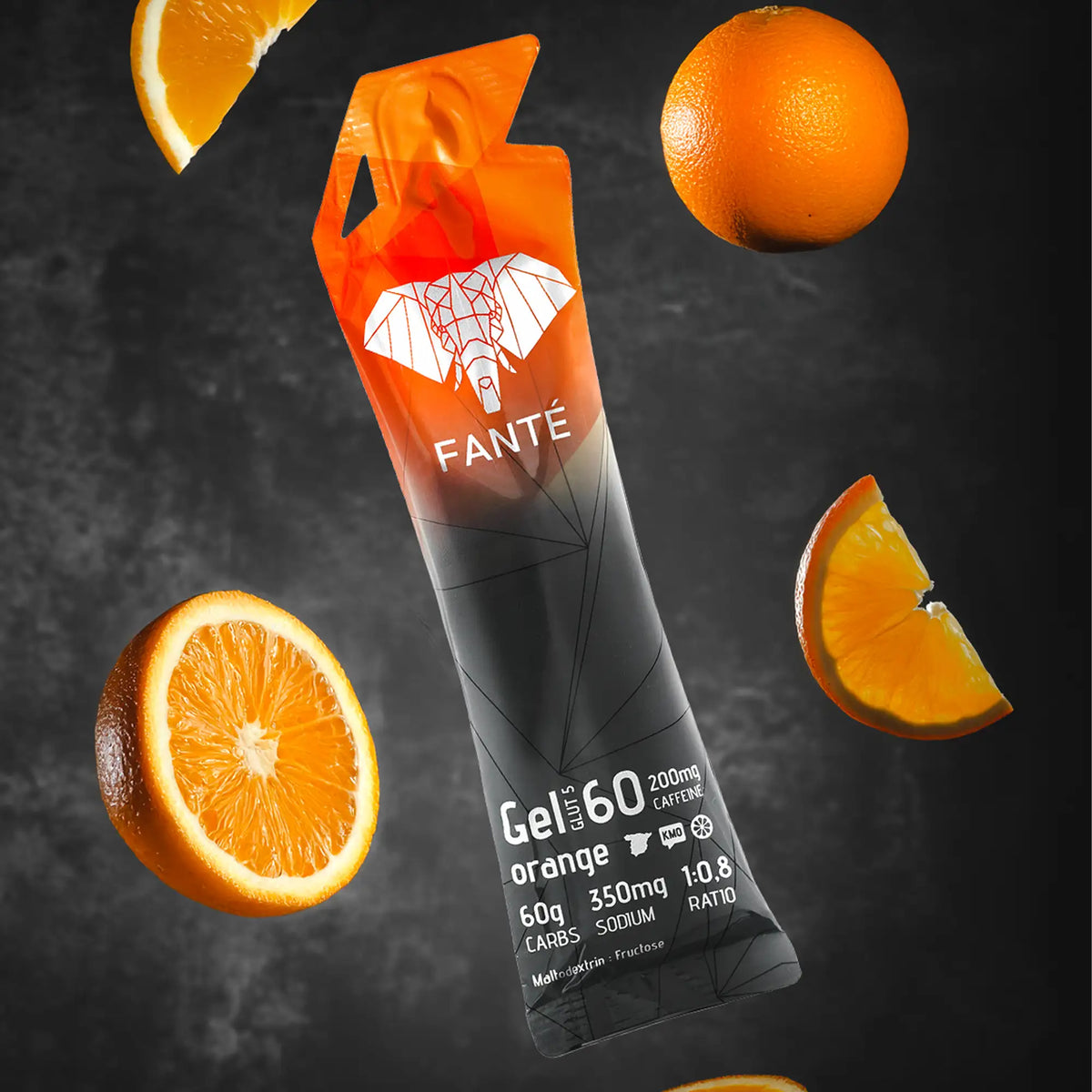
In the case of Gel 60, by providing 60 g of carbohydrates, it can be used as a concentrated option for runners looking to cover a larger part of their needs with fewer doses. You can see more options in our energy gels.
How much water should energy gels be taken with?
All energy gels work best when accompanied by water. Taking them without liquid can increase the feeling of concentration in the stomach and, in some people, cause digestive discomfort.
As a practical guideline, you can take small sips of water with the gel, especially if it is a dense gel or has a high carbohydrate content. In a race, this means planning to take the gel near an aid station or carrying your own hydration if you don't have enough water points.
It is not advisable to accompany a gel with a highly concentrated carbohydrate drink if you have not tried it before, because you can overload the digestive system. The combination of gel, water, and electrolytes should be trained just like race pace.
How to take gels in a marathon: regimen per kilometer
Knowing how to take gels in a marathon is especially important because the distance demands a sustained strategy. In a marathon, the most common mistake is to start taking gels too late, when the energy depletion is already evident.
A guiding regimen for a marathon could be:
- Before the start: if you tolerate it well, you can take a small amount of carbohydrates or a gel close to the start, especially if many hours have passed since breakfast.
- Kilometer 8-10: first gel, to start providing carbohydrates before fatigue appears.
- Kilometer 16-18: second gel.
- Kilometer 24-26: third gel, a key moment to maintain pace before the toughest part.
- Kilometer 32-34: fourth gel, especially useful if pace, heat, or race duration warrant it.
This regimen must be adjusted to your target time. A runner who takes 2 h 45 min does not need exactly the same as one who takes 4 h 30 min. Therefore, rather than just thinking in kilometers, it is better to think in grams of carbohydrates per hour.
For example, if you want to provide 60 g/h and your gel contains 30 g, you would need approximately two gels per hour. If you use a gel with 60 g of carbohydrates, the regimen may be different. The key is to calculate the strategy before the race and practice it on long runs.
Key differences from a half marathon
The strategy for how to take gels in a half marathon is usually simpler than in a marathon, because the total duration is shorter. Even so, if you are going to run for more than 75-90 minutes, a gel can help you maintain intensity in the second half.
A common regimen for a half marathon can be:
- Before the start: optional, depending on breakfast and tolerance.
- Kilometer 7-8: first gel if the estimated time exceeds 75-90 minutes.
- Kilometer 13-15: second gel if the race lengthens, the pace is demanding, or you want to ensure energy until the end.
For fast runners, one gel before or during the race may be enough. For runners who take more than 1 h 45 min - 2 h, it may make sense to take one or two gels during the event.
The main difference is that in a half marathon there is less margin for error and less time to digest. Therefore, if you have doubts about how to take gels for running at this distance, prioritize a simple, proven, and easy-to-execute regimen.
Most common mistakes when taking gels for running
One of the most common mistakes is taking the gel too late. If you wait until you feel empty, you may have already accumulated too much fatigue. Gels work best as prevention, not as rescue.
Another frequent mistake is not accompanying them with water. Although some formats are more liquid, many runners tolerate gels better when they take them with small sips. This is especially important in hot races or with concentrated gels.
It is also common to take too many gels without having trained with them. The digestive system needs adaptation, and a high intake of carbohydrates without practice can cause nausea, bloating, diarrhea, or a feeling of heaviness.
Another mistake is mixing gels, isotonic drinks, bars, and other products without calculating the total carbohydrates. More is not always better. The important thing is to adjust the amount per hour and ensure that the body tolerates it.
Finally, many runners do not check the type of carbohydrates in the gel. Formulas with carbohydrate combinations, such as maltodextrin and fructose, can help increase absorption when high intakes are sought, provided that tolerance has been previously trained.
In summary, to understand how to take an energy gel correctly, three ideas must be remembered: take it before a dip, accompany it with adequate hydration, and test the regimen in training.
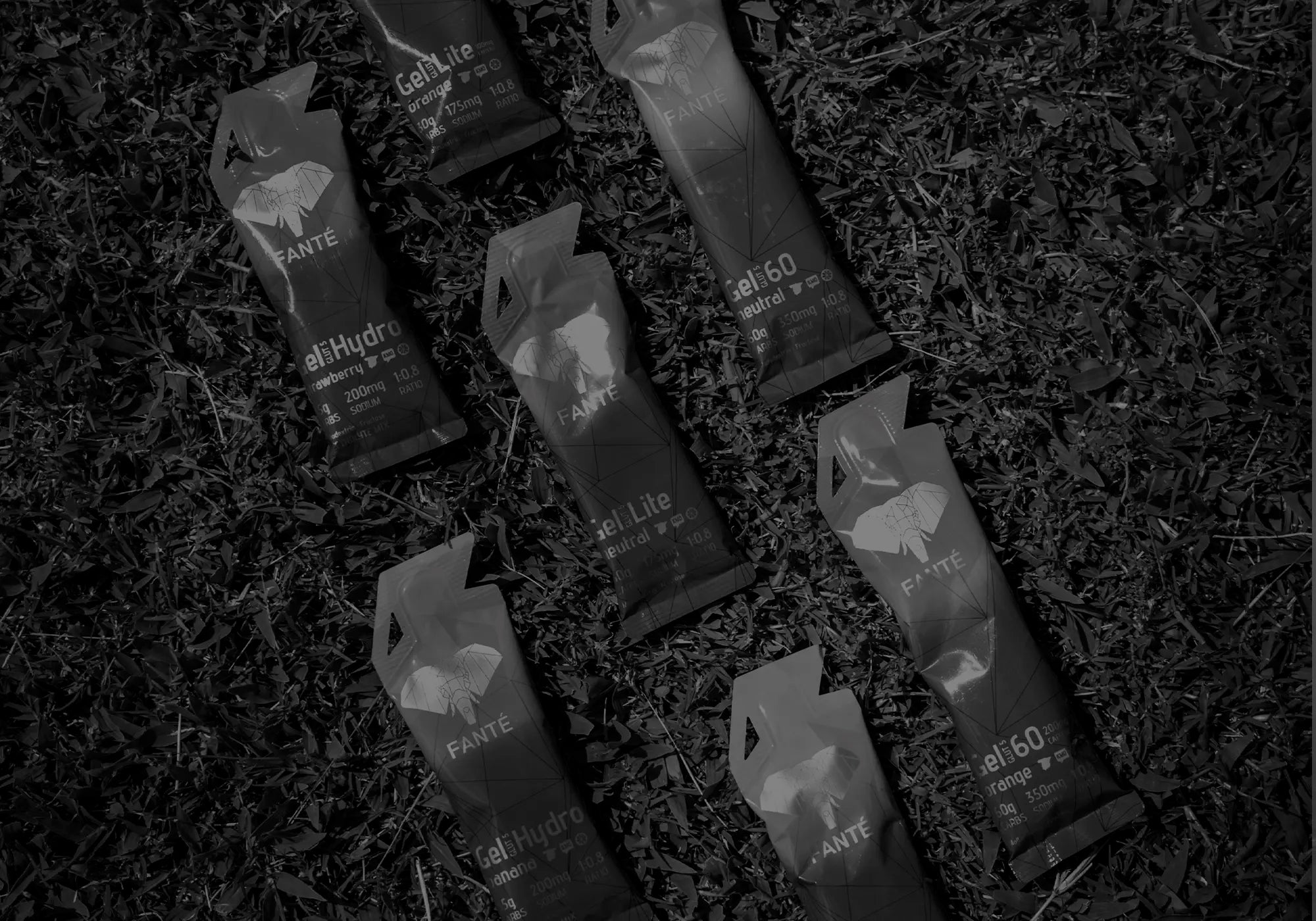
Fanté gels for running without digestive discomfort and 100% natural
At Fanté, gels are designed for endurance athletes who need to provide carbohydrates during exercise in a practical and planned way.
Within our energy gels you can find different options depending on the type of race, duration, and your texture preferences.
- Gel 60 can be an interesting option for runners looking for a high carbohydrate intake without caffeine. Its formula with maltodextrin and fructose in a 1:0.8 ratio is designed to promote high carbohydrate availability during prolonged efforts.
- Gel 60 Caffeine can be suitable for races or training sessions where, in addition to carbohydrates, you are looking for the support of caffeine at key moments of the race. It can be useful in the middle-to-end part of a marathon, provided you have tested your tolerance beforehand.
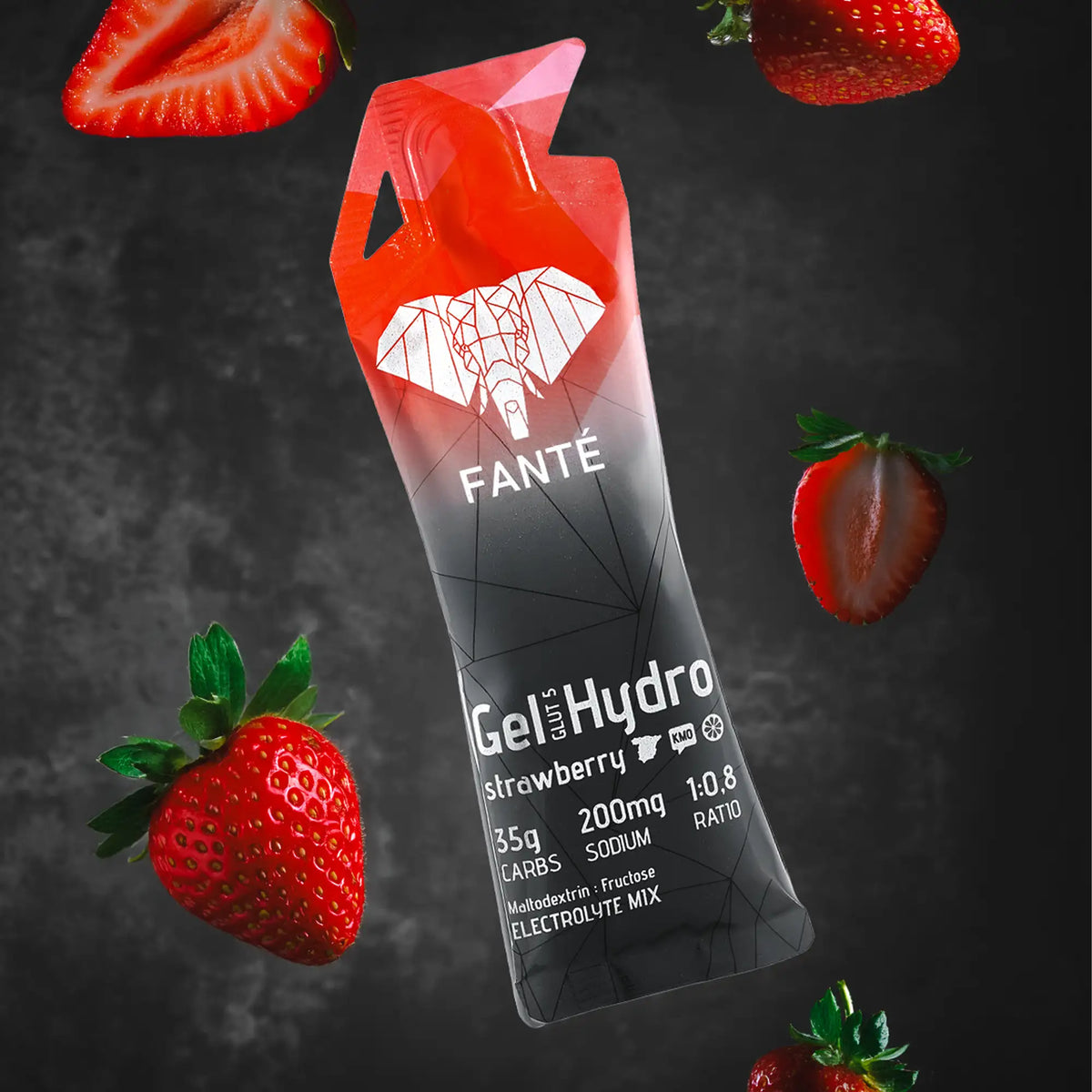
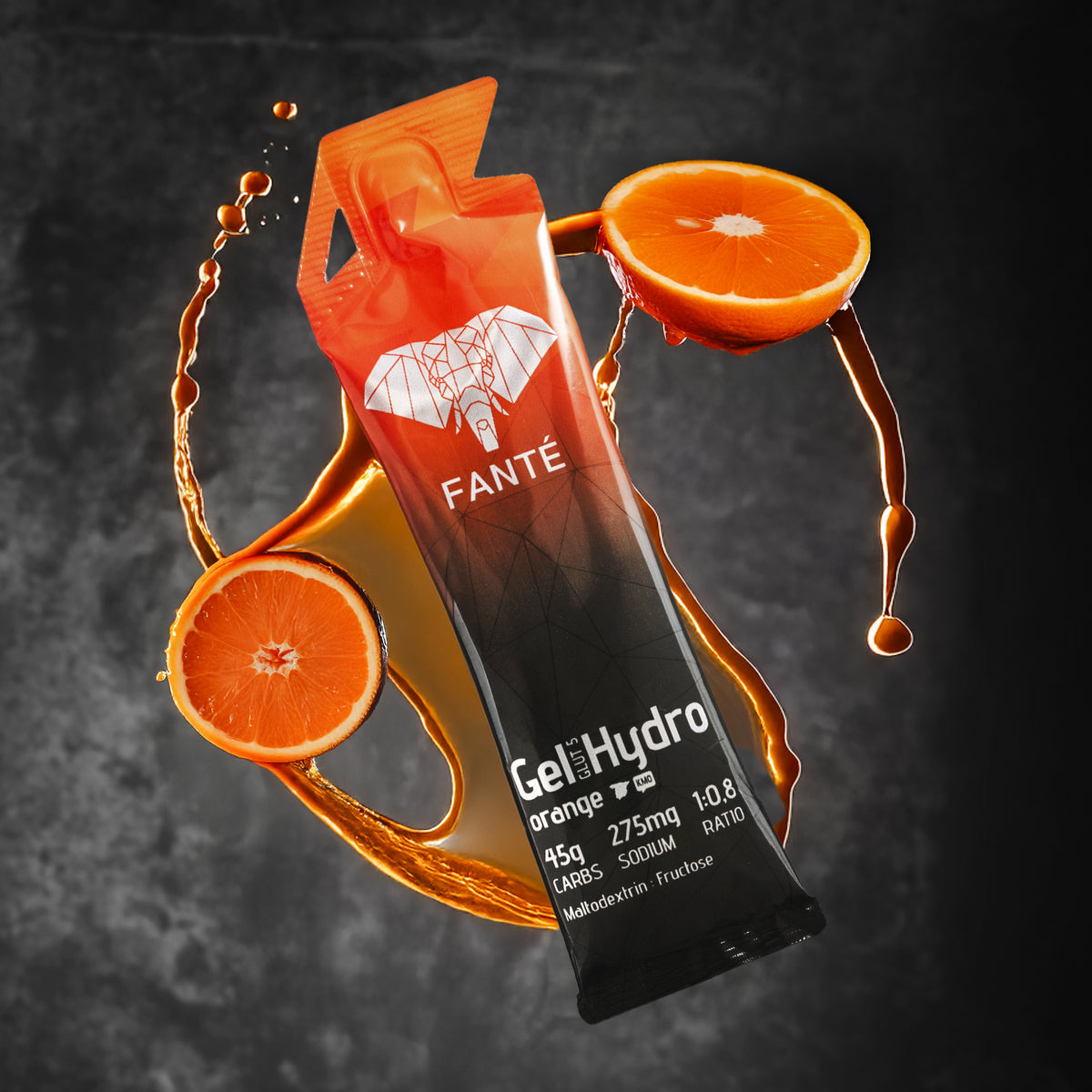
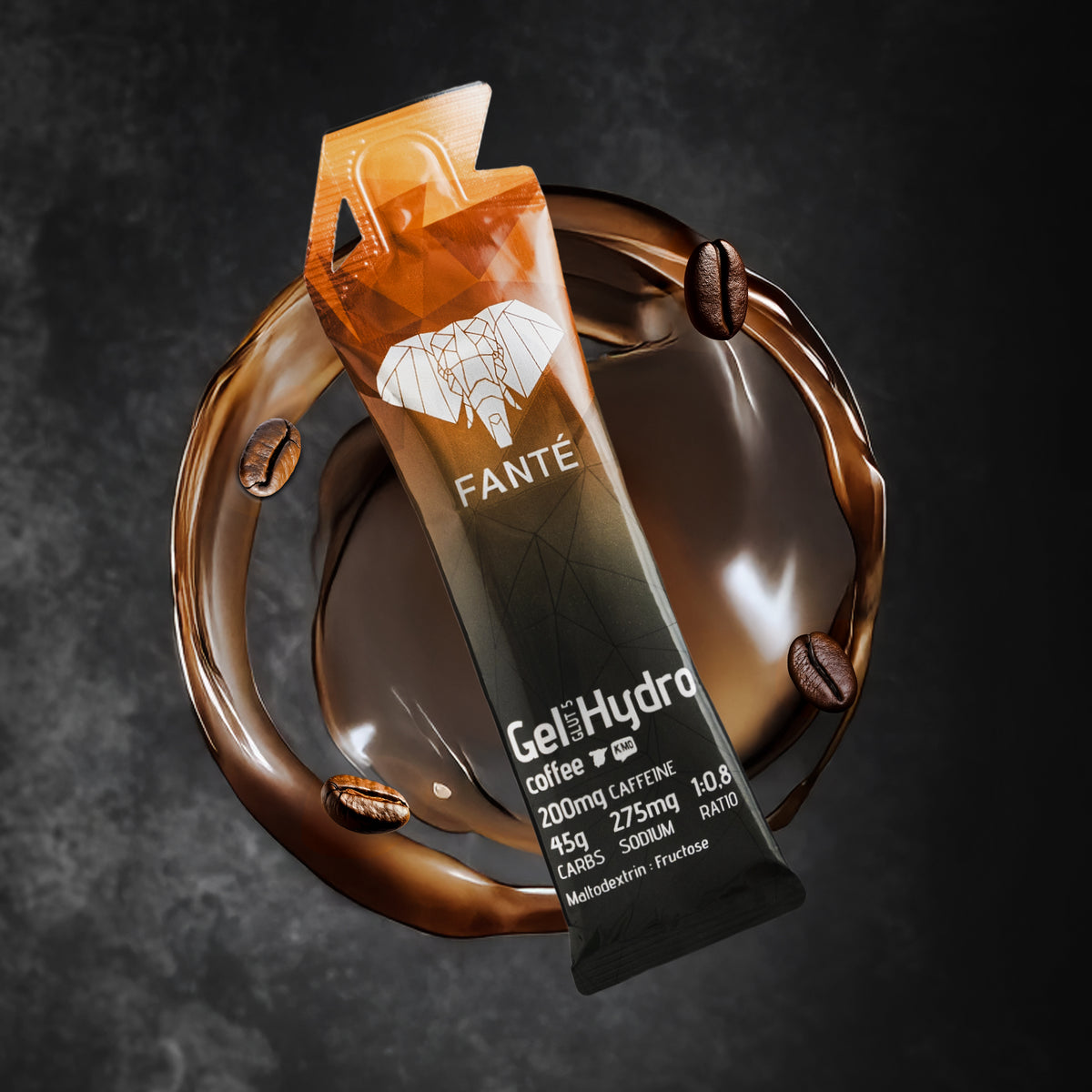
- Gel Hydro 35 and Gel Hydro 45 can be interesting alternatives for those who prefer a more fluid and easy-to-take texture during the race. With almost no need to drink water when taking it.
The choice should not be based solely on taste or the number of gels you carry, but on the carbohydrate goal per hour, water availability, race duration, and your digestive tolerance.
If you are preparing for a long race, combine your gel strategy with good race hydration planning. Performance does not depend only on carbohydrates: fluids, sodium, temperature, pace, and prior experience also influence.
Bibliography
Academy of Nutrition and Dietetics, Dietitians of Canada and American College of Sports Medicine. Nutrition and Athletic Performance.
Jeukendrup AE. Multiple transportable carbohydrates and their benefits.
International Olympic Committee. IOC consensus statement: dietary supplements and the high-performance athlete.