Why do we need to know the sweat rate?
The goal of drinking during exercise is to prevent significant dehydration and allow for peak performance. Your sweat rate determines your fluid needs during exercise, whether you're running a marathon, competing in a long-distance triathlon, or playing a game of basketball or soccer.
Why do I need to know my sweat rate?
Everyone sweats differently. Genetics, gender, training, and acclimatization all affect your sweat rate. Also, the harder you work out, the more you sweat. The hotter it is, the more you sweat. And other factors like humidity, sun, wind, and clothing will affect your sweat rate.
If you want to learn more about hydration, you'll learn more in our hydration guide .
What is the general idea behind measuring the sweat rate?
The simplest way to measure sweat rate is to exercise without consuming any food or drink and without using the restroom. If you weigh yourself before and after exercising, the weight difference is primarily due to sweat loss. Convert that to a volume of fluid, and you have sweat loss (1 kg = 1 L). When you divide that sweat loss by the exercise time, you get your sweat rate.
Getting back to reality, things are a bit more complicated. If you drank while exercising, then your total sweat loss is the amount you determined from your weight loss plus the amount you drank. To get your sweat rate, it's the same idea as before: simply divide your total sweat loss by the exercise time.
If you went to the bathroom, the math is simple, but the measurement might not be. Your sweat loss would be the total sweat loss from above minus the volume of urine.
What is the detailed procedure?
First, there are a couple of things you will need to take your measurement:
- Scale (0.1 kg accuracy)
- Kitchen scale (optional)
- Measuring cup (optional)
- A towel
- A sweat rate calculator by Fanté (download)
Data collection:
- Empty your bladder and record your weight (naked or scantily clad); record your “weight before”
- Record your workout or run; log/remember exactly how much you drank; record your "volume of intake" and your "exercise time." Also record other data such as temperature, humidity, and altitude.
- If urination occurred, record the estimated/measured volume as "urination".
- Weigh yourself after exercise; without clothes or in the same initial conditions; record your “weight after”
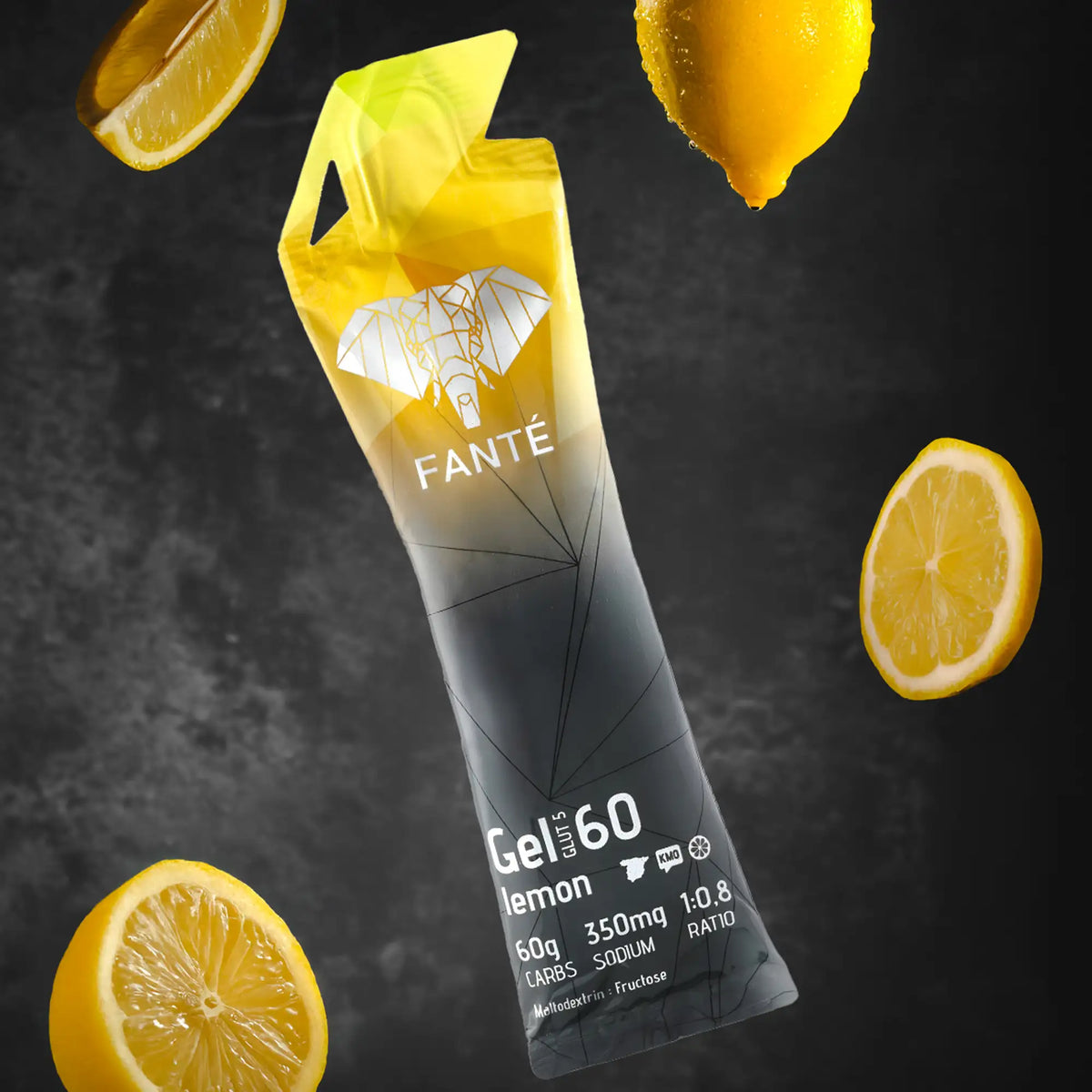
The purpose of obtaining this data is to help you develop an effective hydration strategy during your workouts, tailored to your individual needs. If you experience varying sweat rates under different weather conditions, intensities, and durations, you'll be able to better estimate your hydration requirements and tailor your strategy to our GLUT 5 DRINK and GEL 60 products.
[[PRODUCT:gel-60]]
Should I measure more than once?
Sweat rates are often measured only once. This gives you a sweat rate for the specific conditions under which the measurement was taken: a sweat rate for that sport, that temperature and humidity, that exercise intensity, and that clothing you were wearing, etc. If any of these variables change, the rate will also change. It's more important to measure under the conditions for which you're creating nutrition plans; since conditions will vary, repeated measurements under different circumstances are essential.
Additionally, errors will be introduced by the accuracy of your scale, temperature measurement, fluid intake measurement, etc. Repeated measurements under a specific set of conditions will help reduce error.
Estimates of your sweat rate will never be 100% accurate, but they will give you a better idea of how much to drink than simply relying on thirst.
Literature
- Baker L.B. (2017). Sweating Rate and Sweat Sodium Concentration in Athletes: A Review of Methodology and Intra/Interindividual Variability. Sports Med. 47(Suppl 1):111-128,
- Gonzalez et al. (2009). Expanded prediction equations of human sweat loss and water needs. J. Appl. Physiol. 107(2):379-88,