What to eat at Quebrantahuesos and Treparriscos 2026: nutritional strategy to finish strong
The Quebrantahuesos is not just another cycling event. It's almost 200 km of effort, long climbs, temperature changes, many hours on the bike, and an energy demand that doesn't forgive mistakes.
And although the Treparriscos is a shorter distance, its 85 km also require a clear strategy if you want to enjoy the race and not run on empty in the last kilometers.
Therefore, one of the most important questions is not only how to train, but how to fuel yourself during the Quebrantahuesos or Treparriscos.
In a race of this type, nutrition cannot be improvised. You need to know what to take, when to take it, and how to adapt carbohydrates, salts, caffeine, and hydration to your actual pace.

Why nutrition is key in the Quebrantahuesos
In a long-distance cycling event, the body relies heavily on carbohydrates to sustain intensity. The problem is that muscle and liver glycogen stores are limited.
If you don't provide energy constantly, you may experience:
- Sharp drops in performance.
- Feeling of empty legs.
- Difficulty maintaining watts.
- Digestive problems.
- Premature fatigue.
- Cramps or muscle blockage.
- Loss of concentration on descents or technical sections.
In the Quebrantahuesos, moreover, we are not talking about a linear effort. Climbs, descents, aid stations, changes in pace, and group management make it even more important to have a simple and easy-to-follow plan.
The key is not to take products "when you remember." The key is to have a nutritional strategy prepared before setting off.

What changes between Quebrantahuesos and Treparriscos
Although both events share a cycling atmosphere and demand, the nutritional strategy should not be identical.
The Quebrantahuesos requires longer planning, designed for many hours of effort. Here you need to control very well:
- Carbohydrates per hour.
- Mineral salts.
- Caffeine.
- Fluids.
- Digestive tolerance.
- Key intake moments.
In contrast, the Treparriscos allows for a slightly more compact, but equally structured, strategy. Although it is shorter, a common mistake is to underestimate it and start without a clear plan.
Even in the Treparriscos, you can dehydrate, run low on carbohydrates, or deplete a large part of your muscle glycogen stores if the intensity is high.
In both races, the goal is the same: maintain stable energy and avoid improvisation.
How many carbohydrates to consume during the race
The amount of carbohydrates depends on the cyclist's level, body weight, planned duration, and digestive training.
As a general reference:
- Beginner cyclists: 40–60 g of carbohydrates per hour.
- Intermediate cyclists: 60–80 g of carbohydrates per hour.
- Advanced cyclists: 80–100 g/h or more, provided they have trained for it beforehand.
In events like the Quebrantahuesos, many cyclists can benefit from strategies close to 80–90 g of carbohydrates per hour, especially if they will be spending many hours on the bike.
These strategies not only aim to improve performance. They also help reduce accumulated fatigue, prevent energy drops, protect digestive tolerance, and better sustain intensity on the last climbs.
In the Treparriscos, intake may be slightly less, but it's not advisable to run short. The relative intensity can even be higher, and the accumulated energy expenditure is still significant.
Therefore, good nutrition for the Quebrantahuesos or Treparriscos should be trained weeks in advance, just like you train for climbs or long rides.
Hydration and salts: the point many cyclists neglect
On race day, it can be hot, humid, or experience significant temperature changes between valleys, climbs, and descents. This directly affects sweating.
When you sweat, you don't just lose water. You also lose sodium and other electrolytes like potassium, magnesium, or calcium.
Therefore, a good strategy should include:
- Water.
- Sufficient amounts of sodium.
- Isotonic drink or carbohydrates in your bottle.
- Adjustment according to temperature.
- Frequent replenishment throughout the ride.
Drinking only water for many hours may not be enough. And taking salts without a clear plan also doesn't guarantee good hydration.
The goal is to combine fluids and electrolytes coherently to maintain performance throughout the ride. If you drink too little, you can dehydrate. If you drink too much without sodium, you can also create an imbalance.
Therefore, hydration should be part of the strategy from the beginning, not just when you're already thirsty.
Caffeine: useful, but only if well planned
Caffeine can be an interesting tool in long-distance cycling. It helps reduce the perception of effort, improve concentration, and sustain intensity at key moments.
But it should not be taken randomly.
In a race like the Quebrantahuesos, it may make sense to reserve it for specific moments:
- Before a decisive climb.
- In the final stretch, when mental fatigue sets in.
- Before Hoz de Jaca.
- In demanding phases like Portalet.
- At the beginning, if you need to maintain focus from the start towards Somport.
In the Treparriscos, it can be used more simply, especially if the goal is to compete or maintain high intensity.
The important thing is not to try a new dose on race day. Caffeine also requires training. You should know how it affects you, when it helps you, and how much you tolerate well.
The nutritional strategy must be prepared before the race
One of the biggest mistakes in cycling events is thinking that "eating at the aid stations" will be enough.
The problem is that, during the race, there are too many variables:
- Pace.
- Groups.
- Cyclist traffic.
- Descents.
- Climbs.
- Nerves.
- Heat.
- Loss of appetite.
Therefore, having a segmented strategy makes execution much easier.
Knowing what to take before each climb, when to drink, when to use caffeine, or when to reinforce salts can make the difference between barely surviving and finishing strong.
Nutrition should not depend on memory. It should be planned, trained, and ready to be applied during the ride.

Nutritional strategy for Quebrantahuesos and Treparriscos 2026
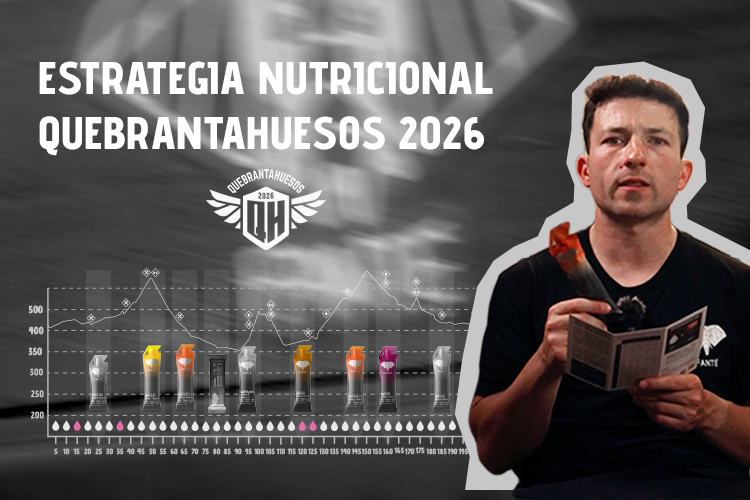
To help you prepare for the race, we have created a specific page with a nutritional strategy for Quebrantahuesos and Treparriscos 2026, designed for different levels of cyclists.
On it you will find:
- Analysis of the race profile.
- Performance tips.
- Carbohydrate strategy.
- Hydration and salts.
- Use of caffeine.
- Recommendations according to level.
- Practical guide to apply during the ride.
The idea is that any cyclist can understand how to fuel themselves during the race without having to improvise.
In addition, the strategy is designed so that you can apply it practically: with a visual guide, specific products, and recommendations adapted to the type of effort.
You can consult the nutritional strategy for Quebrantahuesos and Treparriscos 2026 here.
Ultracycling Pack: a ready-made solution for races like the Quebrantahuesos
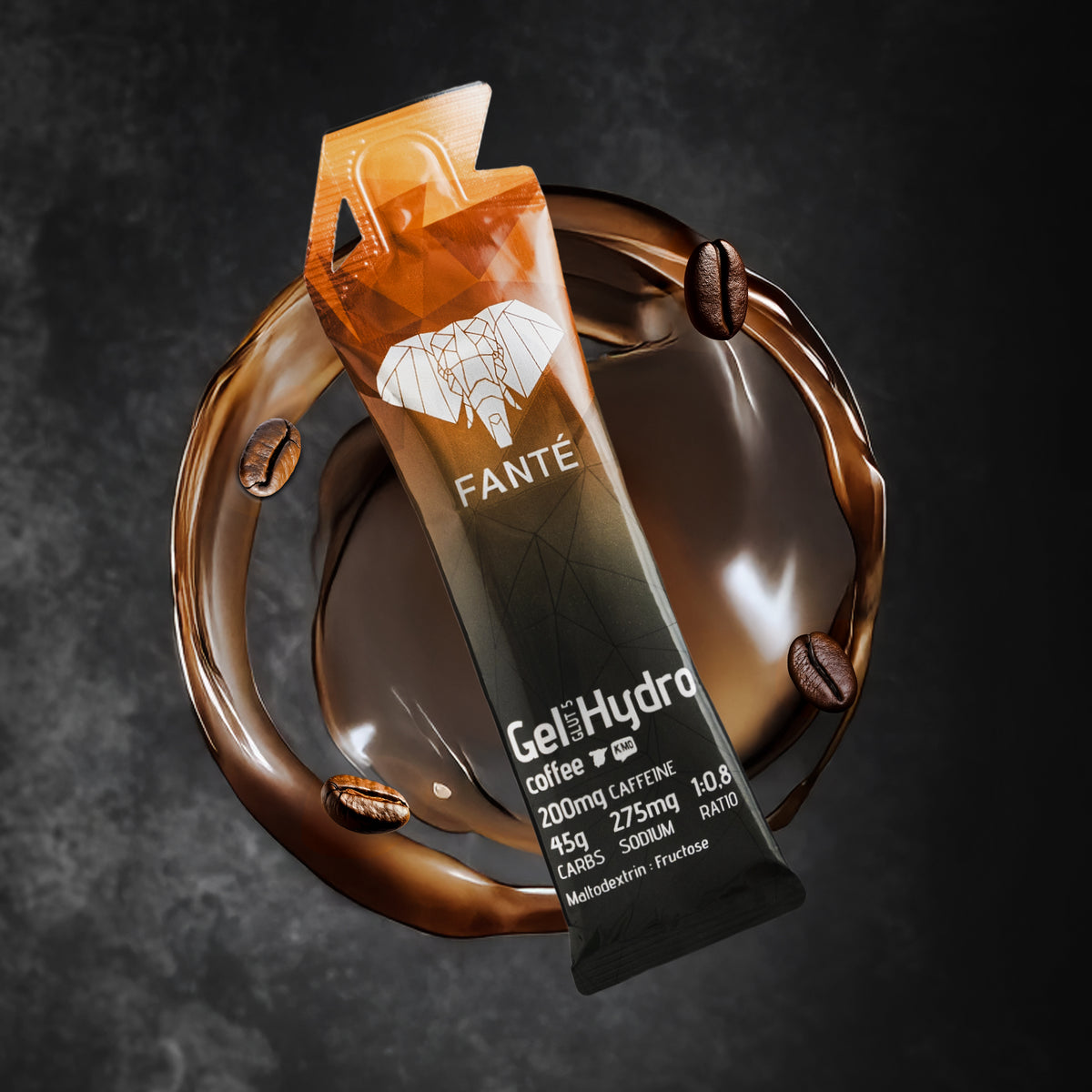
In addition to the free strategy, at Fanté 🐘 we have developed the Ultracycling Pack, designed for long-distance cycling events such as the Quebrantahuesos, Treparriscos, or ultracycling challenges.
This pack includes products to cover:
- Sustained energy.
- Hydration.
- Mineral salts.
- Caffeine.
- Digestive tolerance.
- Segmented planning.
The idea is simple: so you know what to take, when to take it, and how much to take at all times, without relying on improvisation.
In addition, the pack includes a sticker with the nutritional strategy for your bike frame, ready to follow the plan during the race without having to memorize each intake.
This is especially useful in cycling, where looking at a strategy on your phone during the ride is neither practical nor safe.
[[PRODUCTO:pack-ultracycling-200km]]
Frame strategy and Garmin synchronization
During a long ride, mental fatigue also counts.
Having a sticker on your frame allows you to quickly check:
- Next intakes.
- Gels or drink.
- Salts.
- Caffeine.
- Key points of the route.
- Segment reminders.
In addition, with the Ultracycling Pack, you can access the INNER strategy via QR codes and synchronize it with your Garmin device to receive alerts during the race.
This way, you won't have to worry about memorizing each intake. Your device can remind you when to take a gel, when to drink, or when to reinforce hydration.
It is a much more practical way to execute the nutritional strategy during a long-distance cycling event.
You can see all the details on the specific landing page for Quebrantahuesos and Treparriscos 2026.
How to choose your strategy according to your level
Not all cyclists need the same plan.
A cyclist who aims to complete the race over many hours should not follow exactly the same strategy as someone who is aiming for a record time or will maintain high intensity throughout the route.
Therefore, a good strategy should adjust:
- Grams of carbohydrates per hour.
- Amount of sodium.
- Total caffeine.
- Fluid volume.
- Products per segment.
- Difficulty of the route.
- Estimated duration of the race.
Nutrition should adapt to the athlete, not the other way around.
If your goal is to finish with good sensations, you will probably need a simple, easy-to-follow, and very tolerable plan.
If your goal is to perform at your best, you will need a more precise strategy, with a higher carbohydrate intake, planned caffeine, and finer control of fluids and salts.
Conclusion: don't improvise your nutrition on race day
The Quebrantahuesos and Treparriscos are not prepared by training alone. They are also prepared by planning nutrition.
Knowing how to fuel yourself during the race can help you maintain energy, avoid drops in performance, and reach the finish line much stronger.
If you are preparing for the 2026 edition, it is ideal to start training your nutritional strategy now, just as you train for climbs, watts, or long rides.
Because in a long-distance race, it's not the improviser who wins.
It's the one who best executes their strategy.