
Macronutrients and micronutrients are key for athletes to achieve optimal performance and efficient recovery, especially in endurance sports. Beyond calories and macronutrients, these compounds work at the cellular level to support your energy, muscle function, electrolyte balance, and antioxidant defense.
In this guide you will learn what they are, why they matter, which ones are the most relevant, and when it is advisable to increase your intake with the help of supplements like those from Fanté.
What are micronutrients and why are they essential for athletic performance?
Micronutrients are vitamins and minerals that the body needs in small amounts , but with essential functions to maintain physiological balance.
Unlike macronutrients in sports, which we all understand as providing quick energy (carbohydrates) or building muscle (proteins), micronutrients do not provide energy directly, but they facilitate critical metabolic processes:
- They transform macronutrients into usable energy.
- They are involved in muscle contraction and nerve function.
- They aid in tissue repair and the inflammatory response.
- They maintain the balance of water and electrolytes.
Without an adequate supply of micronutrients, even a high-calorie, high-protein diet may be insufficient for performance and recovery.
[[CTA_COMMUNITY]]
Difference between macronutrients and micronutrients in sports
Macronutrients (carbohydrates, fats, and proteins) are responsible for providing energy and structure during training . A deficiency in these nutrients is immediately noticeable as fatigue or loss of muscle mass.
Micronutrients, on the other hand, act as coenzymes and regulators . Although they do not provide calories, a deficiency can:
- Reduce energy production.
- Increase the risk of injury.
- To cause faster fatigue.
- Decrease the capacity for recovery.
Therefore, a good nutritional plan should integrate both groups in a balanced way.
The specific role of micronutrients in endurance athletes
In endurance sports, such as trail running, long-distance cycling, or triathlon, the body suffers oxidative stress, electrolyte loss, and muscle breakdown. This is where micronutrients make all the difference.
- They allow for efficient energy metabolism.
- They promote a robust immune function.
- They help you recover faster and better after long workouts.
- They maintain the hydroelectrolytic balance , key to preventing cramps and fatigue.
Micronutrients in sports: the 4 that most impact your performance
Magnesium bisglycinate
Magnesium is essential for more than 300 enzymatic reactions, especially in the production of ATP, the body's energy molecule.
Key functions:
- Muscle relaxation.
- Protein synthesis.
- Functioning of the nervous system.
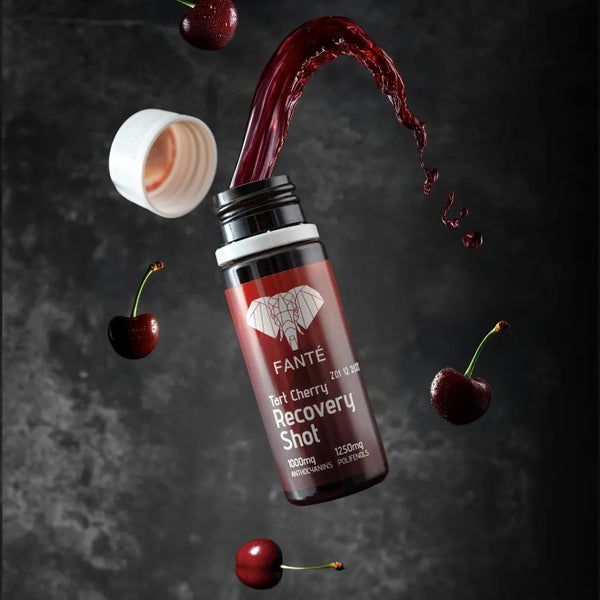
At FANTÉ , we've developed a formula that includes 300 mg of magnesium bisglycinate , the most bioavailable form of magnesium, which helps improve sleep and, consequently, recovery. We recommend using one Tart Cherry Recovery Shot during intense training sessions or competitions.
[[PRODUCT:tart-cherry-recovery-shot]]
Iron
Iron is vital for transporting oxygen in the blood and in the mitochondria, the powerhouses of each cell.
Key functions:
- Component of hemoglobin and myoglobin.
- Participate in the Krebs cycle.
- It helps with energy metabolism.
Signs of deficiency:
- Persistent fatigue.
- Pallor.
- Decreased performance.
In confirmed cases, iron supplementation under professional supervision can make a significant difference . We recommend contacting a healthcare professional to assess your individual situation before starting any supplementation.
Electrolytes
Electrolytes such as sodium, potassium, calcium, and magnesium regulate water balance and nerve conduction.
Key functions:
- Stay hydrated.
- Prevent cramps.
- Support cardiac function.
Our carbohydrate or isotonic drinks , Glut 5 Drink or ISO Drink : isotonic drinks designed to replenish salts, fluids and support recovery.
[[PRODUCT:iso-drink]
[[PRODUCT:glut-5-drink]
Also, if you want to provide those minerals without adding carbohydrates, you can use electrolyte capsules like our Essential Electrolyte Lite .
Access our post → Why an electrolyte imbalance can be your worst enemy in a race?
Antioxidants
During intense exertion, oxidative stress occurs, which can damage cells and delay recovery.
Key antioxidants:
- Vitamin C
- Vitamin E
- Polyphenols and anthocyanins like those in Tart Cherry
Tart Cherry Recovery Shot: helps minimize inflammation and support recovery after demanding sessions.
Micronutrient deficiencies in long-distance athletes: causes and symptoms
Among the causes and symptoms of micronutrient deficiency in long-distance athletes, we highlight the following:
Common causes:
- High training volume.
- Diets low in micronutrients.
- Sweat losses.
- Malabsorption.
Common symptoms:
- Chronic fatigue.
- Slow recovery.
- weakened immune system.
- Frequent cramps.
When is an athlete recommended to take extra micronutrients? 2 key situations
Training and competition subject an athlete's body to a high level of physiological stress. As the workload increases, not only do energy demands rise, but also the need for key micronutrients involved in recovery, cell protection, and mineral balance.
Therefore, there are specific times when an extra supply of micronutrients is not only recommended, but strategic to perform better and avoid deficiencies that may affect performance or recovery.
These are two key situations in which the athlete's body needs specific reinforcement:
Intense training blocks
During high-volume weeks, the requirement for micronutrients increases because:
- More free radicals are generated.
- More minerals are lost through sweat.
These free radicals are modulated and eliminated thanks to the anthocyanins and polyphenols contained in the Tart Cherry Recovery shot.
Post-competition recovery phase
After long events like marathons, the body is catabolic and has reduced reserves. Ideally, include:
- Antioxidants like Tart Cherry
- Electrolytes such as ISO Drink or Essential Electrolytes Lite
- Magnesium
How to integrate micronutrients into your training routine
1. A varied and colorful diet
Fruits, vegetables, legumes and nuts.
2. Isotonic drinks like Glut 5 or ISO Drink
Ideal for long training sessions.
3. Strategic Supplementation
Magnesium before bed. Tart Cherry Recovery Shot after competitions.
4. Professional control
Especially for supplements like iron.
5. Useful links:
- Learn about sodium bicarbonate in sports
- Discover which salts you should consume according to your perspiration.
Literature
- Maughan RJ. Role of micronutrients in sport and physical activity. Br Med Bull. 1999.
- Knez WL, Peake JM. The role of micronutrients in recovery and adaptation to training. Sports Med. 2016.
- DellaValle DM, Haas JD. Iron status and endurance performance in female runners. Am J Clin Nutr. 2011.
- McClung JP. Iron status and physical performance in athletes. Curr Sports Med Rep. 2020.
- Peeling P, et al. Evidence-based recommendations for iron supplementation in athletes. Int J Sport Nutr Exerc Metab. 2014.
- Close GL, et al. Assessment and consequences of vitamin D deficiency in athletes. Int J Sport Nutr Exerc Metab. 2013.
- Bell PG, et al. Montmorency cherries reduce the oxidative stress and inflammatory responses to repeated days high-intensity stochastic cycling. Nutrients. 2014.