
Different strategies such as cold water immersion, active recovery, compression garments, massage and electrical stimulation are currently being used to improve athlete recovery, depending on the type of activity performed, the time until the next training session or competition, as well as the equipment and medical personnel available (1)
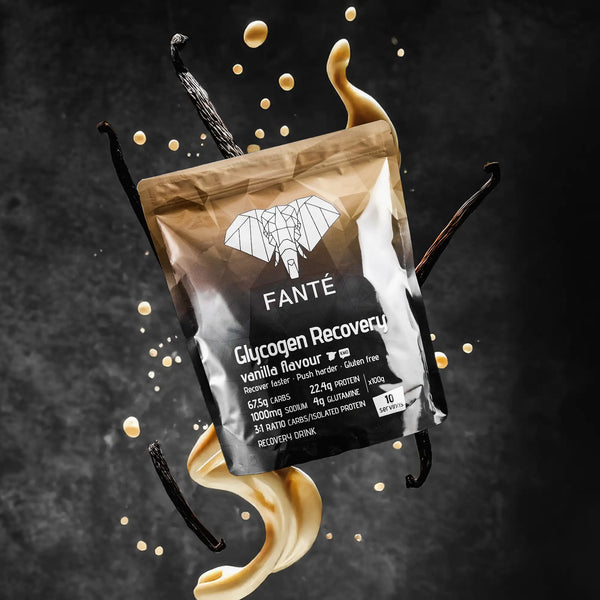
Among the various factors that can improve an athlete's recovery , rest and nutrition stand out (2) , with the latter being one of the most popular and accessible methods for facilitating the restoration of performance and addressing post-exercise physiological disturbances. In one of our guides, we discuss how you can improve your recovery with a 3:1 ratio, such as our Glycogen Recovery Drink , rather than a 2:1 or 2:2 ratio.
Nutritional strategies during the recovery phase have the following main objectives: replenishment of muscle glycogen (3) , restoring the body's hydroelectrolytic balance, repair of damaged muscle tissue and adaptations to exercise (4) , and restoring those physiological systems altered during training/competition such as the hormonal (5) and/or immune (6) systems.
Glycogen: A mere energy store?
Glycogen is a branched polymer of glucose (up to 55,000 units) linked by α 1:4 and α 1:6 glycosidic bonds around a core protein, glycogenin (7) . The importance of muscle glycogen as a determinant of exercise capacity was first recognized in the late 1960s with the introduction of the muscle biopsy technique in exercise physiology (8) .
Glycogen is much more than an energy store (9) , acting as a regulator of different signaling pathways related to the oxidative phenotype, insulin sensitivity, contractile processes, protein degradation and autophagic processes (10).
Where is it stored in the human body?
Skeletal Muscle:
Muscle is one of the main glycogen reservoirs in the human body (up to 600g). The amount stored, however, depends on various factors such as, of course, the amount of muscle mass, physical fitness, diet, etc. It has been documented that trained endurance athletes have a greater capacity for glycogen storage in skeletal muscle, this being one of the main adaptations to this type of exercise. The glucose stored in muscle glycogen is a bioavailable source exclusive to the muscle itself and plays a fundamental role in both regulation and signaling, as well as in the metabolic control of muscle cells. In this regard, it is worth noting that glycogen is stored in different cellular compartments (subsarcolemmal, intramyofibrillar, and intermyofibrillar) and, depending on its location, performs different functions, such as providing energy to the cell or generating ATP for the proper dynamics of calcium and/or the Na+, K+-ATPase pump. Finally, it should be added that its resynthesis is primarily stimulated by glucose.
Liver:
The amount of liver glycogen is estimated to be around 80-100 g, although this varies between individuals. The importance of this storage lies in its ability to release glucose into the bloodstream and thus regulate blood glucose levels. This occurs thanks to the enzyme glucose-6-phosphatase, which is not present, for example, in skeletal muscle. Furthermore, as discussed in this guide, liver glycogen resynthesis is related to the availability of fructose, a crucial factor to consider when restoring glycogen levels after or before exercise. Therefore, both maltodextrin and fructose are necessary in an optimal recovery product, such as our Recovery GLYCOGEN (11).
Brain:
Here's the new finding. Recent discoveries point to a significant amount of glycogen, although 100 times smaller than in other storage sites, located in the brain. Specifically, in astrocytes, glial cells that perform a wide range of functions related to supporting neurons and the nervous system. What's interesting is the potential these cells offer to nourish neurons and act as an energy source through the glycogen they contain. Recent studies link this glycogen content to the possible central fatigue induced by exercise, which we already mentioned in this guide. Undoubtedly, this opens up a new field of research that can help us determine the true limiting factors of performance. (12)
Kidneys:
In the kidneys, as well as in smooth and cardiac muscle, the amount of glycogen is minimal, so the significance is also very low.
Blood and white blood cells:
Likewise, we also find small amounts of glycogen in red and white blood cells, and the classic amount of glucose (not glycogen) available in the blood (blood glucose), which is approximately 5g, an amount that will differ depending on many factors (the first being diet). (13)

And knowing where it's stored, which compartment needs to be filled more thoroughly and efficiently?
During exercise at 50% of VO2max, the approximate rate of glycogen utilization is 0.6 mmol of glycosyl units/kg of dry muscle/minute, while if the intensity increases to 100%, this rate rises to 3.6 mmol/kg.dw/min. Likewise, during maximal effort, its utilization can reach 30-50 mmol/kg.dw/min. It seems that we know all this well today, but nevertheless, there are still lines to draw to fully understand many other things. (14)
As we know, muscle glycogen needs to be replenished not only at the muscular level but also at the hepatic level for optimal 100% recovery. This is where our recovery formula comes in, with a 2:1 carbohydrate ratio (maltodextrin:fructose) and a 3:1 overall ratio (carbohydrates:proteins). Once ingested, where does this glycogen go (to different compartments), and what is the function of each compartment?
Subsarcolemmal:
In general terms, glycogen represents 5-15% of total muscle glycogen. However, its percentage varies depending on the type of muscle fiber. In human type I (slow-twitch) fibers, it represents 9-12%, while in type II (fast-twitch) fibers, it represents 7-9%. It is located in the outermost part of the cell, just beneath the cell membrane and between the contractile filaments. Its function appears to be primarily related to local regulatory and energy functions, which is easy to understand given the multitude of biological processes that require energy and occur around the cell membrane. At the same time, it has a direct relationship with mitochondria due to their relative proximity. ( 15 , 16)
Its utilization during exercise varies between fibers and muscles. In the arms (triceps brachialis), its depletion after 1 hour of maximum exercise is close to 80% in type I fibers and 60% in type II fibers, while in the legs (vastus lateralis), it is 60% in type I fibers and an almost insignificant decrease in type II fibers.
Intermyofibrillar:
It accounts for approximately 75% of muscle glycogen, representing the largest quantity among the three storage locations. Depending on the muscle fiber type, it is stored in greater quantities in type II fibers (84%) than in type I fibers (77%). Its location, situated between the myofibrils, results in very high energy bioavailability. In fact, it is located very close to the mitochondria and the sarcoplasmic reticulum. In this sense, it appears to fulfill a primary energy function that is constant and efficiently regulated. In practical terms, it is the quantitative storage that we commonly envision when we talk about muscle glycogen.
After one hour of arm and leg exercise, muscle fiber depletion also varies between muscle groups, although there doesn't appear to be a significantly different decrease depending on the type of muscle fibers. In the arms (triceps brachii), there was a 75% depletion in type I fibers and a 70% depletion in type II fibers. In the legs (vastus lateralis), however, type I fibers showed a 55% decrease and type II fibers a decrease of around 10%.
Intramyofibrillar:
It represents a relatively small percentage of the total (5-15%). In type I fibers, it fills 12% of total glycogen, while in type II fibers, it fills a smaller amount (8%). Its location is key. It is located within the myofibrils, specifically within the contractile myofilaments, and around the I band of the sarcomere. Therefore, it is distributed very close to the myofibrillar structures involved in the contraction process, as you will see below. Before detailing the approximate percentages of its utilization, we want to clarify that this subcellular storage is primarily used during moderate-to-high-intensity exercise compared to the other two compartments (intermyofibrillar and subsarcolemmal).
After 1 hour of maximum effort cross-country skiing (20km time trial) in professional skiers, intramyofibrillar glycogen in the arms (triceps brachii) was depleted by 90% in type I fibers and by 17% in type II fibers. In the legs (vastus lateralis), however, it was depleted by 70% in type I fibers and showed a curious increase in type II fibers.
Summary
If we go back to the very basics of Human Physiology, it is evident that muscle contraction and relaxation (muscle function) is the first requirement for human movement and, therefore, for physical exercise.
Calcium is a fundamental ion for muscle contraction, especially for the first "triggering" step of the process: Excitation-Contraction Coupling. This step represents the electrical activation of muscle cells to initiate the contractile process. Within this process, as mentioned, calcium is essential. A low availability of this ion results in an inadequate action potential and prevents contraction from occurring under the appropriate conditions. The calcium available in the cell's internal environment, beyond entering through ion channels across the cell membrane, is regulated by the sarcoplasmic reticulum (SR). In other words, the SR is the calcium reservoir that regulates its intracellular concentration and responds to various depolarization stimuli to release more or less calcium. Therefore, at Fanté, we include calcium in our recovery formula , not in gels or single-dose packets . Adding another solute to the ingredients would increase osmolarity and slow gastric emptying, consequently impairing performance. Calcium should be included in your regular diet and taken post-workout, not during training.
As early as the 1970s, a direct relationship between the glycogenolytic complex and the sarcoplasmic reticulum (SR) was discovered. This complex is involved in the regulation of glycogen and regulatory proteins of glycogenolysis (the pathway for energy production from glycogen), glycogenesis (the synthesis of glycogen from glucose), and glycolysis itself (the synthesis of energy from glucose). At that time, it was hypothesized that a glycogen-regulated feedback loop played a fundamental role in the release of calcium from the SR and, consequently, in muscle contraction. Simultaneously, it was documented that the decrease in calcium levels, induced by impaired SR function, was directly related to muscle fatigue, along with multiple other factors and intracellular metabolites. Therefore, it was not surprising to think that the relationship between glycogen and muscle function is more than just close.
Along these lines, various authors advanced our understanding using complex methods of quantification, isolation, and correlation, both in animals and humans, concluding that calcium and muscle strength are directly related to glycogen content. Therefore, part of the explanation for muscle fatigue could be related to the exercise-induced decrease in muscle glycogen. In fact, studies in which adequate cellular phosphocreatine and ATP availability was maintained, but with low glycogen availability, showed that muscle function was reduced in the same way (even with sufficient energy in the cell), suggesting that glycogen is much more than a mere energy store.
Only the intramyofibrillar glycogen content is directly related to the calcium outflow rate from the SR, to the excitation-contraction coupling system, and therefore to muscle function.
Likely due to its location and the glycogen-sarcoplasmic reticulum complex, intramyofibrillar glycogen is the primary regulator of muscle function, serving as a source of glycogenolytic energy. Along these lines, recent studies (2019) have demonstrated this same loss of muscle function by limiting glycogenolytic flux, while maintaining an adequate energy environment within the cell. This underscores the importance of intramyofibrillar glycogen in this process.
And what does that mean?
It is clear that glycogen, beyond its bioenergetic function, plays a crucial role in internal regulatory processes. Furthermore, its relationship with muscle function has become evident. All of this suggests that its availability is directly linked to muscle fatigue through a specific mechanism. What does this mean? Specifically, its depletion (intramyofibrillar) will limit the muscle's contractile capacity and, therefore, force us to stop.
To give you an idea, a 10% decrease in calcium output has been documented with a 20% depletion of glycogen in the vastus lateralis. Similarly, in the arms (triceps brachii), a 25% decrease in calcium has been found alongside a 60% depletion of intramyofibrillar glycogen. However, these data were obtained after 1 hour of exercise (cross-country skiing) with a carbohydrate intake of 1 g/kg of body weight/hour. Can you imagine the loss without carbohydrate intake? Add to this the fact that the athletes analyzed were elite endurance athletes, trained for over 11 years with around 700 hours of training annually. Now imagine that in a person of a lower fitness level.
So how do I recover and store muscle glycogen post-workout? In this guide , I'll explain what you should do and which Fanté product you can use to optimize it .
Replenish lost glycogen: Refueling
Restoring endogenous carbohydrate stores is crucial in determining the recovery time (19) . Therefore, one of the main nutritional approaches for athletes after exercise is replenishing muscle and liver glycogen through carbohydrate intake (20). The muscle glycogen resynthesis process begins immediately after exercise and is much faster during the first 5–6 hours of recovery (21) . One of the main stimuli leading to increased glycogen synthesis is glycogen depletion itself (22). However, the most significant determinant of muscle and liver glycogen resynthesis is a high carbohydrate intake of around 1–1.5 g/kg of body weight immediately after exercise and during recovery, increasing resynthesis to 5–10 mmol/kg of dry weight/h (23) . The optimal CHO intake strategy to maximize glycogen stores varies greatly and depends on a number of factors, including primarily the amount, timing, and type of CHO (2:1 ratio) ingested during recovery (24) .
Literature
- Nédélec, M., McCall, A., Carling, C., Legall, F., Berthoin, S., & Dupont, G. (2013). Recovery in soccer: Part II-recovery strategies. Sports Medicine. https://doi.org/10.1007/s40279-012-0002-0
- Heaton, LE, Davis, JK, Rawson, ES, Nuccio, RP, Witard, OC, Stein, KW, … Baker, LB (2017). Selected In-Season Nutritional Strategies to Enhance Recovery for Team Sport Athletes: A Practical Overview. Sports Medicine. https://doi.org/10.1007/s40279-017-0759-2
- Burke, L.M., & Mujika, I. (2014). Nutrition for Recovery in Aquatic Sports. International Journal of Sport Nutrition and Exercise Metabolism, 24(4), 425–436. https://doi.org/10.1123/ijsnem.2014-0022
- Evans, GH, James, LJ, Shirreffs, SM, & Maughan, RJ (2017). Optimizing the restoration and maintenance of fluid balance after exercise-induced dehydration. Journal of Applied Physiology, 122(4), 945–951. https://doi.org/10.1152/japplphysiol.00745.2016
- Nieman, D.C., & Mitmesser, S.H. (2017). Potential impact of nutrition on immune system recovery from heavy exertion: A metabolomics perspective. Nutrients. https://doi.org/10.3390/nu9050513
- Peake, J., Neubauer, O., Walsh, NP, & Simpson, RJ (2017). Immune system recovery after exercise. Journal of Applied Physiology, 122, 1077–1087. https://doi.org/10.1152/japplphysiol.00622.2016
- Hearris MA, Hammond KM, Fell JM, Morton JP. Regulation of Muscle Glycogen Metabolism During Exercise: Implications for Endurance Performance and Training Adaptations. Nutrients. 2018; 10(3): 298.
- Impey, SG, Hammond, KM, Shepherd, SO, Sharples, AP, Stewart, C., Limb, M., … Morton, JP (2016). Fuel for the work required: A practical approach to amalgamating train-low paradigms for endurance athletes. Physiological Reports, 4(10). https://doi.org/10.14814/phy2.12803
- Impey, SG, Hearris, MA, Hammond, KM, Bartlett, JD, Louis, J., Close, GL, & Morton, JP (2018). Fuel for the Work Required: A Theoretical Framework for Carbohydrate Periodization and the Glycogen Threshold Hypothesis. Sports Medicine, 48(5), 1031–1048. https://doi.org/10.1007/s40279-018-0867-7
- Hearris, M.A., Hammond, K.M., Fell, J.M., & Morton, J.P. (2018). Regulation of muscle glycogen metabolism during exercise: Implications for endurance performance and training adaptations. Nutrients. https://doi.org/10.3390/nu10030298
- Areta JL, Hopkins WG. Skeletal Muscle Glycogen Content at Rest and During Endurance Exercise in Humans: A Meta-Analysis. Sports Med. 2018; 48(9): 2091–2102.
- Mata F, Grimaldi-Puyana M, Sánchez-Oliver AJ. Replenishment of Muscle Glycogen in the Recovery of the Athlete. SPORTS TK-EuroAmerican Journal of Sports Sciences. 8. 57-66.
- Bangsbo, J., Mohr, M., & Krustrup, P. (2006). Physical and metabolic demands of training and match-play in the elite football player. In Nutrition and Football: The FIFA/FMARC Consensus on Sports Nutrition (pp. 1–18). https://doi.org/10.4324/9780203967430
- Bartlett, J.D., Hawley, JA, & Morton, J.P. (2015). Carbohydrate availability and exercise training adaptation: Too much of a good thing? European Journal of Sport Science, 15(1), 3–12. https://doi.org/10.1080/1 7461391.2014.920926
- Beck, KL, Thomson, JS, Swift, RJ, & von Hurst, P.R. (2015). Role of nutrition in performance enhancement and postexercise recovery. Open Access Journal of Sports Medicine, 6, 259–67. org/10.2147/OAJSM.S33605
- Beelen, M., Burke, L.M., Gibala, M.J., & Van Loon, L.J.C. (2010). Nutritional Strategies to Promote Postexercise Recovery. International Journal of Sport Nutrition and Exercise Metabolism, 20, 515–532. https://doi.org/10.1123/ijsnem.20.6.515
- Beelen, M., Van Kranenburg, J., Senden, J.M., Kuipers, H., & Van Loon, L.J.C. (2012). Impact of caffeine and protein on postexercise muscle glycogen synthesis. Medicine and Science in Sports and Exercise, 44(4), 692–700. https://doi.org/10.1249/MSS.0b013e31823a40ef
- Burke, LM, Collier, GR, Broad, EM, Davis, PG, Martin, DT, Sanigorski, AJ, & Hargreaves, M. (2003). Effect of alcohol intake on muscle glycogen storage after prolonged exercise. Journal of Applied Physiology (Bethesda, Md. : 1985), 95(3), 983–990. https://doi.org/10.1152/japplphysiol.00115.2003
- Jentjens, R., & Jeukendrup, A.E. (2003). Determinants of post-exercise glycogen synthesis during short-term recovery. Sports Medicine. https://doi.org/10.2165/00007256-200333020-00004
- Ranchordas, M.K., Dawson, J.T., & Russell, M. (2017). Practical nutritional recovery strategies for elite soccer players when limited time separates repeated matches. Journal of the International Society of Sports Nutrition. https://doi.org/10.1186/s12970-017-0193-8
- Goforth, H.W., Laurent, D., Prusaczyk, W.K., Schneider, K.E., Petersen, K.F., & Shulman, G.I. (2003). Effects of depletion exercise and light training on muscle glycogen supercompensation in men. American Journal of Physiology – Endocrinology And Metabolism, 285(6), E1304–E1311. https://doi.org/10.1152/ajpendo.00209.2003
- Murray, B., & Rosenbloom, C. (2018). Fundamentals of glycogen metabolism for coaches and athletes. Nutrition Reviews, 76(4), 243–259. https://doi.org/10.1093/nutrit/nuy001
- Burke, L.M., van Loon, L.J.C., & Hawley, J.A. (2017). Postexercise muscle glycogen resynthesis in humans. Journal of Applied Physiology, 122(5), 1055–1067. https://doi.org/10.1152/japplphysiol.00860.2016
- Alghannam, A., Gonzalez, J., & Betts, J. (2018). Restoration of Muscle Glycogen and Functional Capacity: Role of Post-Exercise Carbohydrate and Protein Co-Ingestion. Nutrients, 10(2), 253. https://doi.org/10.3390/nu1002025 .