
Muscle glycogen is a vital component in energy storage in the human body. Its formation and accumulation are closely linked to carbohydrate consumption, and it is fundamental in restoring and maintaining our energy reserves.
Different strategies such as cold water immersion, active recovery, compression garments, massage and electrical stimulation are currently being used to improve athlete recovery, depending on the type of activity performed, the time until the next training session or competition, as well as the equipment and medical personnel available (1)
Among the different factors that can improve the athlete's recovery , rest and nutrition stand out (2), the latter being one of the most popular and accessible methods to facilitate the restoration of performance and physiological disturbances after exercise.
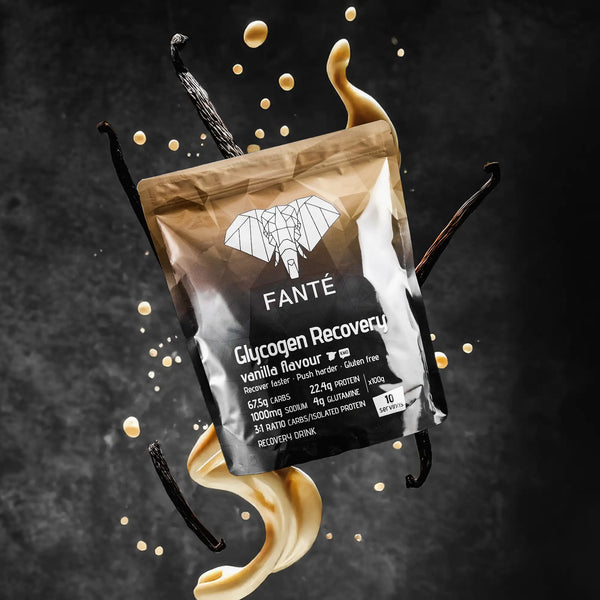
In one of our guides we discuss how you can improve your recovery with a 3:1 ratio like our Glycogen recovery supplement , and not with 2:1 or 2:2 ratios.
Nutritional strategies during the recovery phase have the following main objectives: replenishment of muscle glycogen (3), restoring the body's hydroelectrolytic balance, repair of damaged muscle tissue and adaptations to exercise (4) and, restoring those physiological systems altered during training/competition such as the hormonal (5) and/or immune (6) systems.
[[CTA_COMMUNITY]]
Glycogen: What is it?
Glycogen is a branched polymer of glucose (up to 55,000 units) linked by α 1:4 and α 1:6 glycosidic bonds around a central protein, glycogenin (7).
The importance of muscle glycogen as a determinant of exercise capacity was first recognized in the late 1960s with the introduction of the muscle biopsy technique in exercise physiology (8).
Glycogen is much more than an energy store (9), acting as a regulator of different signaling pathways related to the oxidative phenotype, insulin sensitivity, contractile processes, protein degradation and autophagic processes (10).
Where is glycogen stored in the human body?
Skeletal Muscle:
Muscle is one of the main glycogen reservoirs in the human body (up to 600g). The amount stored, however, depends on various factors such as, of course, the amount of muscle mass, physical fitness, diet, etc.
It has been documented that trained endurance athletes have a greater capacity to store glycogen in skeletal muscle , this being one of the main adaptations to this exercise.
Glucose stored in muscle glycogen is a bioavailable source exclusive to the muscle itself and plays a fundamental role in both regulation and signaling, as well as in the metabolic control of muscle cells.
Liver:
The amount of liver glycogen is estimated to be approximately 80-100 g, although this varies between individuals. The importance of this storage lies in its ability to release glucose into the bloodstream and thus regulate blood glucose levels.
This occurs thanks to the enzyme glucose-6-phosphatase, which is absent, for example, in skeletal muscle. Furthermore, as discussed in this guide, hepatic glycogen resynthesis is linked to fructose availability, a crucial factor to consider when restoring glycogen levels after or before exercise.
Therefore, both maltodextrin and fructose are necessary in an optimal recovery product, such as our Recovery GLYCOGEN . (11)
[[PRODUCT:glycogen-recovery-drink]]
Brain:
Recent discoveries indicate a significant amount, though 100 times smaller than in other storage sites, located in the brain. Specifically, in astrocytes, glial cells that perform a wide range of functions related to supporting neurons and the nervous system.
Studies have linked this glycogen content to the possible central fatigue induced by exercise, which we already mentioned in this guide. Undoubtedly, this opens a new field of research that can help us determine the true limiting factors of performance. (12)
Kidneys:
In the kidneys, as well as in smooth and cardiac muscle, the amount of glycogen is minimal , so the significance is also very low.
Blood and white blood cells:
Likewise, we also find small amounts of glycogen in red and white blood cells , and the classic amount of glucose (not glycogen) available in the blood (blood glucose), which is approximately 5g, an amount that will differ depending on many factors (the first being diet). (13)

And knowing where it's stored, which compartment needs to be filled more and better?
During exercise at 50% of VO2max, the approximate rate of glycogen utilization is 0.6 mmol of glycosyl units/kg of dry muscle/minute, while if the intensity increases to 100%, this rate rises to 3.6 mmol/kg.dw/min. Likewise, during maximal effort, its utilization can reach 30-50 mmol/kg.dw/min. (14)
As we know, muscle glycogen not only needs to be recovered at the muscle level, but it also needs to be recovered at the liver level for optimal 100% recovery, and this is where our Recovery comes into play with a 2:1 ratio in carbohydrates (maltodextrin: fructose) and a 3:1 total (carbohydrates: proteins).
Subsarcolemmal
In general terms, it represents 5-15% of total muscle glycogen . However, its percentage varies depending on the type of muscle fibers.
- In human type I (slow) fibers it represents 9-12%.
- In type II (fast) fibers, 7-9%.
It is located, precisely, on the outermost part of the cell, just below the cell membrane, and between the contractile filaments. Its function appears to be related mainly to local regulatory and energy functions , something that is not difficult to understand if we consider the multitude of biological processes that require energy supply and that occur around the cell membrane. (15,16)
Its utilization during exercise varies between fibers and muscles. In the arms (triceps brachialis), its depletion after 1 hour of maximum exercise is close to 80% in type I fibers and 60% in type II fibers, while in the legs (vastus lateralis), it is 60% in type I fibers and an almost insignificant decrease in type II fibers.
Intermyofibrillar
It accounts for approximately 75% of muscle glycogen , representing the highest quantitative amount among the three locations. Depending on the type of muscle fiber, it is stored in greater quantities in type II fibers (84%) than in type I fibers (77%).
Its location, situated between the myofibrils, results in very high energy bioavailability. In fact, it is located very close to the mitochondria and the sarcoplasmic reticulum. In this sense, it appears to fulfill a priority energy function that is "constant" and efficiently regulated.
After 1 hour of arm and leg exercise, their depletion also varies between muscle groups, although there does not seem to be a very different decrease depending on the type of muscle fibers:
- In the arms (triceps brachialis) there is a 75% depletion in type I fibers and a 70% depletion in type II fibers.
- In the legs (vastus lateralis), however, type I fibers showed a decrease of 55% and type II fibers around 10%.
Intramyofibrillar
It represents a relatively low percentage of the total (5-15%). In type I fibers, it replenishes 12% of total glycogen, while in type II fibers, it replenishes a smaller amount (8%).
Its location is key. It is located within the myofibrils, inside the contractile myofilaments, and specifically around the I band of the sarcomere. Therefore, it has a distribution very close to the myofibrillar structures involved in the contraction process.
After 1 hour of maximum effort cross-country skiing (20 km time trial) in professional skiers, intramyofibrillar glycogen in the arms (triceps brachii) was depleted by 90% in type I fibers and by 17% in type II fibers. In the legs (vastus lateralis), however, it was depleted by 70% in type I fibers and showed a curious increase in type II fibers.
Replenish lost glycogen: Refueling
Restoring endogenous carbohydrate stores is crucial in determining the recovery time (19); therefore, one of the main nutritional approaches for athletes after exercise is replenishing muscle and liver glycogen through carbohydrate intake. (20)
The process of muscle glycogen resynthesis begins immediately after exercise, being much faster during the first 5-6 hours of recovery (21). One of the main stimuli that leads to greater glycogen synthesis is its own depletion. (22)
However, the major determinant of muscle and liver glycogen resynthesis is a high intake of CHO around 1-1.5 grams/kg of body weight immediately after exertion and during recovery, increasing resynthesis to 5-10 mmol/kg of dry weight/h. (23)
The optimal CHO intake strategy to maximize glycogen stores varies greatly and depends on a number of factors, including primarily the amount, timing, and type of CHO (2:1 ratio) ingested during recovery (24).
So, how is glycogen stored?
When we talk about how glycogen is stored, we are talking about the timing of carbohydrate intake, which is essential for restoring our energy stores.
To understand the importance of the timing of carbohydrate intake , it is necessary to understand the two phases of its resynthesis. Thus, different studies have indicated that glycogen resynthesis after exercise occurs following a biphasic pattern (25).
Initially, there is a rapid increase in the rate of resynthesis, independent of insulin concentrations and lasting approximately 30-60 minutes after exercise; this supports the high glycogen synthesis in the 60 minutes immediately following the end of exercise. (26)
Therefore, at FANTÉ we recommend innovative usage methods compared to current recovery methods, differentiating time and dose by athlete's weight, never before seen in any usage method to date.
In this phase, an increase in the translocation of the glucose transporter protein (GLUT-4) can be observed, due to an increase in calcium concentrations at the level of the rhabdomyocyst sarcoplasm (a consequence, in turn, of the multiple action potentials that take place during exertion) (27), up to two times, gradually decreasing until reaching pre-exercise levels 2 h after its completion. (28)
As for hepatic glycogen, it is rapidly restored during post-exercise food intake with a fructose content of 0.2 to 0.5 grams/kg of body weight, helping to maintain normoglycemia, or, when carbohydrate intake does not occur post-exercise, via gluconeogenic regeneration from lactate. (29)
In light of the above, there appears to be a potential post-exercise window of opportunity that athletes should take advantage of for muscle glycogen recovery (30).
In fact, when comparing immediate CHO intake with intake up to 2 hours after exercise, it results in 45% lower concentrations of muscle glycogen (31).
In the context of recovery from exhaustive exercise, an intake of 6-12 g/Kg is known to be sufficient to restore endogenous glycogen stores when the recovery time is ≥ 24 h. (32, 33)
However, when recovery time is limited (< 8 h), specific strategies aimed at accelerating glycogen resynthesis become necessary (26).
Similar to the effects of the glycemic index of foods over longer periods (i.e., 24 h), the frequency of CHO intake does not appear to influence muscle glycogen resynthesis; however, when recovery time is limited, the frequency at which CHO is ingested may have an influence.
This has been demonstrated in studies that have shown that with an intake of CHO occurring at intervals of 15-30 minutes, the rate of muscle glycogen resynthesis is approximately 40% higher than when supplied every two hours (34, 35, 36).
Amount of carbohydrate intake
Regarding the amount of CHO recommended for glycogen replacement , van Loon et al. (12) showed how an intake of 1.2 g/Kg/hour of CHO resulted in a 150% greater glycogen resynthesis (from 17 to 45 mmol/Kg dm/h) compared to a lower dose of 0.8 g/Kg/hour (12).
Looking for the optimal amount in this regard, Howarth et al. (2009), (37) showed how the ingestion of 1.6 g/Kg/hour did not further stimulate glycogen resynthesis, considering that the recommended amount of CHO post exercise will be around 1.0-1.5 g/Kg/hour maximum within the first hour of the cessation of exercise and continue with an intake of 1.0-1.5 g/Kg/h every 4-6 hours or until resuming usual meals (38).
Type of carbohydrates
An important factor that determines muscle glycogen resynthesis is insulin-mediated glucose uptake in muscle cells.
The intake of moderate or high glycemic index (GI) carbohydrates is a good option to achieve glycogen restoration, in part because it provides rapid glucose availability and insulin response (39).
When fructose is compared with glucose or sucrose, it is observed that the insulinemic response is lower in the former, which is attributed to a greater use of this monosaccharide in the resynthesis of hepatic glycogen (26, 40).
On the other hand, glucose and sucrose appear to have a similar effect on muscle glycogen resynthesis, as was recently demonstrated in a study, where it was shown that the intake of 1.2 g/Kg/h of glucose, glucose + fructose or glucose + sucrose during recovery resulted in similar rates of muscle glycogen resynthesis (41).
In this regard, it is recommended to ingest a mixture of glucose + fructose in a 2:1 ratio that provides an optimal dose of CHO for the effective restoration of liver and muscle glycogen. (26)
Ingesting liquid or solid forms of carbohydrates appears to be equally effective in restoring muscle glycogen , so the athlete's individual preference should take precedence (42). However, as Ranchordas (2017) (30) points out, from a practical perspective it would be beneficial for athletes to have access to mixtures of both solid and liquid foods to avoid these problems.
Protein YES or NO in recovery
Various nutritional factors are being studied to enhance glycogen resynthesis in conjunction with carbohydrate intake. In this regard, several studies have shown that the simultaneous intake of carbohydrates and proteins can be beneficial for glycogen resynthesis. (37)
This is because protein intake increases insulin secretion by the pancreas, stimulating glycogen resynthesis.
The type of protein appears to influence insulin secretion. Thus, hydrolyzed protein (isolate) has been shown to have a greater effect on insulin secretion than intact protein, which is related to its accelerated rate of digestion and absorption (43, 44).
Furthermore, whey protein appears to be a greater insulin stimulator than casein, possibly due to its higher leucine content (45). Therefore, we use whey protein isolate rather than other types in our GLYCOGEN recovery program .
So, carbohydrates and proteins 3:1?

How do the following factors interfere with glycogen replenishment?
Glutamine
Glutamine is a conditionally essential amino acid widely used in sports nutrition, especially for its immunomodulatory role. However, glutamine performs several other biological functions, such as cell proliferation, energy production, glycogenesis, and ammonia buffering, among others.
Another possible anti-fatigue property of glutamine is its ability to prevent dehydration . Glutamine is transported across the intestinal brush border by a sodium-dependent system, promoting faster absorption of fluids and electrolytes in the gut.
Therefore, the inclusion of glutamine in rehydration solutions could increase sodium absorption and water flow.
The amount of sodium
When we ingest a recovery drink, it must have a good supply of carbohydrates according to our weight, the type of carbohydrates 2:1, protein in an adequate amount, and an adequate amount of specific minerals in order to replenish what we have spent.
The quantity is fundamental not only to replenish salts, but also because having a high quantity and being a hypertonic drink favors the entry of solute (cho) into the cell faster than an isotonic (single-dose) or hypotonic drink.
Therefore, at FANTÉ we opt for a hypertonic recovery formula in accordance with current scientific evidence, adding 0.8g of sodium per dose for weights up to 50kg and 1.5g of sodium for >90kg per dose.
Remember! Because it's hypotonic, you resynthesize glycogen very quickly, but it doesn't hydrate you. Therefore, we advise you to prepare another bottle of water and drink from that as well, and not just exclusively from Fanté GLYCOGEN.
Creatine
Creatine has also been studied for its synergistic action in glycogen resynthesis. Studies have shown that creatine monohydrate intake increases the expression of genes involved in various activities , including glycogen resynthesis, which is suggested to be mediated by the osmotic effect of this ergogenic aid (46).
Robert et al. (2016) (47) observed an increase in post-exercise glycogen storage following intake of creatine supplementation (20 g/day) along with a high CHO diet.
This was most evident in the 24 hours after exercise and was maintained for 6 days of post-exercise recovery with a high-CHO diet.
It is important to consider the 1-2% body weight gains that may be due to creatine use, which may interfere in some sports where weight gain can impair performance (e.g., high jump) (38).
Caffeine
Another nutrient studied in this regard is caffeine. One study observed that an intake of 8 mg/kg of caffeine along with carbohydrates (1 g/kg/h) resulted in a substantial increase in glycogen content during 4 hours of post-exercise recovery (48).
However, the potential interference of such a high caffeine intake with the athlete's sleep must be considered. Furthermore, other similar studies have found no difference in glycogen content (49).
A recent systematic review has analyzed how the different compounds contained in coffee can affect muscle glycogen resynthesis, showing how some of these compounds can activate different molecular pathways leading to an increase in muscle glycogen synthesis, which leads the authors to conclude that coffee could be an option for athlete recovery.
More research is still needed.
Alcohol
Finally, it should be noted that alcohol can interfere with glycogen replenishment.
In relation to this, Burke et al., (2003) (50) showed how alcohol intake (approximately 120 g) could indirectly interfere with glycogen storage during recovery, displacing CHO intake.
However, the direct effects have not yet been clarified.